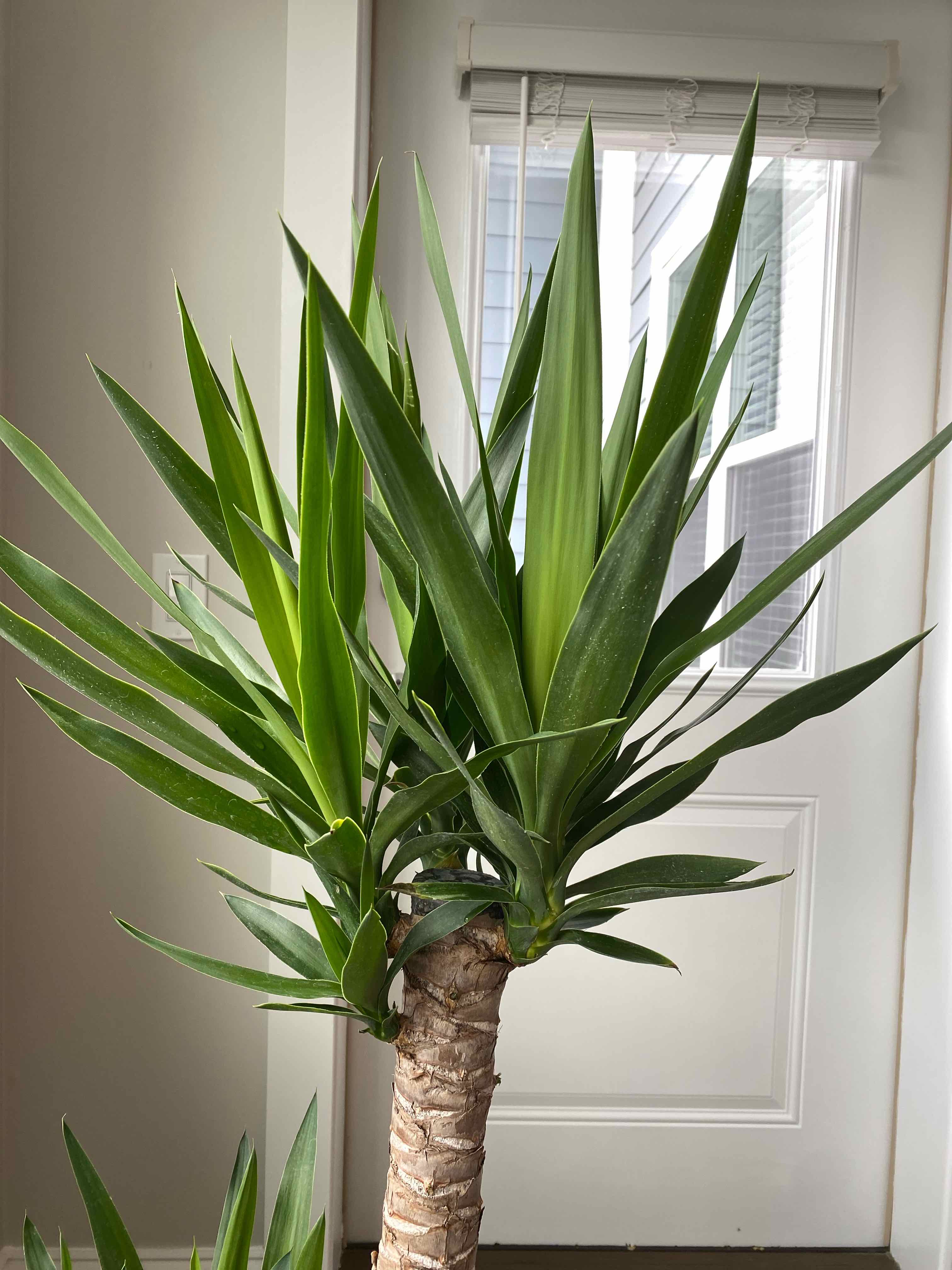
How to Water Blue-Stem Yucca
Yucca gigantea
Reviewed by Kiersten Rankel M.S.
Quick Answer
Water your Blue-Stem Yucca when the top 3 inches of soil are bone-dry, every 14–21 days from May through September. Stretch to once a month or longer from late November through February.
Yucca gigantea stores water in its thick trunk. Soft trunk tissue near the base is always rot, never thirst.

Stay on top of plant care
Get seasonal reminders for watering and fertilizing — personalized for your plants.
How Often and How Much to Water
Adjust the sliders below for your pot size, light, and setting. The numbers assume a free-draining cactus or succulent mix and a pot with drainage.
Setting
Every
9days
Use
1cup
Your Watering Rhythm Across the Year
Soil dries faster in the growing season, which varies by region. Slow down watering in the off-season to avoid overwatering.
Pacific
Mountain
Midwest
Northeast
Southeast
JFMAMJJASOND
Growing season
Growing season
9days
Resting season
3–4weeks
How to Water Your Blue-Stem Yucca
Soak deeply, then leave it alone. Yucca roots want a real dry-down between waterings, and rot risk is far higher than drought risk in any home setting.
1
Water at the soil line, never on the leaves or down into the crown where the leaves emerge from the trunk.
2
Pour slowly until water runs out the drainage holes. The trunk roots need a full soak to refill, not a surface splash.
3
Empty the saucer after 10 minutes so the rootball doesn't sit in standing water.
4
Lift the pot before and after watering. Knowing the heavy and light weights gives you the most reliable check between waterings.
Should You Water Your Blue-Stem Yucca Today?
Yucca rots far more easily than it dries out. Wrinkled or slightly soft leaves are nearly always thirst. Soft tissue at the base of the trunk is always rot, never thirst.
Hold off
Leaves stand stiff and upright
Trunk firm all the way down to the soil
Soil dry on top but still cool an inch down
Less than 2 weeks since the last watering
Pot feels heavy when lifted
Ready for water
Lower leaves softening or yellowing from the tip
Trunk still firm with no soft spots
Soil bone-dry through the drainage hole
Visible gap between soil and pot wall
Pot feels almost empty
If Something Looks Off
Yucca shows drought and rot in opposite places. Drought shows in the leaves first while rot starts at the trunk base or in the roots. The trunk and the soil tell the two apart.
Underwatered
Soil
Bone-dry and pulled away from the pot edge
Leaves
Lower leaves yellowing from the tip with curling and softening
Pace
Slow decline that perks up within a few days of a deep soak
Next steps
Soak the rootball thoroughly until water runs out the drainage holes
Set the plant in bright light and let the soil dry fully before the next watering
Expect leaf firmness to return over 1 to 2 weeks
Existing yellow leaves won't green back up. They will eventually drop on their own
Overwatered
Soil
Stays damp for over a week with a sour or musty smell
Trunk
Soft mushy tissue or dark patches at the base of the trunk
Leaves
Whole leaves yellowing uniformly with leaves dropping off the trunk
Pace
Sudden collapse that worsens even after you stop watering
Next steps
Stop watering and move to a bright airy spot. Watch for fungus gnats hovering above the soil, a sign the mix has stayed too wet too long
Slip the plant out of the pot and trim any black mushy roots back to firm white tissue with a sterile blade
If trunk rot has reached above the soil line, cut the trunk above the rot down to firm tissue and treat the top as a propagation cutting
Repot in fresh dry succulent mix in a clean pot with drainage holes
Wait at least 3 weeks before the first watering. Return to soaking only when the soil is fully dry
Got More Questions?
Why are my yucca leaves browning at the tips?
Most often a buildup of salts from tap water or fertilizer, sometimes very dry indoor air. The browning starts at the tip and works down the leaf.
Flush the pot with plain water until water runs out the drainage holes 2 or 3 times. If using softened water, switch to filtered or rainwater. Misting does little to fix this.
How long can my yucca go without water?
Easily 4 to 6 weeks during the growing season, and longer in winter dormancy.
Vacations and travel rarely cause yucca problems. Deep-water before you leave and the plant will wait for you. Frequent watering is a far bigger threat than any reasonable absence.
Why is my yucca's trunk going soft?
Soft trunk tissue is always root rot or trunk rot from over-watering. There is no other common cause.
Stop watering immediately, slip the plant out of the pot, and inspect the roots. If the rot is contained at the base, you may save the top half by cutting above the rot and rooting the cutting in fresh dry succulent mix.
Can I grow my yucca in a self-watering pot?
No. Self-watering pots keep the soil consistently moist, and yucca rots within weeks in those conditions.
Use a heavy unglazed terracotta pot with multiple drainage holes. Terracotta wicks moisture out of the mix and gives the rootball the dry-down it needs.
Why is my yucca leaning over?
Most often light, not water. Yucca grows toward the strongest light source and leans noticeably in low-light corners.
Rotate the pot a quarter turn weekly to keep growth even, or move closer to a south or west window. Leaning combined with a soft trunk base is rot, not light.
Can I use tap water on my yucca?
Yes for most regions. Yucca handles ordinary tap water without issue.
If you have very hard water or use a softener, salt buildup over time causes leaf-tip browning. Flush the pot with plain water 2 or 3 times every few months, or switch to filtered water.
Stay on top of plant care
Get seasonal reminders for watering and fertilizing — personalized for your plants.
About This Article

Kiersten Rankel M.S.
Botanical Data Lead at Greg · Plant Scientist
Editorial Process
Watering guidance verified against Yucca gigantea growth data from Greg's botanical database, cross-referenced with USDA hardiness zone data and published horticultural research.
14,290+ Greg users growing this plant
USDA hardiness zones 9a–11b