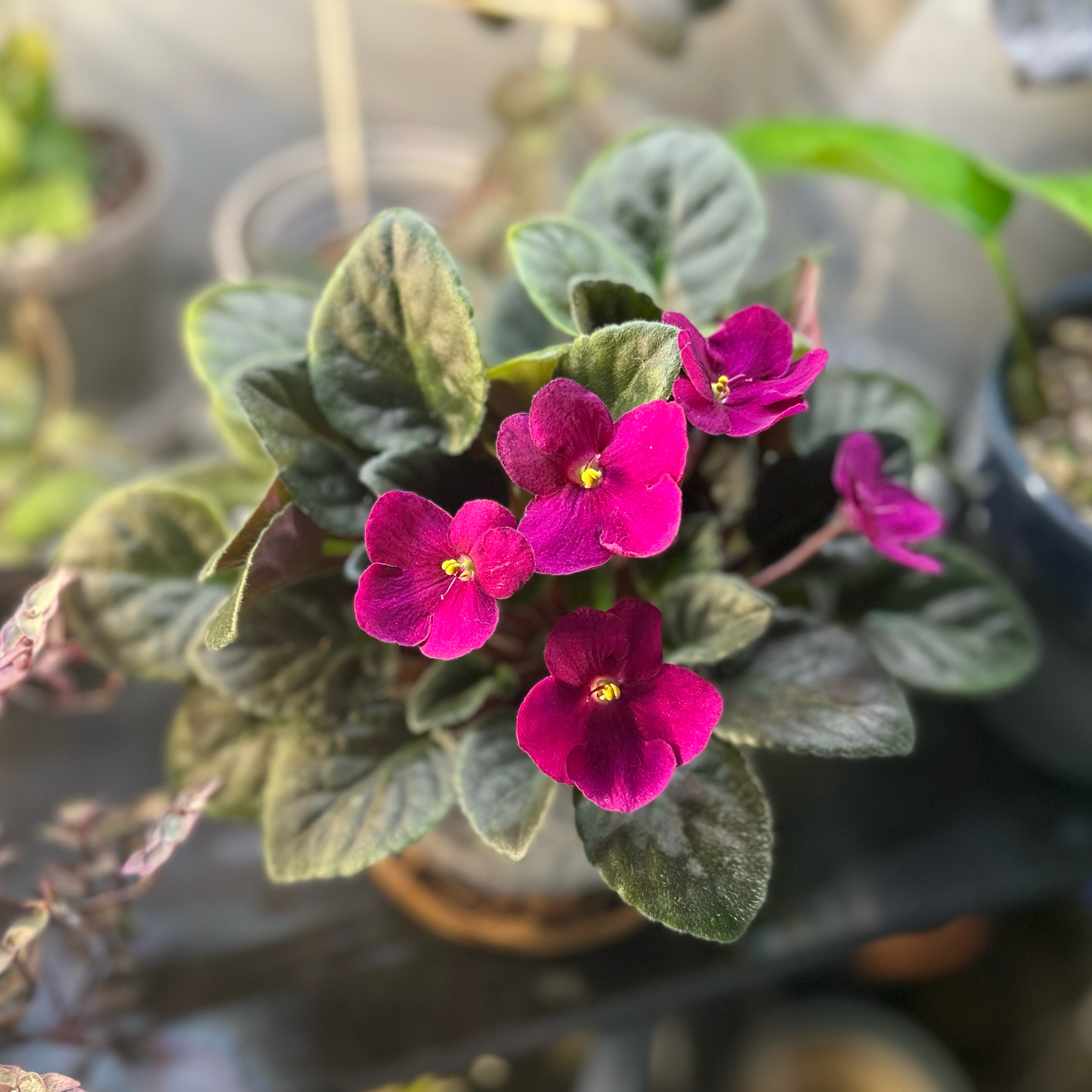
How to Water African Violet
Streptocarpus ionathus
Reviewed by Kiersten Rankel M.S.
Quick Answer
Water your African Violet every 5 to 8 days when the top of the soil feels dry to the touch. Stretch to 9 to 12 days in winter when blooms slow down.
Water from below if you can. African Violets hate cold water on their leaves and develop pale spots wherever water sits on the fuzzy foliage.

Stay on top of plant care
Get seasonal reminders for watering and fertilizing — personalized for your plants.
How Often and How Much to Water
Adjust the sliders below for your pot size, light, and setting. The numbers assume a peat-free moisture-retaining mix and a pot with drainage.
Setting
Every
9days
Use
1cup
Your Watering Rhythm Across the Year
Soil dries faster in the growing season, which varies by region. Slow down watering in the off-season to avoid overwatering.
Pacific
Mountain
Midwest
Northeast
Southeast
JFMAMJJASOND
Growing season
Growing season
9days
Resting season
3–4weeks
How to Water Your African Violet
Keep water off the leaves and the soil consistently damp but never soggy. African Violets are bloom-machines when the cadence is right and sulk fast when the crown sits in water or the soil swings dry.
1
Water from below by setting the pot in a saucer of room-temperature water for 20 to 30 minutes, then dump any leftover.
2
If watering from above, pour at the soil line and never on the crown or leaves. Cold water leaves pale spots wherever it touches the fuzzy foliage.
3
Use room-temperature or slightly tepid water. Cold tap water shocks the roots and can leave permanent leaf marks.
4
Empty the saucer after 30 minutes. Standing water at the base rots the crown.
Should You Water Your African Violet Today?
Always check before you water. African Violets crisp at the leaf edges going too dry and rot at the crown going too wet, so a quick finger-test decides for you.
Hold off
Leaves feel firm and look fuzzy and full
Crown sitting tight in the center
Top of soil still feels damp
Soil sits tight against the pot wall
Pot feels heavy when lifted
Ready for water
Leaves drooping over the rim
Older outer leaves dull and softer than usual
Top of soil dry to the touch
Visible gap between soil and pot wall
Pot feels light when lifted
If Something Looks Off
Underwater and overwater both end in droopy leaves and a stalled bloom cycle. The crown and the speed of decline are how you tell them apart.
Underwatered
Soil
Dry through the pot and pulled away from the wall
Leaves
Outer leaves limp and drooping over the pot rim
Pace
Slow decline that bounces back within hours of a bottom-water soak
Next steps
Set the pot in a saucer of room-temperature water for 30 minutes
Drain fully and move out of direct sun for a day while it recovers
Expect leaves to lift back up within 6 to 12 hours
Existing pale spots from past mistakes will not heal but new leaves come in clean. Wait for new growth before fertilizing
Overwatered
Soil
Stays dark and damp for over a week with fungus gnats hopping off the surface
Stem
Crown brown or mushy at the soil line
Leaves
Whole rosette collapsing inward with yellowing in the center
Pace
Sudden collapse that worsens even after you stop watering
Next steps
Stop watering and move to a bright airy spot
Slide the plant out and check the crown. Trim mushy roots and any rotted crown tissue back to firm white tissue
Repot in fresh peat-free moisture-retaining mix in a small pot, since African Violets bloom best slightly root-bound
Wait until the top of the soil is dry before the first watering
If the crown is mostly rot, take a healthy leaf cutting to start over since the parent plant rarely comes back
Got More Questions?
Why does my African Violet have pale spots on the leaves?
Pale or ringed spots on African Violet leaves come from cold water touching the foliage. The temperature shock damages the cells where the droplet sits.
Water from below when you can or pour very carefully at the soil line with room-temperature water. The marks do not heal, but new leaves grow in clean.
How do I water African Violets from below?
Set the pot in a saucer of tepid water and let it wick up through the drainage holes for 20 to 30 minutes. Touch the topsoil. If it feels damp, the rootball is fully soaked.
Dump any water still in the saucer when you are done. If you keep the plant in a self-watering pot, refill the reservoir only when it has been empty for a day.
Can I use tap water on my African Violet?
Plain tap water works for most homes if you let it sit out overnight to release chlorine and warm to room temperature. African Violets are less sensitive to fluoride than calatheas but heavily softened water harms them.
If you have softened water from a salt-based system, use filtered, distilled, or rainwater instead.
Why has my African Violet stopped blooming?
Most often the cause is too little light or a watering swing that stresses the plant. African Violets bloom continuously when they get bright indirect light, steady moisture, and regular feeding.
Move to a bright window or add a grow light, water on a consistent cadence, and feed every other watering with a bloom fertilizer at quarter strength. New buds usually appear within 4 to 6 weeks.
How long can my African Violet go without water?
About 5 to 7 days at most. African Violets are not drought tolerant and the rosette wilts dramatically once the soil dries through.
For a longer trip, water deeply before you leave and use a self-watering pot or a saucer with a small reserve. Pull the plant back from any window with strong afternoon sun.
Can I use a self-watering pot for my African Violet?
Yes. African Violets are one of the few houseplants that thrive in self-watering pots since they want consistent moisture and a small root zone.
Specialty African Violet pots with porous ceramic inner wells work very well. Refill the reservoir only when it has been empty for a day to prevent crown rot.
Stay on top of plant care
Get seasonal reminders for watering and fertilizing — personalized for your plants.
About This Article

Kiersten Rankel M.S.
Botanical Data Lead at Greg · Plant Scientist
Editorial Process
Watering guidance verified against Streptocarpus ionathus growth data from Greg's botanical database, cross-referenced with USDA hardiness zone data and published horticultural research.
2,571+ Greg users growing this plant
USDA hardiness zones 11a–12b