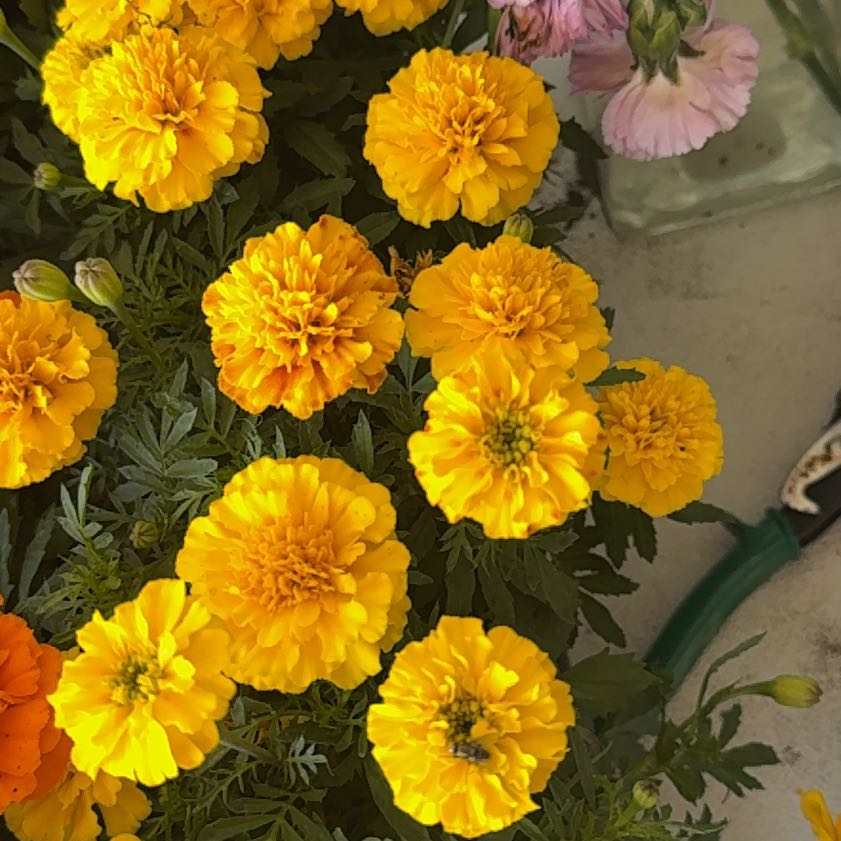
How to Water African Marigolds
Tagetes erecta
Reviewed by Kiersten Rankel M.S.
Quick Answer
Water your African marigolds every 3–5 days during peak summer bloom when the top inch of soil feels dry. Seedlings want lighter more frequent moisture, and the cadence stretches in cooler weather.
Marigolds are heavy bloomers with shallow roots. Keep water off the petals. They rot fast if they stay wet overnight.

Stay on top of plant care
Get seasonal reminders for watering and fertilizing — personalized for your plants.
How Often and How Much to Water
Adjust the sliders below for your pot size, light, and setting. The numbers assume rich well-draining soil with compost and a setup with drainage.
Setting
Every
9days
Use
1cup
Average across the active season. See the phase chart below for how this shifts at flowering, harvest, and other stages.
Your Watering Rhythm Across the Season
African Marigold is an annual, so its water needs shift dramatically across a single growing season rather than across the year. Match your cadence to the growth phase the plant is in.
Just sprouted
Keep barely moist with a fine mist until seedlings have two true leaves
Growing leaves
Every — days
Buds and flowers
Every — days
Late bloom and seed
Every — days
Last few days
Stop watering once you’re collecting seed and let the plant dry down
How to Water Your African Marigold
Soak the soil and keep water off the flowers. Marigolds bloom hardest when moisture is steady and the petals stay dry.
1
Pour at the soil line around the base of each plant. Avoid wetting the flowers since wet petals rot quickly and invite mold.
2
Keep pouring slowly until you see water start to pool briefly on the surface or run from the drainage holes. That confirms a deep watering, not a teasing splash.
3
Water in the morning so the soil drinks fully before the afternoon heat and any splashed leaves dry by night.
4
Mulch a couple of inches around the base in midsummer to even out moisture and reduce how often you need to water.
Should You Water Your African Marigold Today?
Always check before you pour. Marigolds bloom hardest with steady moisture but rot at the soil line if water sits, and powdery mildew loves leaves that stay wet overnight.
Hold off
Leaves feel firm and look bright green
New buds opening on schedule
Top inch of soil still feels damp
Soil sits tight against the pot wall or stems
Container or bed feels heavy if you can lift or probe it
Ready for water
Top inch of soil dry and crumbly
Lower leaves drooping by midmorning
New flowers smaller than the earlier ones
Visible gap between soil and pot wall if container-grown
Pot feels noticeably light
If Something Looks Off
Wilting marigolds can mean either dry or rotted at the base. The soil tells the real story, since both states can drop the whole plant overnight.
Underwatered
Soil
Bone-dry and crumbly through the top inch
Leaves
Whole plant droops in the afternoon and recovers at dusk
Pace
Slow decline that perks up within hours of a deep soak
Next steps
Soak the soil deeply at the base of the plants, slowly enough that water sinks rather than running off
Mulch around the base if the bed dries out fast, especially in midsummer heat
Expect leaves to lift back up by the next morning
Wait for new buds before resuming any fertilizer
Overwatered
Soil
Stays dark and damp for days with a sour or musty smell
Stem
Soft mushy or blackening at the soil line
Leaves
Yellowing and dropping with white powdery patches on the surface
Pace
Sudden collapse that worsens even after you stop watering
Next steps
Stop watering for a week or longer until the top 2 inches of soil dry out
Pull plants spaced too tightly to improve airflow if you see powdery mildew or rot at the base
If container-grown, repot in fresh well-draining mix in a clean pot with drainage holes
Wait until the top inch of soil is dry before the next watering
Pull off any leaves that have fully yellowed or detached
Got More Questions?
Why do my marigold flowers turn brown and mushy?
Wet flowers in summer humidity rot from the inside out. The pom-pom flower head holds water and stays damp long enough for fungus to set in.
Water at the soil line, not over the plants. Trim off rotted flower heads as you spot them so they don’t spread mold to neighbors.
Can I water my marigolds in the heat of the day?
Try not to. Watering in afternoon heat wastes water to evaporation and can shock the roots if the water is much cooler than the soil.
Water early in the morning so the plants drink up before peak heat and any splashed leaves dry by evening.
How often should I water marigolds in containers?
Container marigolds in summer can want water every 1 to 2 days at the height of the bloom. The shallow root system and the pot’s small soil volume both speed up dry-down.
Finger-test daily during peak heat. A wilted marigold by midday means tomorrow’s watering needs to come sooner.
How long can I leave my marigolds while I’m on vacation?
About 3 to 4 days for containers in full summer sun, longer in cooler weather. In-ground beds buffer better and tolerate a week with a deep soak before you leave.
Mulch around the base, deep-soak the morning you leave, and ask a neighbor to check containers if you’re gone more than 4 days.
Why are my marigold leaves yellowing from the bottom?
Lower-leaf yellowing usually means the soil has been too wet too long, especially in heavy clay or close-spaced beds with poor airflow.
Let the top 2 inches dry between waterings, pull weeds and crowded neighbors, and check that water isn’t pooling around the stems after rain.
Should I water more when marigolds are flowering?
Yes, modestly. Heavy bloom uses water faster than leafy growth, and dry-then-flooded swings during flowering will drop buds before they open.
Finger-test the top inch every day or two during peak bloom and water as soon as it’s dry. The plant will bloom right through summer if moisture stays steady.
Stay on top of plant care
Get seasonal reminders for watering and fertilizing — personalized for your plants.
About This Article

Kiersten Rankel M.S.
Botanical Data Lead at Greg · Plant Scientist
Editorial Process
Watering guidance verified against Tagetes erecta growth data from Greg's botanical database, cross-referenced with USDA hardiness zone data and published horticultural research.
6,424+ Greg users growing this plant
USDA hardiness zones 2a–11b