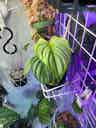
Hairy-Fruited Poison Ivy
Taxonomy

Toxicodendron trichocarpum
Toxicodendron
Anacardiaceae
Sapindales

How to care for Hairy-Fruited Poison Ivy
How often to water your Hairy-Fruited Poison Ivy

every 9
Hairy-Fruited Poison Ivy needs 0.5 cups of water every 9 when it doesn’t get direct sunlight and is potted in a 5" pot.
Use our water calculator to personalize watering recommendations to your environment or download Greg for more advanced recommendations for all of your plants.
Water 0.5 cups every
9
Finding light for Hairy-Fruited Poison Ivy in your home

a window
Hairy-Fruited Poison Ivy love being close to bright, sunny windows 😎.
Place it less than 1ft from a south-facing window to maximize the potential for growth.
Hairy-Fruited Poison Ivy does not tolerate low-light 🚫.
Select your region to see how the current weather in your area affects the placement of Hairy-Fruited Poison Ivy in your home 🏡.
How to fertilize Hairy-Fruited Poison Ivy

Most potting soils come with ample nutrients which plants use to produce new growth.
By the time your plant has depleted the nutrients in its soil it’s likely grown enough to need a larger pot anyway.
To replenish this plant's nutrients, repot your Hairy-Fruited Poison Ivy after it doubles in size or once a year—whichever comes first.
-
Good morning everyone. I hope your plants and trees are doing well and that you are too. Here is one of my Japanese wax tree bonsai showing its autumn colours. It has a lovely gradient that moves from green into red, and once it goes bare and shows those skinny trunks, it somehow gets even more charming. Anyone else’s trees or plants showing some awesome autumn foliage? #bonsai #HappyPlants #PlantsMakePeopleHappy #OutdoorGrowing
-
Just realized I have both in my back yard, poison Ivy and Poison oak. What is the best way to get rid of these. I am highly allergic. Plus I have two dogs can they bring it into the house? TY

Care Summary for Hairy-Fruited Poison Ivy
Hairy-Fruited Poison Ivy
 Greg recommends:
 Water
Water
0.5 cups every 9 days
 Placement
< 1ft from a window
 Nutrients
Repot after 2x growth
Based on the 4” pot your plant is in, and that it doesn’t get direct sunlight.
 Trending in your area









 Similar to Hairy-Fruited Poison Ivy
✨ Discover rare plants

Hoya fitchii

Large Leaf Elephant B…

Fernleaf Lavendar

Eden Climbing Rose
Stanhopea tigrina

Cleistocactus icosago…

Peperomia 'Harmony's …
Graptopetalum 'Marqui…

Scindapsus pictus 'Si…

Echeveria Arrow

Crassula 'Calico Kitt…

Betel

Treasure Flower

Ruby Ball

Sedeveria 'Blue Elf'

Rhipsalis clavata