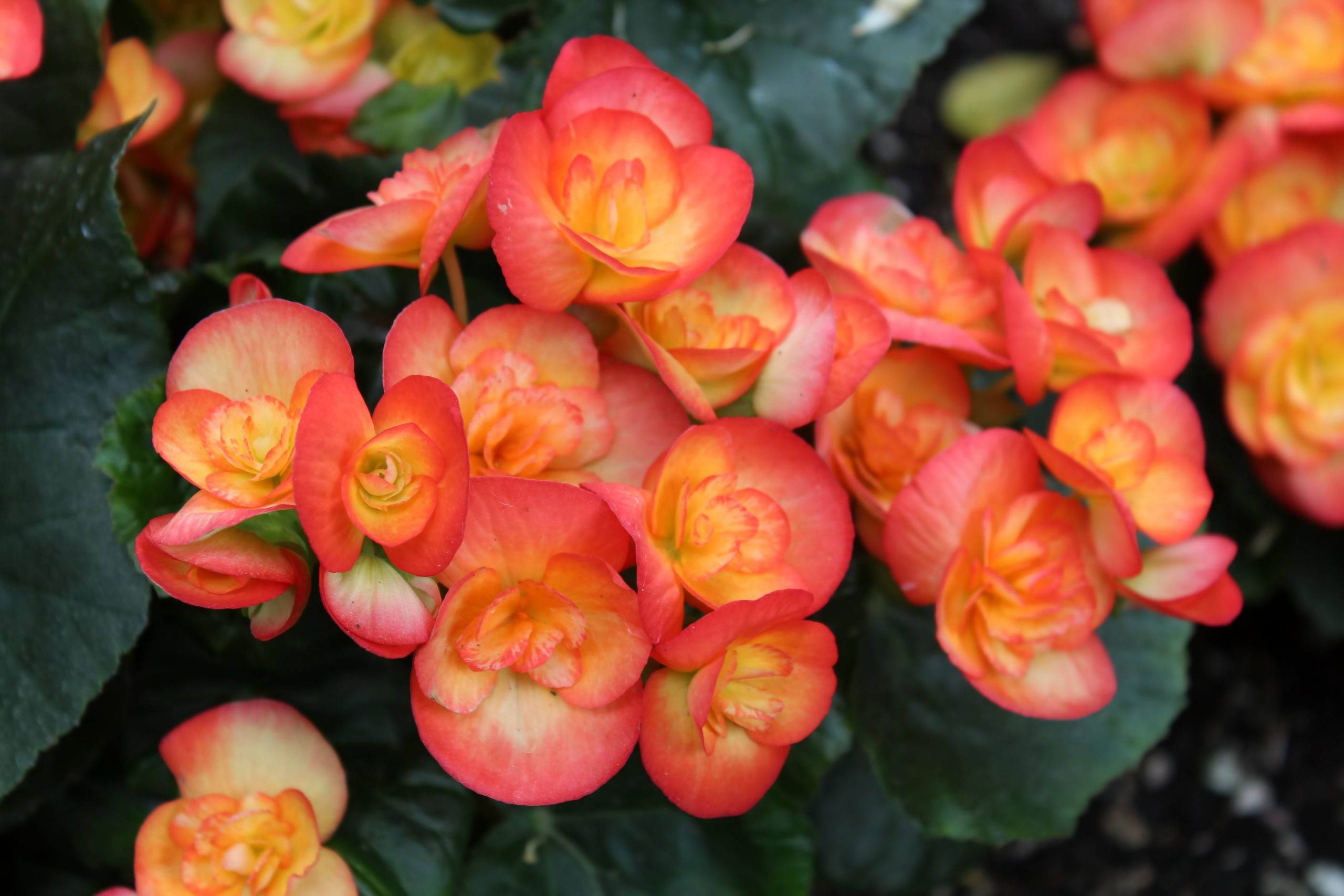
Tuberous Begonia does best in a light, fluffy mix that holds some moisture without staying soggy. Combine potting soil with perlite and peat moss or coco coir for the right balance. Aim for a slightly acidic pH between 5.5 and 6.2.
What Type of Soil Does a Tuberous Begonia Need?
Tuberous Begonia stores energy in an underground tuber that rots easily in waterlogged soil. It needs a mix that stays lightly moist between waterings but lets excess water drain away quickly, keeping air flowing around the roots.
Stays wet
Damp
Waterloggedwet & suffocating
Damp & Airymoisture + oxygen
Compacteddense & dry
Gritty & Fastdrains in seconds
Tuberous Begonia
Regular Potting Soil
Airy
Dries quickly
Tuberous Begonia has a fleshy tuber that sits just below the soil surface. If the mix holds too much water, the tuber softens and rots. A loose, airy blend gives the roots oxygen while still holding enough moisture to keep the plant happy.
Standard potting soil on its own packs down too tightly for this plant. Adding perlite opens up air pockets, and peat moss or coco coir holds moisture evenly without becoming waterlogged. The result is a mix that feels damp to the touch but never heavy or muddy.
In nature, these begonias grow in the loose, humus-rich leaf litter of Andean forests. Mimicking that spongy, well-aerated ground layer is the goal when choosing your soil mix.
What Soil Mix Should I Use for My Tuberous Begonia?
Recommended Mix
Potting soil40%
Perlite25%
Peat moss25%
Horticultural charcoal10%
Stay on top of plant care
Get seasonal reminders for watering and fertilizing — personalized for your plants.
Tuberous Begonia prefers slightly acidic soil in the 5.5–6.2 range. Peat moss in the mix naturally lowers pH, which is one reason it pairs so well with begonias. You can check your soil with a simple pH meter or test strips from any garden center.
If the pH climbs above 6.5, you may notice yellowing between the leaf veins, a sign the plant can't absorb iron properly. Persistently alkaline soil can stunt growth and reduce flowering.
Ideal pH Range
Ideal range5.5–6.2
Tolerable maximum6.5
To lower pHMix in peat moss or elemental sulfur
To raise pHAdd a small amount of dolomite lime
When Should I Replace My Tuberous Begonia's Soil?
Refresh the soil each spring when you bring tubers out of dormancy. This is the natural time to repot, since the plant is starting fresh growth anyway. Peat moss and potting soil break down over one growing season, losing their airy structure.
If your Tuberous Begonia stays in the same pot year-round in a frost-free climate, replace the soil every 12 months. A moderate grower, it won't exhaust nutrients as fast as some plants, but compacted soil raises the risk of tuber rot.
Signs Your Soil Needs Replacing
Water pools on the soil surface instead of soaking in
The mix feels dense and heavy when wet
Tuber feels soft or shows signs of rot
New spring growth is weak or slow to emerge
How Should I Amend Garden Soil for Tuberous Begonias?
If you're planting Tuberous Begonias outdoors in a warm climate, their tubers need soil that is light, humus-rich, and drains freely. Sitting in wet ground even briefly can cause the tuber to rot, so drainage is the top priority.
In clay soil, dig in compost, fine bark, and perlite to create a loose, crumbly texture that water passes through quickly. Planting the tubers slightly above grade in a raised bed gives extra insurance against standing water. For sandy soil, compost and leaf mold will help the ground hold just enough moisture to keep the roots happy without staying soggy. Choose a spot with bright indirect light or dappled shade, since these plants scorch in hot direct sun.
Got More Questions?
Can I use regular potting soil for Tuberous Begonia?
Regular potting soil holds too much moisture on its own and can cause tuber rot. Mix it with perlite and peat moss so water drains freely while the roots still get consistent moisture.
Do I need to sterilize soil before planting Tuberous Begonia?
It's not required if you're using fresh, bagged potting mix. If you're reusing soil from a pot where a plant had disease, sterilize it in the oven at 180°F for 30 minutes before planting.
Should I add fertilizer to the soil mix when potting?
Skip fertilizer at planting time. The tuber has stored energy to fuel early growth. Wait until you see active leaves, then feed with a diluted liquid fertilizer every two to three weeks.
Can I use coco coir instead of peat moss?
Yes. Coco coir works as a direct substitute for peat moss in this mix. It holds moisture well and stays airy, though it's closer to neutral pH, so you may need to adjust acidity separately.
How deep should I plant the tuber in the soil?
Place the tuber hollow-side up with just half an inch of soil on top. Burying it too deep traps moisture around the crown and increases the chance of rot.
Stay on top of plant care
Get seasonal reminders for watering and fertilizing — personalized for your plants.
Kiersten Rankel holds an M.S. in Ecology & Evolutionary Biology from Tulane University. A certified Louisiana Master Naturalist, she has over a decade of experience in science communication, with research spanning corals, cypress trees, marsh grasses, and more. At Greg, she curates species data and verifies care recommendations against botanical research.
See Kiersten Rankel's full background on LinkedIn.
Editorial Process
Soil recommendations verified against Begonia x tuberhybrida growth data from Greg's botanical database, cross-referenced with USDA hardiness zone data and published horticultural research.