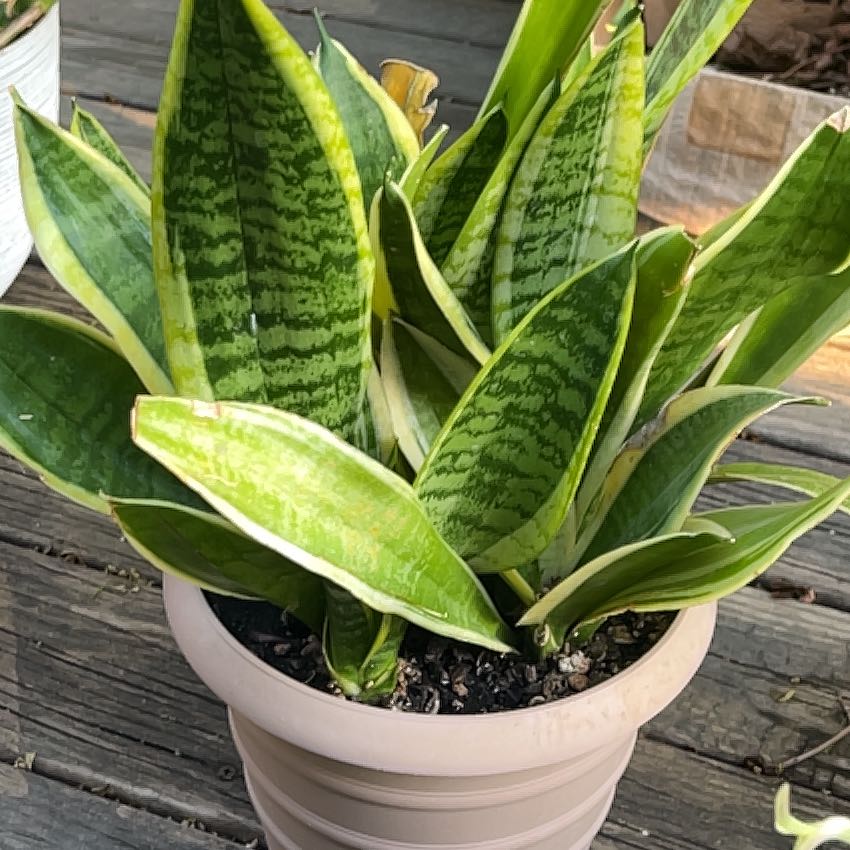
Snake Plant

Best Soil for Snake Plant

Dracaena trifasciata
Reviewed by Kiersten Rankel M.S.
Quick Answer
Snake plants need fast-draining, gritty soil that dries out quickly between waterings. A cactus and succulent mix works perfectly, or amend regular potting soil with 50% perlite or coarse sand. Aim for a slightly acidic to neutral pH of 6.0 to 7.0.

What Soil Does a Snake Plant Need?

Snake plants are native to dry, rocky regions of West Africa and store water in their thick leaves, so they need soil that drains fast and stays dry. Dense or moisture-retaining mixes lead straight to root rot, which is the most common way to lose a snake plant.

Stays wet
Damp
Waterlogged wet & suffocating
Damp & Airy moisture + oxygen
Compacted dense & dry
Gritty & Fast drains in seconds
Snake Plant
Regular Potting Soil
Airy
Dries quickly

Snake plants have thick, fleshy roots that rot quickly when they sit in wet soil. Standard potting soil holds too much moisture on its own, so the key is cutting it with something coarse and inorganic. A 50/50 blend of potting soil and perlite gives you a mix that drains in seconds and lets the roots breathe between waterings.

You can also use a pre-made cactus and succulent mix straight from the bag, since those are already formulated with drainage in mind. Some growers go even further with snake plants and use 70% inorganic material, especially if their home is humid or they know they tend to overwater.

Avoid anything marketed as moisture-control or water-retaining potting soil. Those mixes are designed for plants like ferns that want consistent moisture, and they will cause problems for a snake plant within a season.

What Soil Mix Should I Use for My Snake Plant?

Recommended Mix
Cactus and succulent potting mix 50%
Perlite 35%
Coarse sand 15%
Stay on top of plant care
Get seasonal reminders for watering and fertilizing โ€” personalized for your plants.
Try Greg Free

What pH Does My Snake Plant Need?

Snake plants prefer a slightly acidic to neutral pH between 6.0 and 7.0. This range keeps nutrients like iron and nitrogen available in the soil. You can check your soil's pH with an inexpensive meter or test strip from any garden center.

If the pH drifts below 5.5, you may notice yellowing lower leaves and slowed growth as nutrient availability drops off. At the high end, above 7.5, leaves can develop pale, washed-out patches as iron becomes locked in the soil. Both issues are uncommon in snake plants unless you're using water with an unusual mineral content or fertilizing heavily.

Ideal pH Range
Ideal range 6.0โ€“7.0
Tolerable range 5.5โ€“7.5
To lower pH Mix in peat moss or sulfur
To raise pH Add a pinch of garden lime

When Should I Replace My Snake Plant's Soil?

Snake plants are slow to moderate growers, so their soil doesn't need refreshing as often as fast-growing tropicals. Plan on changing the soil every two to three years, or whenever the plant gets repotted. Over time, even a gritty cactus mix breaks down and compacts, reducing the drainage that snake plants depend on.

The best time to refresh the soil is in spring when the plant is entering its active growing season. Because snake plants tolerate being root-bound, you can often refresh the soil at the same pot size rather than sizing up.

Signs Your Soil Needs Replacing
Water pools on the surface instead of draining immediately
Soil stays wet for more than a week after watering
Roots are pushing out of the drainage holes
Leaves are yellowing at the base despite correct watering
Soil has pulled away from pot edges and looks dense or crusty

What Soil Amendments Does a Snake Plant Need in the Ground?

If you are planting a Snake Plant outdoors in a warm climate, the most important thing is making sure water does not sit around the roots. These plants store water in their thick leaves and rhizomes, so soggy soil leads to rot quickly.

Amend clay soil heavily with coarse sand, perlite, and gravel to create fast drainage. Sandy soil works naturally well for Snake Plants, though a small scoop of compost will give them a nutrient boost without holding excess moisture. Choose a spot where rainwater drains away and the soil dries out between waterings.

Got More Questions?

Can I use regular potting soil for my snake plant?
Plain potting soil holds too much moisture and will likely cause root rot. Always amend it with at least 30 to 50 percent perlite or coarse sand, or just use a cactus mix straight from the bag.
Do I need to sterilize soil for a snake plant?
No, sterilization is not necessary for snake plants. A fresh bag of commercial cactus mix is clean enough. If you're reusing old soil, replace it rather than sterilizing it.
How do I know if my snake plant's soil is too wet?
Push your finger two inches into the soil. If it feels damp at all, wait. Snake plant soil should be completely dry before you water again. Mushy or soft leaves are a sign root rot may already be underway.
Can I use sand from the garden or beach in my snake plant mix?
Avoid beach sand, which contains salt that damages roots. Garden sand can carry pathogens. Use horticultural or builder's sand from a garden center instead.
Does the pot type affect which soil I should use?
Yes. Terracotta pots wick moisture away faster, so a slightly less porous mix is fine. In plastic or glazed ceramic pots that hold more moisture, lean toward a higher perlite ratio to compensate.
Stay on top of plant care
Get seasonal reminders for watering and fertilizing โ€” personalized for your plants.
Try Greg Free

About This Article

Kiersten Rankel M.S.
Botanical Data Lead at Greg ยท Plant Scientist
About the Author
Kiersten Rankel holds an M.S. in Ecology & Evolutionary Biology from Tulane University. A certified Louisiana Master Naturalist, she has over a decade of experience in science communication, with research spanning corals, cypress trees, marsh grasses, and more. At Greg, she curates species data and verifies care recommendations against botanical research.
See Kiersten Rankel's full background on LinkedIn.
Editorial Process
Soil recommendations verified against Dracaena trifasciata growth data from Greg's botanical database, cross-referenced with USDA hardiness zone data and published horticultural research.
122,345+ Greg users growing this plant
USDA hardiness zones 9aโ€“11b