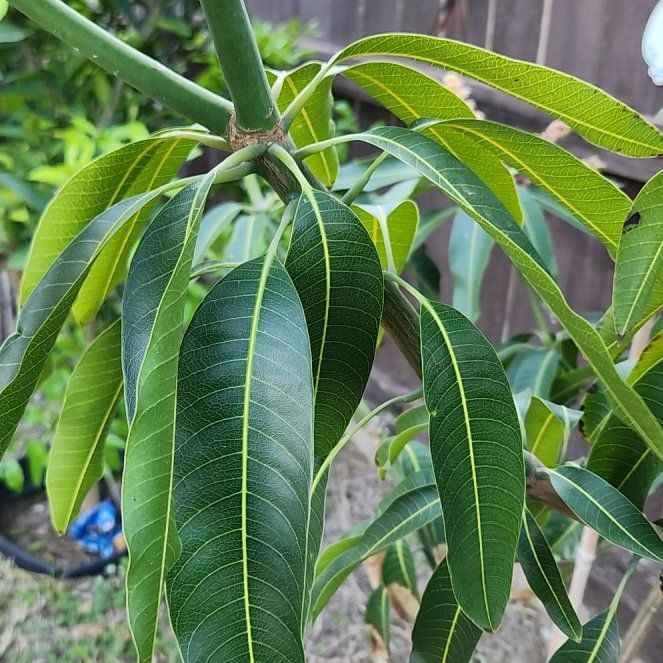
Best Soil for Mango
What Kind of Soil Does a Mango Tree Need?
Mango trees originate in South and Southeast Asia, where they evolved in deep, well-aerated alluvial soils with distinct wet and dry seasons. Their extensive taproot system needs room to grow downward, and they are adapted to soils that dry out between rains rather than staying continuously moist. Standing water, even briefly, stresses the roots and invites disease.
In the ground, mangoes are remarkably adaptable, growing in sandy loam, red laterite soils, and even shallow rocky ground, as long as drainage is good and the soil is reasonably deep. What they cannot tolerate is waterlogging. A location where rainwater ponds after a storm is not suitable, and raised planting berms are a practical solution in areas with slow-draining ground.
For container-grown mango trees, which are popular in regions outside their hardiness range, a deep, well-draining potting mix is essential. The container must have large drainage holes and the mix should be opened up with coarse perlite or grit. Young trees in pots are more vulnerable to overwatering than mature trees in the ground because the root system has less soil volume to drain into.
Organic matter is beneficial for mango trees because it improves water-holding capacity in sandy soils and drainage in clay soils. Compost incorporated at planting time and used as an annual topdress supports the microbial activity that makes nutrients available to the roots.
What Soil Mix Should I Use for a Container Mango Tree?

What pH Does My Mango Tree Need?
Mango trees tolerate a fairly wide pH range, from about 5.5 to 7.0, with 6.0 to 6.5 being the sweet spot. Within this range, the iron, zinc, and manganese that mangoes need for flowering and fruit production stay accessible. Test soil pH with a meter or test strips before amending, especially if your tap water is hard or your soil has a history of high pH.
When pH climbs above 7.5, mango trees show typical signs of iron and zinc deficiency: young leaves emerge pale or yellowish, and fruit set is reduced. Very acidic soils below 5.0 can cause aluminum toxicity that stunts root growth. Mango trees in alkaline areas sometimes benefit from regular foliar iron applications since soil pH adjustment in mature tree plantings is slow.
When Should I Refresh a Mango Tree's Soil?
Mature in-ground mango trees do not need soil replacement, but an annual topdress of 2 to 4 inches of compost around the drip line (the outer edge of the canopy) replenishes organic matter and feeds the feeder roots that spread wide from the trunk. Keep mulch or compost a few inches away from the trunk to prevent collar rot.
Container mango trees need repotting every 2 to 3 years as the potting mix breaks down and root space becomes limited. Use the largest practical container at each repotting to give the taproot room to grow. The best time to repot is in late winter or early spring before the flush of new growth begins.
How Should I Amend Garden Soil for a Mango Tree?
Mango trees develop deep taproots and wide-spreading lateral roots that need well-drained soil to thrive. They are surprisingly adaptable to different soil types but will not tolerate waterlogging, which leads to root diseases quickly.
In clay soil, dig a wide planting hole and work in coarse compost, bark, and grit to improve drainage around the root zone. Mounding the planting area helps keep the trunk base dry during heavy rains. Sandy soil is actually fine for mangoes as long as you add compost to build up nutrient levels and moisture retention for the first few years. Plant in full sun in the warmest part of your yard, and avoid low spots where water collects after storms.
Got More Questions?
About This Article
