Best Soil for Elkhorn Fern
What Growing Medium Does an Elkhorn Fern Need?
Elkhorn ferns are epiphytic plants that anchor themselves to tree trunks and branches in their native Australian and Southeast Asian forests. Their roots are adapted to grip bark, absorb quick bursts of moisture, and dry out rapidly between rain events. They need maximum airflow around their roots , conventional potting soil recreates none of these conditions.
Because elkhorn ferns are epiphytes, the conventional idea of 'soil' doesn't really apply to them. In the wild, their root systems nestle into crevices in bark, old leaf litter caught in tree crotches, and decomposing organic material that has dried almost completely between rain events. Replicating this means prioritizing structure and drainage over moisture retention.
Mounting is the most species-appropriate approach. Attach the plant to a piece of untreated wood (cedar, Douglas fir, or cork bark work well) with a pad of damp long-fiber sphagnum moss behind the shield fronds. The sphagnum catches moisture and releases it slowly, while the wood and open air allow rapid drying. Mounted plants are easy to water by dunking the whole board in a bucket or holding it under a shower.
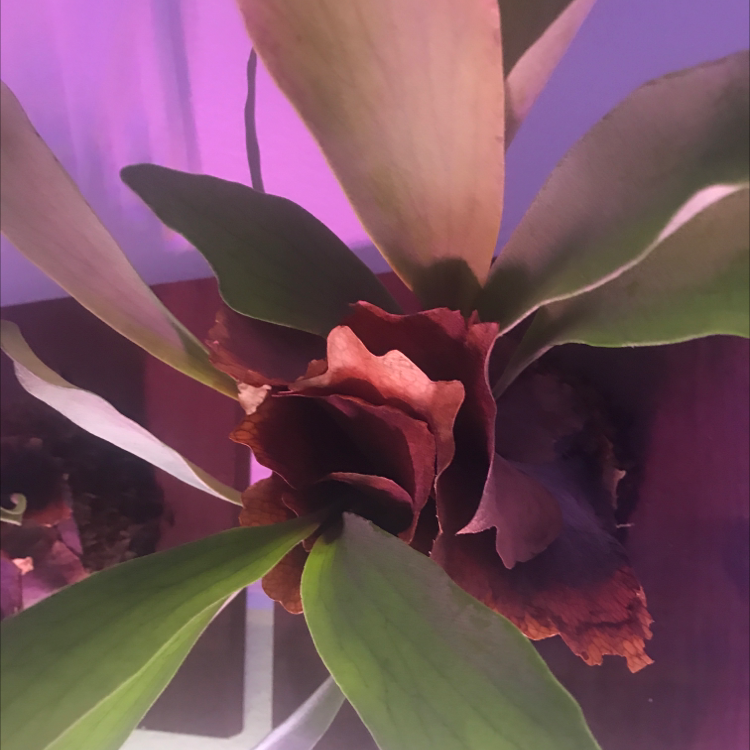
If mounting isn't practical, potting in a very chunky mix works as a second option. Orchid bark chunks, perlite, and a small amount of sphagnum create an open structure with adequate air circulation. Avoid any mix that feels dense or damp to the touch after watering. The worst thing you can do to an elkhorn fern is bury it in regular potting soil , the roots will drown and rot within weeks. The brown shield fronds at the base of the plant are not dead; they are the plant's anchor and water-collection structures, so never remove them.
What Growing Mix Should I Use for My Elkhorn Fern?

What pH Does My Elkhorn Fern Need?
Elkhorn ferns prefer a slightly acidic pH in the range of 5.5–6.5, which matches the naturally acidic conditions of decomposing bark and leaf litter they encounter in the wild. You can check the pH of your mounting medium or potting mix with an inexpensive pH meter. For mounted plants, check the sphagnum pad periodically , mineral buildup from tap water can gradually shift the pH higher.
When pH drifts above 7.0, fronds may develop yellowing or browning at the tips and new fronds can come in pale rather than a healthy deep green. Below 5.0, the medium becomes too acidic and the fine absorbing roots deteriorate. Using rainwater or distilled water for your elkhorn fern is the easiest way to prevent pH drift, especially for mounted specimens where you can't easily amend the medium.
When Should I Replace My Elkhorn Fern's Growing Medium?
For mounted elkhorn ferns, the sphagnum moss pad behind the shield fronds should be refreshed every 1–2 years, or when you notice it has become dark, compacted, and no longer holds its springy structure. As it decomposes, it shifts from a moisture-regulating pad to a soggy mat that keeps the base of the plant perpetually damp.
For potted specimens, refresh the chunky bark mix every 2 years. Orchid bark breaks down over time into finer particles that compact and drain less effectively. Refresh in spring when the plant is entering its active growing period. Unlike most houseplants, elkhorn ferns are quite slow growers and you may not need to size up the pot at each refresh , the same container is often fine for several years.
How Do I Prepare Garden Soil for an Elkhorn Fern?
Elkhorn Ferns are epiphytes in the wild, growing on tree trunks rather than in soil. When planting one in the ground, the goal is to recreate that airy, fast-draining environment so the roots never sit in dense, wet earth.
If you are planting directly in garden soil, replace or heavily amend with coarse bark, coconut coir, and perlite. Clay soil will need the most work since compacted ground will suffocate the roots. For sandy ground, mix in bark and compost to give it something to grip while maintaining fast drainage. A shaded spot at the base of a tree is ideal.
Got More Questions?
About This Article
