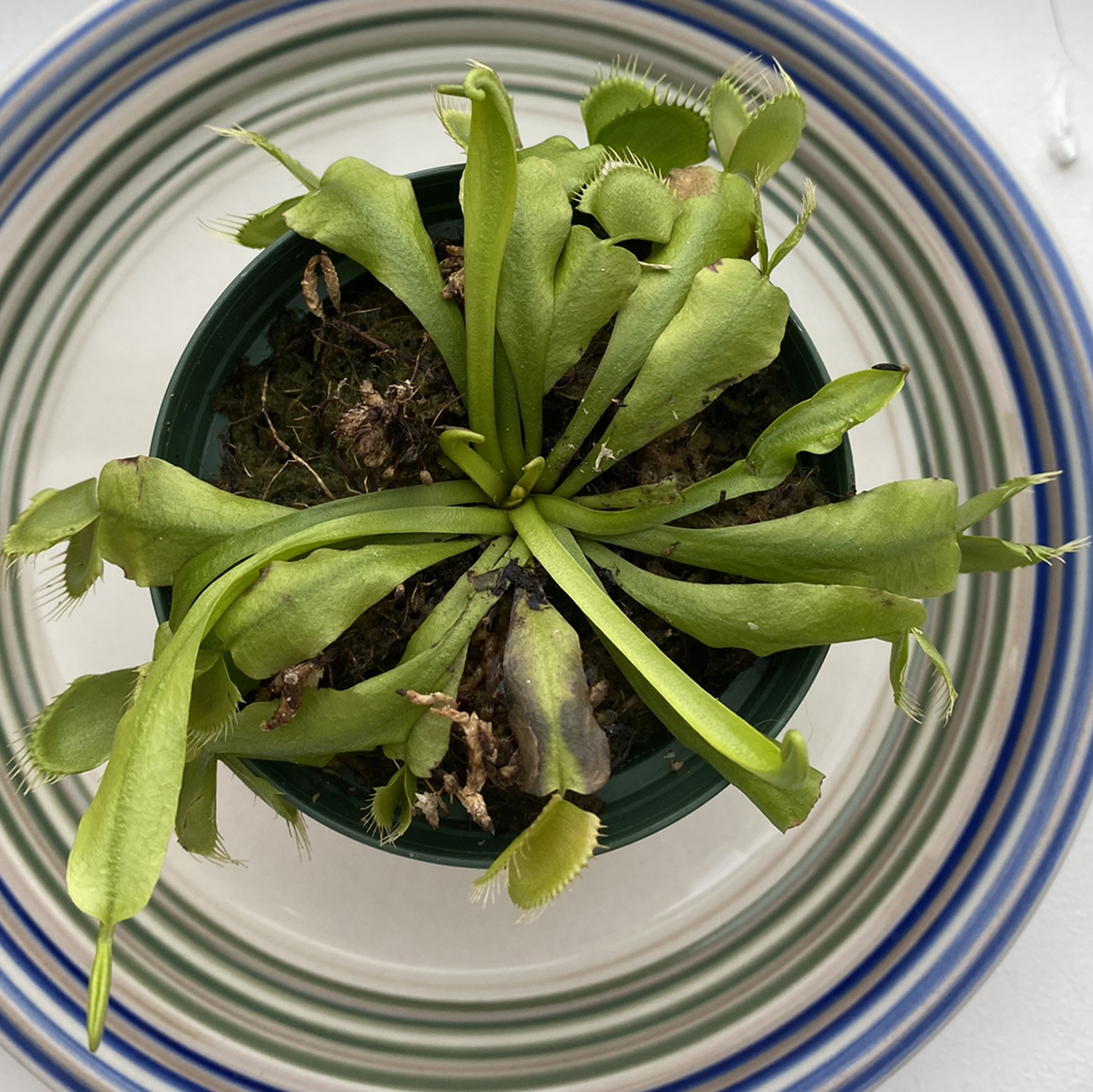
Best Soil for Venus Fly Trap
What Soil Does a Venus Fly Trap Need?
Venus fly traps are native to the coastal bogs of North and South Carolina, where the soil is permanently wet, highly acidic, and nearly devoid of nutrients. They evolved carnivory specifically because their native soil has almost no nitrogen, so they need a bog-like medium that stays damp and stays poor.
Venus fly traps require the most counterintuitive soil of any houseplant: the worse the soil nutrition, the better. Regular potting soil, compost, fertilizer, or any nutrient-rich amendment will burn the roots and kill the plant within weeks. The roots are adapted for pure, nutrient-free water and acidic conditions and can't tolerate the mineral and fertilizer concentrations found in normal soil products.
The standard mix is a 50/50 blend of pure sphagnum peat moss and perlite. The peat provides the acidic, moisture-retentive medium the plant needs, and the perlite keeps the mix from becoming completely anaerobic. Some growers use pure sphagnum peat alone, which also works. Long-fiber sphagnum moss (not peat) can be used as an alternative or supplement for top dressing.
The water you use matters as much as the soil. Tap water contains dissolved minerals that build up in this nutrient-free mix and poison the roots over time. Use only distilled water, rainwater, or reverse-osmosis water. Many growers keep the plant in a shallow tray with a centimeter or two of water at all times, mimicking the bog habitat. This is one of the few plants where sitting in a water tray is recommended rather than harmful.
What Soil Mix Should I Use for My Venus Fly Trap?

What pH Does My Venus Fly Trap Need?
Venus fly traps need highly acidic soil with a pH of 3.5 to 5.0. This is far more acidic than most plants tolerate. Pure sphagnum peat naturally falls in this range, which is why it's the go-to base for carnivorous plants. You can verify your mix with pH test strips before planting. If you use a meter, rinse it well afterward since the acidic conditions can affect calibration.
If the pH rises above 5.5, the plant may lose its ability to form functional traps and the leaves will start to blacken at the tips. This usually happens when tap water is used, since its mineral content gradually neutralizes the acid in the peat. The fix is switching to distilled water and refreshing the peat-perlite mix annually.
When Should I Replace My Venus Fly Trap's Soil?
Refresh the peat-perlite mix every one to two years. Peat breaks down over time and becomes less effective at maintaining the right acidity and aeration. When old peat turns dark brown or black and feels slimy rather than fibrous, it's time to replace it.
The best time to repot is in late winter or very early spring, just before the plant emerges from its winter dormancy. Venus fly traps need a dormant period of around three to four months with cooler temperatures and less light, and repotting during this window minimizes stress. Always use fresh peat and perlite, never reused mix.
How Do I Amend Garden Soil for a Venus Fly Trap?
Venus Fly Traps have very specific soil needs that are different from almost any other plant. Their roots evolved in nutrient-poor, acidic bogs, and regular garden soil with its minerals and compost will actually harm them.
Dig out your existing garden soil entirely and replace it with a mix of peat moss and coarse sand or perlite. Do not add compost, fertilizer, or any enrichment. The planting area should stay consistently wet, almost boggy. If your garden naturally drains well, consider sinking a plastic-lined bed into the ground to hold moisture.
Got More Questions?
About This Article
