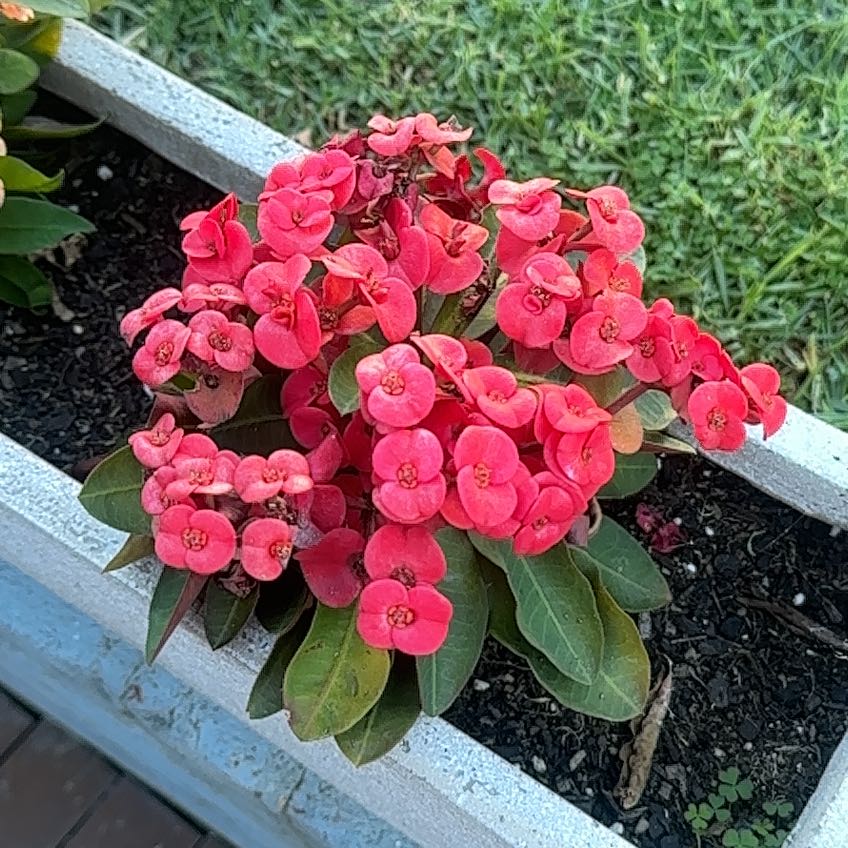
Best Soil for Crown of Thorns
What Soil Does Crown of Thorns Need?
Crown of thorns is native to the dry, rocky coastal areas of Madagascar, where it grows in poor, well-draining soil under intense sun. As a succulent Euphorbia, it stores water in its thick stems and must have soil that dries out quickly and completely between waterings to prevent root and stem rot.
Crown of thorns shares its growing requirements with desert cacti and succulents, even though it's technically a Euphorbia. The roots are adapted to dry, gritty conditions and will rot in soil that stays moist for more than a few days. Standard potting mix holds too much water and should be cut with coarser, faster-draining material.
A cactus and succulent potting mix is the best base. You can use it straight or improve it further by adding extra perlite to bring inorganic material up to around 50 percent of the mix. Coarse sand or pumice are also good additions. The finished mix should drain immediately when watered, with no standing water visible in the bottom of the saucer more than a few minutes after watering.
One note specific to crown of thorns: the plant produces a milky latex sap when cut or repotted that can irritate skin and eyes. Wear gloves when working with the roots and soil, and be careful not to get sap on your face. The latex doesn't affect how you handle the soil, but it's worth mentioning at repotting time.
What Soil Mix Should I Use for My Crown of Thorns?

What pH Does My Crown of Thorns Need?
Crown of thorns grows well in slightly acidic to neutral soil, with a pH of 6.0 to 7.0. This range keeps nutrients available and suits the gritty, lean soil environment it prefers. Most commercial cactus mixes fall naturally in this range. Check with a pH meter or test strip if you're uncertain, especially if you're using a homemade mix with unusual components.
If pH creeps above 7.5, you may notice pale leaves and slowed growth as nutrient uptake becomes less efficient. Below 5.5, the acidic conditions can stress the roots of this drought-adapted plant, which is not used to highly acidic soil in nature. Both extremes are uncommon with a standard cactus mix and neutral tap water.
When Should I Replace My Crown of Thorns' Soil?
Crown of thorns is a slow to moderate grower, and because the mix is mostly mineral, it doesn't break down as quickly as an organic potting mix. Plan to refresh the soil when repotting, which is typically every two to three years. Because the plant is drought-tolerant and somewhat root-bound tolerant, there's no need to rush repotting just for the soil.
The best time to repot and refresh is in spring, just before the plant enters its active growing phase. Always let the new pot and mix dry completely before the first post-repotting watering, which helps the roots settle and reduces the chance of root rot at cut root ends.
What Soil Amendments Does Crown of Thorns Need in the Ground?
Crown of Thorns is native to Madagascar and its roots are built for dry, well-drained ground. Sitting in soggy soil is the fastest way to lose this plant, so drainage is your top priority when preparing a planting spot.
In clay soil, mix in coarse sand, perlite, and gravel to break up the density and let water move through quickly. Sandy soil actually works well for Crown of Thorns already, but adding a small amount of compost will give it just enough nutrients without holding too much water. Choose a sunny, slightly raised spot where rainwater drains away fast.
Got More Questions?
About This Article
