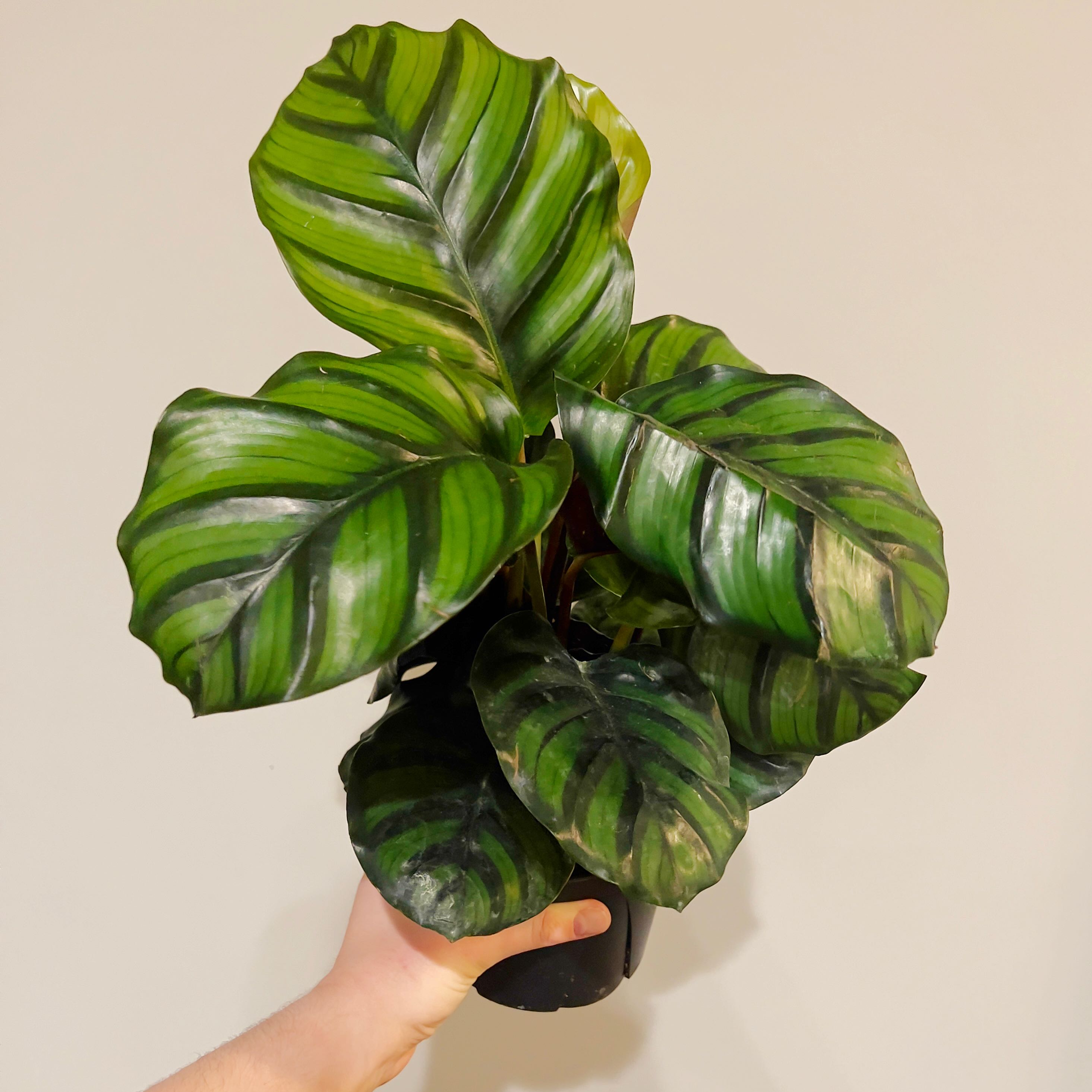
Best Soil for Calathea fasciata
What Soil Does Calathea fasciata Need?
Calathea fasciata is native to humid, shaded tropical forests where the soil stays consistently damp and rich in organic matter. It wants the opposite of cactus conditions: steady moisture with good air circulation around the roots, so the soil should hold water without ever becoming a soggy, suffocating mass.
The key challenge with calatheas is finding the middle ground between wet and waterlogged. Their fibrous root system needs consistent moisture to support the large, decorative leaves, but sitting in standing water quickly causes root rot. Standard potting soil straight from the bag often stays too wet for too long, especially indoors where there's no wind to help the surface dry.
Adding perlite to any potting mix opens up air pockets that keep roots from suffocating even when the soil is damp. Coconut coir is a good base ingredient for calatheas because it holds moisture evenly and resists compacting over time compared to peat moss. A peat-based mix works too, but it can compress into a solid block after a year or two, which makes even watering difficult.
Avoid mixes with a lot of bark chunks or very gritty amendments, since those drain too quickly for calatheas and make it hard to maintain the even moisture this plant needs. You want something that feels like a moist sponge, not something that pours through the pot in seconds.
What Soil Mix Should I Use for My Calathea fasciata?

What pH Does My Calathea fasciata Need?
Calathea fasciata prefers slightly acidic soil between 6.0 and 6.5. This range keeps nutrients available and matches the naturally acidic forest-floor soils of its native habitat. A simple pH test strip or meter from a garden center will confirm where your mix stands before you pot.
If the pH drifts above 7.0, you may notice pale yellow patches developing between the leaf veins, which is a sign of iron or magnesium deficiency caused by nutrient lockout at higher pH. Below 5.5, the soil can become too acidic for beneficial soil organisms and may cause leaf edge browning. Both issues are correctable with amendments, but it's easier to start with the right mix.
When Should I Replace My Calathea fasciata's Soil?
Plan to refresh the soil every one to two years. Calathea mixes are often peat or coir heavy, and those organic materials compact over time, reducing the air pockets that keep roots healthy. When the mix compresses, water tends to run straight down the edges of the pot rather than soaking in evenly, and the soil can become either too wet or too dry depending on watering timing.
Spring is the best time to repot and refresh the mix. Calatheas are sensitive to root disturbance, so work gently. Shake off old soil carefully from the fibrous roots rather than pulling or cutting. Fresh soil gives the plant a nutrient boost just as it enters its most active growing period.
How Do I Prepare Garden Soil for Calathea fasciata?
Calathea fasciata roots want consistently moist soil that never gets waterlogged. They thrive in a rich, spongy mix that holds moisture without compacting, much like the forest floor they naturally grow on.
If your garden soil is heavy clay, work in several inches of compost and fine bark to loosen it up and improve drainage. For sandy soil, mix in generous amounts of compost and leaf mold to help it hold moisture longer. Plant in a sheltered, shaded spot where the soil stays evenly damp.
Got More Questions?
About This Article
