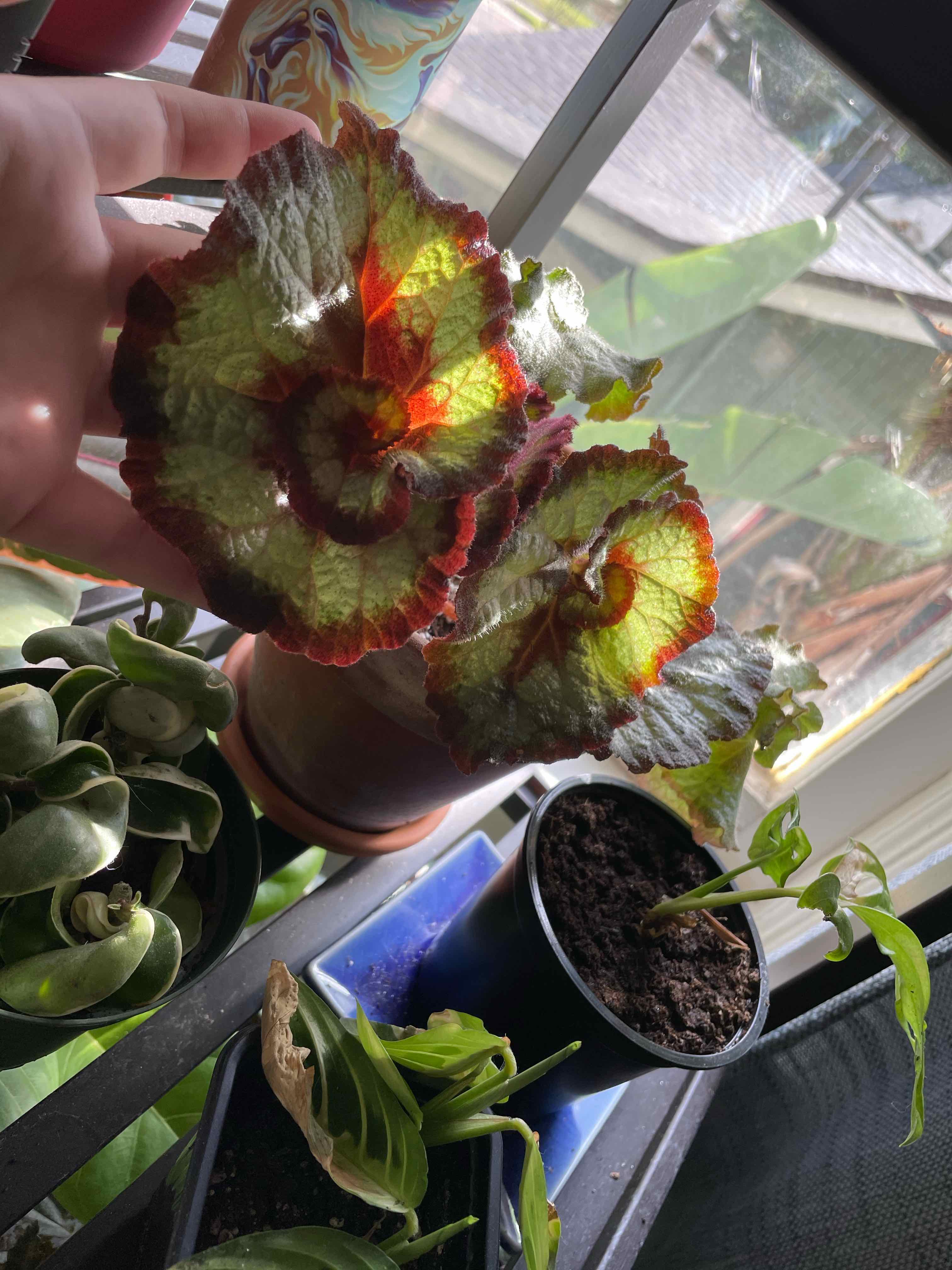
Best Soil for Rex Begonia
What Soil Does a Rex Begonia Need?
Rex Begonia is grown primarily for its dramatic, patterned foliage rather than its flowers. It has a clumping growth habit with shallow, fine roots that sit near the soil surface rather than diving deep. Those roots are sensitive to overwatering and need a light, open-textured mix that lets them breathe and dry out partially between waterings.
Rex Begonia roots are delicate and very prone to rot in dense or heavy soil. Standard potting mix is often too moisture-retentive for this plant, especially if it's used in a shaded spot where the soil dries more slowly. The mix needs to be light enough that air can reach the roots and excess water drains away quickly, without becoming so dry and porous that the plant wilts between waterings.
Adding perlite to potting soil is the most accessible way to open up the texture. Fine orchid bark chips improve aeration further and mimic the loose, leaf-littered forest floor Rex Begonias grow near in their native habitats in Southeast Asia. Avoid dense amendments like heavy compost in large quantities, which can hold too much moisture around those fine surface roots.
Never reuse soil from a pot that had a rotted Rex Begonia. Root rot pathogens persist in old mix and will infect new plants quickly. Start fresh with a clean mix every time you repot.
What Soil Mix Should I Use for My Rex Begonia?

What pH Does My Rex Begonia Need?
Rex Begonia prefers a slightly acidic pH of 5.5–6.5. In this range, nutrients are available and the root environment stays healthy. You can check your mix's pH with an inexpensive meter or test strips. Most quality potting soils formulated for houseplants already fall within this range, which makes them a good base to build from.
When pH drifts above 6.5, iron and manganese become less accessible and you may notice pale, washed-out coloring in the new leaves, which is a shame given how stunning the foliage patterns can be. Below 5.0, the soil becomes too acidic for healthy root function. Gradual pH rise from hard tap water is more common than acidification in indoor plants, so watch for fading leaf colors as a signal to check the soil.
When Should I Replace My Rex Begonia's Soil?
Rex Begonias are moderate growers and their mix should be refreshed every 1–2 years. The light, bark-based mix breaks down relatively quickly, losing structure and becoming denser over time. When that happens, drainage slows and the roots lose the aerated environment they need.
Repot in spring when the plant is entering its active growing season. Choose a pot only slightly larger than the current one. Rex Begonias have shallow root systems and do fine in relatively small, wide pots rather than deep ones. Oversized pots hold excess moisture around the roots and increase the risk of rot.
What Soil Amendments Does a Rex Begonia Need in the Ground?
Rex Begonias have shallow, delicate root systems that need light, fluffy soil with plenty of organic matter. Heavy or compacted ground smothers these fine roots and invites rot at the base of the plant.
If you're planting outdoors in a warm climate, amend clay soil with compost, perlite, and shredded bark until it feels loose and spongy. Sandy soil drains too fast, so fold in compost and leaf mold to hold moisture near the surface where the roots actually grow. Pick a shaded spot where the soil stays cool and evenly damp.
Got More Questions?
About This Article
