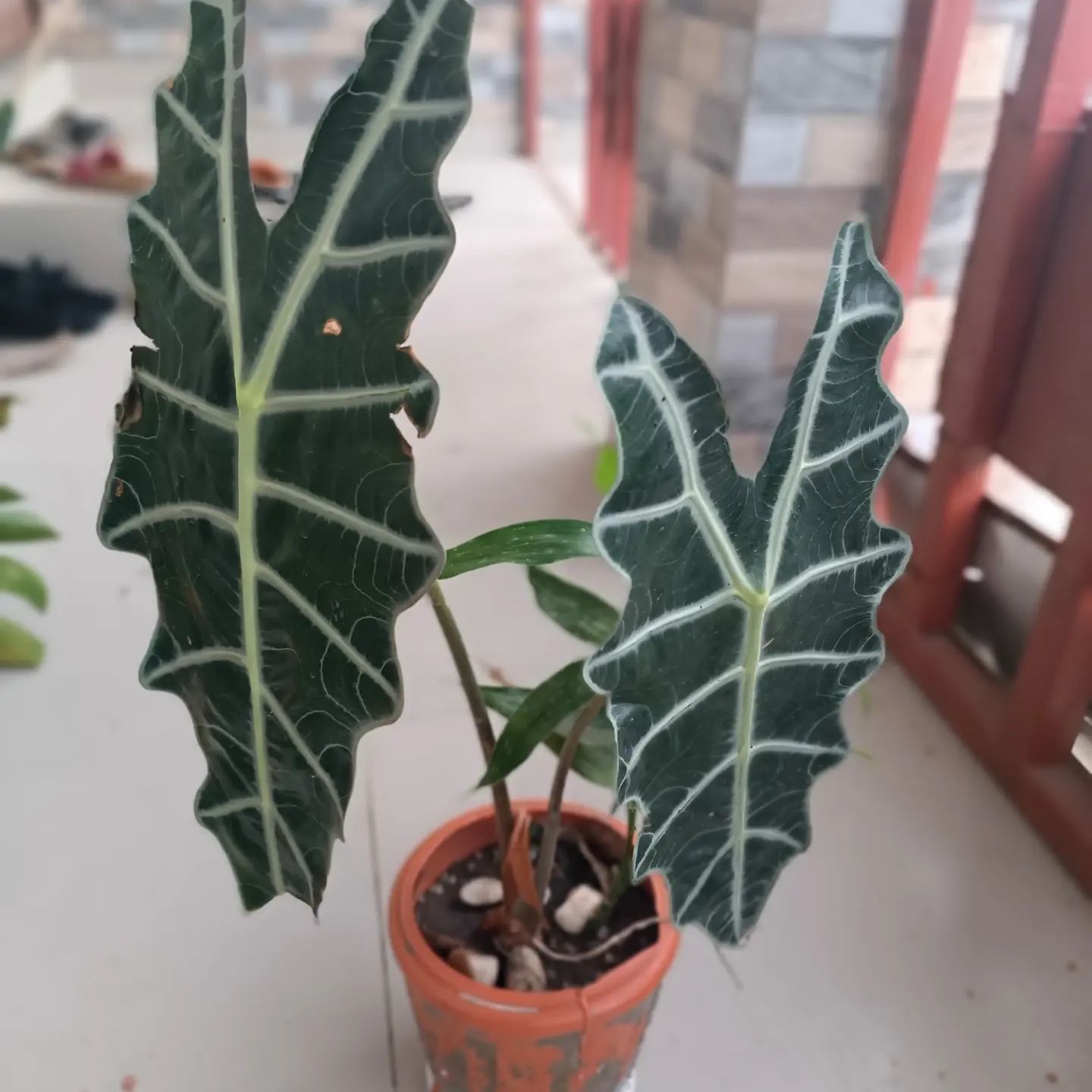
Best Soil for Alocasia Polly Plant
What Soil Does an Alocasia Polly Need?
Alocasia x mortfontanensis is a hybrid tropical aroid developed from species native to tropical Southeast Asia, where plants grow in the warm, humid understory with roots that wrap around organic material and forest debris. Its roots need consistent moisture and oxygen, which means the mix must drain freely while still retaining some moisture between waterings. Dense, compacted soil is the fastest path to root rot with this plant.
Alocasia Polly has chunky, fleshy rhizomes and thick roots that are adapted to airy, open growing conditions. In its parent species' native Southeast Asian habitat, roots anchor in organic matter like decomposing bark and leaf debris on the forest floor, surrounded by air and intermittent moisture. This is not a plant that wants to be packed tightly into dense, moisture-retaining potting soil.
A proper aroid mix for Alocasia Polly needs three things: structure from an organic base, drainage from chunky inorganic material like perlite, and open air pockets from coarse bark. Orchid bark added to the mix creates the aeration the rhizomes need, while perlite ensures excess water moves through rather than pooling around the roots. Standard all-purpose potting mix is too dense on its own and will stay wet far too long after watering.
Alocasia Polly is particularly sensitive to overwatering, and choosing the right mix is the single most effective way to prevent root rot. Even with careful watering habits, a dense mix will hold moisture long enough to cause problems. A chunky, open mix lets you water more freely without risking root health, since the water moves through quickly and the roots dry out between sessions. This plant also goes through natural dormancy cycles in lower light conditions, during which even less water is needed and drainage becomes even more critical.
What Soil Mix Should I Use for My Alocasia Polly?

What pH Does My Alocasia Polly Need?
Alocasia Polly thrives in a slightly acidic pH range of 5.5 to 6.5, which reflects the naturally acidic forest floor soils of tropical Southeast Asia where its parent species originate. Within this range, it can efficiently absorb the iron, calcium, and micronutrients it needs for healthy root and foliage development. An inexpensive soil pH meter or test strips from a garden center will give you a quick reading from moistened soil near the rhizomes.
When pH rises above 7.0, iron becomes harder to absorb, leading to yellowing leaves with green veins, a common and frustrating issue with aroids kept in hard tap water areas where the pH drifts alkaline over time. Below 5.0, excessive acidity can damage the fine roots and shows up as browning tips and wilting despite adequate moisture. Flushing the mix with distilled or rainwater every few months helps prevent pH drift caused by mineral buildup from tap water.
When Should I Replace My Alocasia Polly's Soil?
The bark in an Alocasia Polly's mix breaks down faster than mineral ingredients, typically within 12 to 18 months in an active growing environment. As bark decomposes it becomes finer, loses its chunky structure, and starts to compact, reducing the aeration the rhizomes depend on. Once compaction starts, the risk of root rot increases significantly even with careful watering.
Plan to repot Alocasia Polly every 1 to 2 years, refreshing the soil completely at each repotting. Spring is the best time to repot, just as the plant begins its active growing season. Inspect the rhizomes carefully during repotting and trim off any soft, brown sections before replanting in fresh aroid mix. Choose a pot only slightly larger than the root ball, since Alocasia Polly actually prefers a snug container where the roots fill the space and excess wet soil doesn't linger.
How Do I Prepare Garden Soil for an Alocasia Polly?
Alocasia Polly has thick, tuberous roots that need soil with plenty of air pockets and consistent moisture. Waterlogged ground rots the tubers quickly, but bone-dry soil will stall those dramatic arrow-shaped leaves.
If you're planting outdoors in a warm climate, amend clay soil with compost, perlite, and orchid bark to keep things open and breathable around the roots. Sandy soil drains too fast, so fold in compost and coco coir to hold moisture longer. A sheltered, partially shaded spot with rich organic soil will bring out the best in this plant.
Got More Questions?
About This Article
