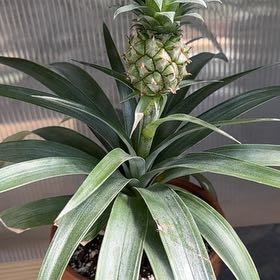
When to Repot a Pineapple
A Pineapple wants a fresh pot every three to four years, since it's a slow-growing bromeliad with a small root system. Move into a wide, shallow container one to two inches larger than the current one in spring, and use a slightly acidic mix of two parts bromeliad or cactus blend to one part standard potting soil with a handful of peat moss.

How to Know It's Time to Repot
Every Pineapple grows at its own pace, so the three-to-four-year cadence is a starting point rather than a strict rule. Pineapple has a small root system for the size of the plant above ground, and it gives a few clear signals when it's truly time for a fresh pot.
-
1Roots are visible at the drainage holes or have started lifting the plant out of the pot.
-
2The base of the plant has spread so wide and heavy that the pot tips when it's bumped.
-
3Soil dries out within a day or two of watering, even in cool weather.
-
4Pups have started forming around the base and need their own room to grow.
A single sign on its own is worth keeping an eye on, but two or more together means it's time. Most Pineapples only need repotting every three to four years, and the plant tolerates a snug pot well, so there's no rush to upsize before the signs are clear. The exception is when pups start crowding the base, since each one needs room to root.
The Best Time of Year to Repot
Spring through early summer is the sweet spot for repotting a Pineapple. Longer days mean stronger light, which helps the plant push out fresh roots and recover from any disturbance. Try to avoid winter repotting, when shorter days slow growth and recovery drags out for weeks. The exact window shifts a bit depending on your latitude, so use the map below to find yours.

How to Choose a Pot and Soil Mix
Pot Size
Move up by one to two inches in diameter, no more than that, and pick a wide shallow pot rather than a deep one. Pineapple has a small root system relative to its leaf mass, and extra wet soil at the bottom of a deep pot encourages root rot. An 8-inch pot suits a young plant grown from a fruit top, while a 12 to 14-inch wide pot fits a mature fruiting Pineapple comfortably. Width matters because the spreading spiny leaves need a stable footprint to keep the plant from tipping.
Pot Material
Plastic, glazed ceramic, and terracotta all work well for Pineapple. Plastic and glazed ceramic hold moisture longer, which suits the plant in dry indoor air or for anyone who tends to underwater. Terracotta dries faster through its porous walls, so it's the safer choice if you're prone to overwatering. Whichever you pick, the pot needs at least one drainage hole, and skip self-watering styles since constantly wet soil rots Pineapple roots from below.
Soil Mix
A simple recipe of two parts bromeliad or cactus mix, one part standard potting soil, and a handful of peat moss works beautifully. Pineapple evolved in well-drained, slightly acidic soils in South America, so the roots want a chunky mix with a pH between 4.5 and 6.5 and excellent drainage. Skip lime-amended mixes and any general potting soil used straight from the bag, since both raise the pH too high and hold too much water for healthy leaf color and root growth.
How to Repot a Pineapple, Step by Step
-
1Water the day before. Give the plant a thorough drink the day before you plan to repot. Moist soil releases the root ball cleanly as a single piece, instead of crumbling and tearing the small feeder roots that keep a Pineapple anchored.
-
2Wear long sleeves and gloves. Pineapple leaves have sharp, often spiny edges that scratch and snag with surprising ease. A long-sleeved shirt and a sturdy pair of gardening gloves make the whole process much easier on your hands and forearms.
-
3Squeeze, tip, slide. Squeeze the sides of the pot to loosen the root ball, tip it sideways, and ease the plant out by holding the base of the lower leaves where they meet the soil. Never pull by the central crown of leaves, since that's the plant's only growing point and damaging it ends fresh growth for good.
-
4Inspect the roots gently. Shake off the loose old soil so you can see the roots, then go slowly so the fine feeder roots stay intact. Healthy Pineapple roots are pale and stringy, so trim away anything dark or mushy with clean scissors. Pineapple is sensitive to root disturbance, so leave the rest of the root ball loose but undisturbed.
-
5Set, fill, water. Add an inch or two of fresh mix to the bottom of the new pot, then settle the plant in so the base sits at the same level it was before. Fill more mix around the roots, press gently to remove air pockets, and water deeply until it drains through the holes. Pour a little extra water into the central cup of leaves too, since a Pineapple drinks from there as much as from its roots.
What to Expect After Repotting
Weeks 1 to 2
A little leaf droop is completely normal while the small root system resettles into its new home. Keep the plant in bright, indirect light, water lightly when the top inch of soil feels dry, and keep the central leaf cup topped up with rainwater or filtered water. Skip fertilizer for now and let the roots heal.
Weeks 3 to 8
New leaves should start unfurling from the center of the crown, and that's the signal the repot has worked. Move the plant back to its usual sunny spot gradually over several days so the leaves don't scorch, and resume normal watering once the top two inches of soil dry between sessions. A diluted balanced fertilizer once a month supports steady leaf growth from here on out.
Got More Questions?
About This Article
