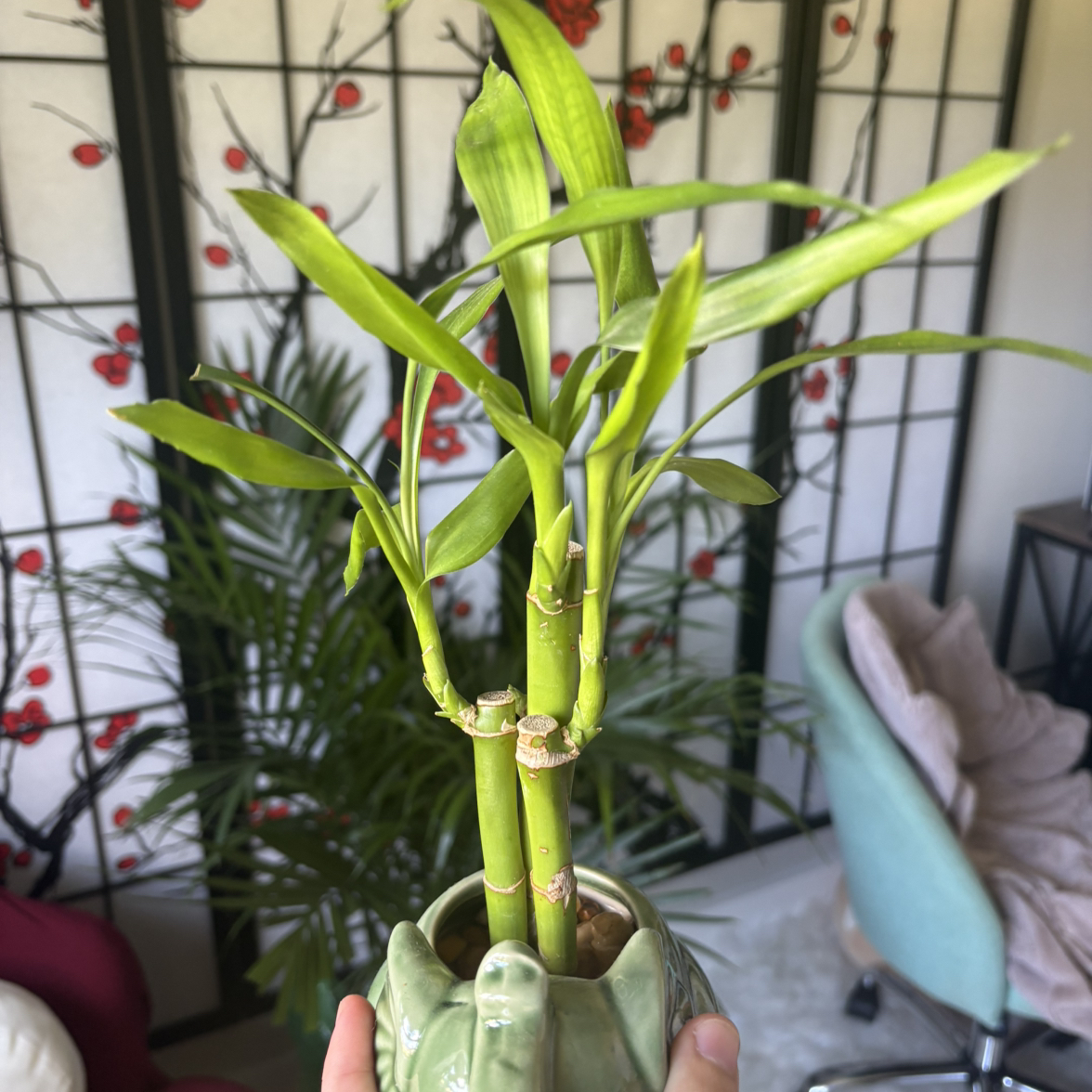
When to Repot a Lucky Bamboo
Lucky Bamboo grown in soil wants a fresh pot every two to three years. Move into a container one to two inches wider in spring, and use a standard houseplant mix with extra perlite. Plants grown in water with pebbles don't need repotting at all, just fresh filtered water every couple of weeks.

How to Know It's Time to Repot
Every Lucky Bamboo is a little different, so the two-to-three-year cadence is a starting point rather than a strict rule. This Dracaena grows slowly and tolerates a snug pot, but it still gives a few clear signals when it has truly outgrown its container, whether you grow yours in soil or in water with pebbles.
-
1Roots are visible at the drainage holes or have started lifting the plant out of the pot.
-
2The plant has roughly doubled in size since you last potted it up.
-
3The water in a vase-grown plant turns murky within a week, even with regular changes.
-
4Soil dries out within a day or two of watering, or roots fill more than half the volume of a water vase.
Most Lucky Bamboo plants in soil only need a new pot every two to three years, and acting on one or two of these signs is enough to know it's time. Vase-grown plants don't need repotting at all unless you're switching them to soil or the arrangement has outgrown its vessel. Lucky Bamboo tolerates being slightly root-bound and even prefers a snug fit, so there's no rush to size up.
The Best Time of Year to Repot
Spring through early summer is the sweet spot for repotting Lucky Bamboo. Longer days mean stronger indoor light, which helps the plant push out fresh roots and new leaf nodes while it recovers from the move. Try to avoid winter repotting, when low light slows growth almost to a stop and recovery drags on for weeks. The exact window shifts a bit depending on your latitude, so use the map below to find yours.

How to Choose a Pot and Soil Mix
Pot Size
Move up by one to two inches in diameter, no more than that. Lucky Bamboo has a fairly small root system and prefers a snug fit, especially when the stalks are arranged in a tight cluster or shaped into a curl. A 4-inch pot suits a young plant nicely, while a 6 to 8-inch pot will fit a mature arrangement comfortably for years. Vase-grown plants only need a new vase if the current one is too small to hold all the stalks upright.
Pot Material
Plastic, glazed ceramic, and glass all work well for Lucky Bamboo. Plastic and glazed ceramic hold moisture longer, which suits this plant's preference for consistently damp soil. Skip terracotta, since its porous walls dry the soil too aggressively for a moisture-loving Dracaena. Vase-grown plants should use clear glass so you can monitor water clarity and root health, and any soil pot needs at least one drainage hole.
Soil Mix
A simple blend of two parts standard houseplant mix to one part perlite gives Lucky Bamboo the steady moisture it likes alongside the drainage that prevents rot. The extra perlite keeps oxygen flowing to the roots and prevents the compacted, soggy conditions that cause black rot at the base of the stalks. Skip moisture-control formulas and dense garden soil, since both compact within a few months and keep the lower stalks wet enough to invite trouble.
How to Repot a Lucky Bamboo, Step by Step
-
1Water the day before. Give the plant a thorough drink the day before you plan to repot. Moist soil releases the root ball cleanly as a single piece, rather than crumbling and tearing the fine roots in the process. Skip this step for plants moving from a vase to soil, since those roots are already wet.
-
2Lift the stalks together. Slide the stalks out of the pot or vase as a group, keeping any decorative arrangement intact. If the stalks are loose or shaped into a curl, hold them upright with one hand while you work with the other so they don't tip over and snap at the base.
-
3Loosen the roots. Tease apart any tightly circling roots with your fingers, going slowly so the fine roots stay intact. Healthy Lucky Bamboo roots are a striking bright orange or red, which is completely normal and not a sign of disease. Trim away any dark or mushy sections with clean scissors.
-
4Set at the same depth. Add an inch or two of fresh mix to the bottom of the new pot, then position the stalks so the soil line sits at the same level as before. The woody base of each stalk must stay above the soil, because burying the lower stalk causes it to rot from the base up.
-
5Fill, firm, water. Fill in more mix around the roots, press gently to remove air pockets, and water with filtered or rain water until it drains through the holes. Return the plant to its usual bright, indirect spot. Plants moving from water to soil need a little extra moisture for the first month while the roots adapt to the new medium.
What to Expect After Repotting
Week 1
A bit of lower leaf yellowing is normal as the roots resettle into their new home. Keep the plant in bright, indirect light, water lightly with filtered or rain water when the top inch of soil feels dry, and skip fertilizer for now. Plants switching from water to soil may shed a few of their oldest leaves while the root system adapts to the new medium.
Weeks 2 to 4
New growth should appear at the top of each stalk, often a small green shoot unfurling from the tip. Resume normal watering once the top inch of soil dries between sessions, sticking with filtered or rain water since Lucky Bamboo is sensitive to fluoride and chlorine in tap water. A balanced liquid fertilizer at quarter strength once a month gently supports the new growth.
Got More Questions?
About This Article
