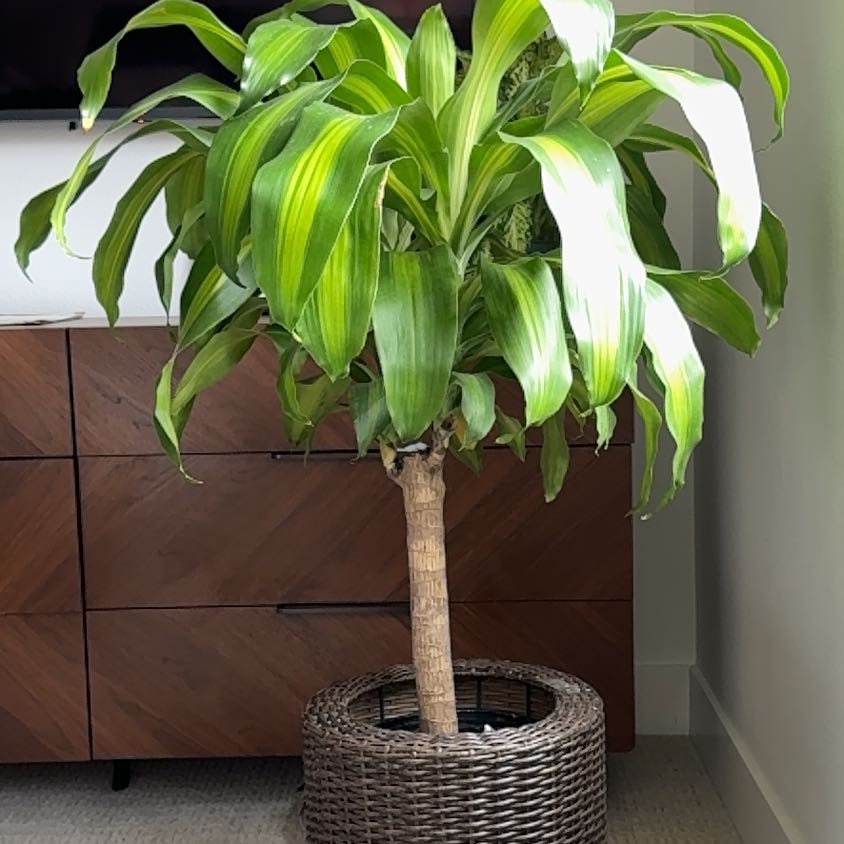
When to Repot a Dracaena Massangeana
Corn Plants want a fresh pot every three to four years, since they grow slowly and prefer to stay settled. Move into a heavy container one to two inches wider than the current one in spring, and use a well-draining mix of two parts standard houseplant mix to one part perlite with a handful of orchid bark.

How to Know It's Time to Repot
Every Corn Plant is a little different, so the three-to-four-year cadence is a starting point rather than a strict rule. These slow growers tolerate a snug pot well, so the plant itself is the best gauge and gives you a few clear signals when the roots have truly run out of room.
-
1Roots circle the soil surface or push out through the drainage holes.
-
2The plant has roughly doubled in size since the last time it was potted up.
-
3Water runs straight through the pot in seconds without soaking into the soil.
-
4The whole pot feels top-heavy and tips easily, even on a flat surface.
-
5Lower leaves drop faster than usual, leaving more bare cane at the base.
A single sign on its own is worth keeping an eye on, but a slow grower like the Corn Plant rarely demands an urgent move. When two or more signs show up together, especially the top-heavy tipping or the doubled-in-size mark, the roots have outgrown the pot and a one-size step up in spring will get the canes pushing fresh leaves again.
The Best Time of Year to Repot
Aim for spring or early summer, when longer days give the plant plenty of indoor light to heal its disrupted roots and push out new growth from the cane tips. Avoid repotting in winter, when low light slows recovery to a crawl and the plant can sit in shock for weeks. The exact window shifts a bit depending on your latitude, so use the map below to find yours.

How to Choose a Pot and Soil Mix
Pot Size
Move up by one to two inches in diameter, no more than that. Corn Plants have surprisingly modest root systems for their height, so any extra wet soil around small roots quickly turns into root rot. A 10-inch pot suits a 2 to 3-foot plant nicely, while a 14 to 16-inch pot will fit a mature 4 to 6-foot Corn Plant comfortably for several years. Whatever size you pick, choose a heavy pot for stability, because tall multi-cane plants tip easily in lightweight containers.
Pot Material
Heavy ceramic and weighted plastic both work well for Corn Plants. Glazed ceramic and plastic hold moisture longer, which suits a plant that prefers steady soil moisture between waterings. Terracotta is fine too, especially in humid rooms or for anyone who tends to overwater, though the lighter weight makes it less ideal for tall multi-cane plants that need a sturdy base. Whichever you pick, the pot needs at least one drainage hole.
Soil Mix
A simple blend of two parts standard houseplant mix to one part perlite, with a handful of orchid bark mixed in, works beautifully for Corn Plants. The houseplant mix holds the steady moisture the roots prefer, while the perlite and bark keep enough air around the roots to prevent rot in those long stretches between repots. Skip dense garden soil and moisture-control formulas, since both compact within a few months and trap water around the roots.
How to Repot a Dracaena Massangeana, Step by Step
-
1Water the day before. Give the plant a thorough drink the day before you plan to repot. Moist soil releases the root ball cleanly as a single piece, rather than crumbling away and tearing the fine roots in the process.
-
2Lay it on its side. Tall canes make Corn Plants awkward to lift straight up, so the easiest move is to lay the pot on its side on a tarp or sheet first. From there you can squeeze the sides, ease the root ball out, and keep the canes safely supported instead of putting all the weight on a single stem.
-
3Loosen and inspect. Tease apart any tightly circling roots with your fingers, going slowly so the fine roots stay intact. Healthy Corn Plant roots are pale orange and stringy, so trim away anything dark or mushy with clean scissors. Most root systems will look modest compared to the size of the canes above them, which is normal for this plant.
-
4Set into a heavy pot. Add about two inches of fresh mix to the bottom of the new pot, then settle the plant so the soil line sits at the same level as before, never deeper. Pick a heavy ceramic or weighted plastic pot, because tall multi-cane Corn Plants are top-heavy and a light pot will tip with the first nudge from a passing pet or vacuum.
-
5Fill, firm, water deeply. Fill in around the root ball with more mix, press gently to remove air pockets, and water thoroughly until it drains through the holes. Use filtered or rainwater if you can, since Corn Plants are sensitive to the fluoride in tap water and the freshly disturbed roots are easier to scorch than usual.
What to Expect After Repotting
Week 1
A bit of lower leaf drop and some softening of the canopy is completely normal as the roots resettle. Keep the plant in bright, indirect light, water lightly when the top two inches of soil feel dry, and hold off on fertilizer for now. The canes themselves should stay firm and upright, even if a few older leaves yellow and fall.
Weeks 2 to 4
New growth appears as a tight green spike unfurling from the top of each cane, often a slightly brighter green than the older leaves around it. Resume normal watering once the top inch of soil dries between sessions. A balanced liquid fertilizer at half strength every month supports the steady, slow leaf production a Corn Plant is built for. If you've switched to filtered water, you should also notice fewer fresh brown tips on the new leaves over the next couple of months.
Got More Questions?
About This Article
