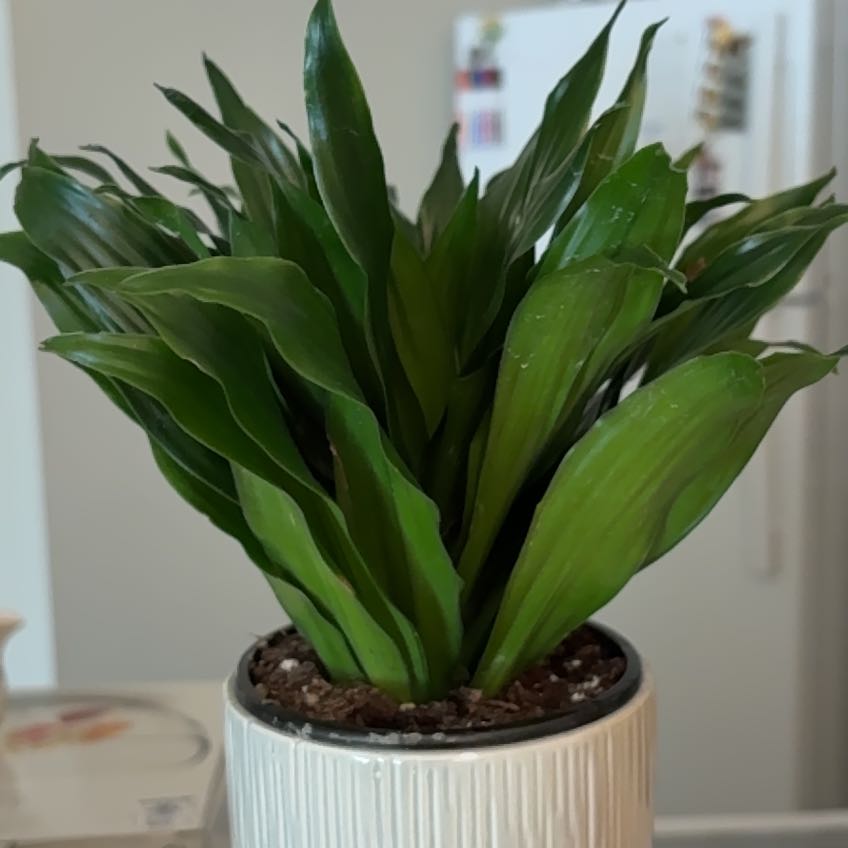
When to Repot a Dracaena 'Janet Craig Compacta'
Janet Craig Compacta wants a fresh pot every three to four years, which makes it one of the slowest-growing Dracaenas to look after. Size up in spring into a container only one to two inches wider than the current one, and use a well-draining blend of two parts houseplant mix to one part perlite with a handful of orchid bark for airflow.

How to Know It's Time to Repot
Every Janet Craig Compacta is a little different, so the three-to-four-year cadence is a starting point rather than a strict rule. This is one of the slowest-growing Dracaenas, so a snug pot is no cause for alarm on its own, and the plant gives a few clear signals when it's genuinely ready for a fresh home.
-
1Roots are visible at the drainage holes or have started lifting the plant out of the pot.
-
2Water runs straight through the pot in seconds without soaking into the soil.
-
3Lower leaves drop more often than usual, leaving bare cane at the base of the plant.
-
4The center rosettes look tighter and more crowded than they did the year before.
A single sign on its own is worth keeping an eye on. When two or more show up together, the roots have outgrown their pot and waiting any longer usually leads to browning lower leaves and stalled growth. Most Janet Craig Compacta plants only need this attention every three to four years, so resist the urge to upsize on schedule when the plant looks happy where it is.
The Best Time of Year to Repot
Aim for spring or early summer, when longer days give the plant the indoor light it needs to heal disrupted roots and push out fresh leaves. Janet Craig Compacta grows slowly even at its peak, so a well-lit window matters more for recovery here than for faster houseplants. Avoid repotting in winter, since low light and cooler indoor air drag the recovery out for months. The ideal window shifts a bit depending on where you live, so use the map below to find yours.

How to Choose a Pot and Soil Mix
Pot Size
Move up by one to two inches in diameter, no more than that. Janet Craig Compacta has a modest root system relative to its leafy crown, and the extra soil in an oversized pot holds water that small roots can't drink fast enough, which quickly leads to root rot. A 6-inch pot suits a young plant nicely, while a 10-inch pot fits a mature Janet Craig Compacta comfortably for many years given how slowly it grows.
Pot Material
Plastic and glazed ceramic both work well for this plant because they hold moisture a little longer than terracotta does. That's an advantage with a slow grower, since the roots are drinking less per week and dry soil for too long can stress the plant. Terracotta is still fine in humid rooms or for anyone who tends to overwater. Whichever you pick, the pot needs at least one drainage hole at the bottom.
Soil Mix
A simple blend of two parts standard houseplant mix to one part perlite, with a handful of orchid bark stirred in, gives Janet Craig Compacta the airflow its roots really want. The bark keeps the mix loose enough that water moves through quickly, while the houseplant base holds enough moisture to keep the plant happy between waterings. Skip dense garden soil and moisture-control formulas, since both compact within a few months and trap water around the roots.
How to Repot a Dracaena 'Janet Craig Compacta', Step by Step
-
1Water the day before. Give the plant a thorough drink the day before you plan to repot. Moist soil releases the root ball cleanly as a single piece, instead of crumbling and tearing the fine roots in the process.
-
2Squeeze, tip, slide. Squeeze the sides of the pot to loosen the root ball, tip the whole pot sideways, and ease the plant out by holding the base of the cane where it meets the soil. Janet Craig Compacta has a fairly shallow root system, so it usually comes free without much fuss.
-
3Inspect and trim. Take a moment to look the roots over and gently tease apart any that are circling the bottom of the root ball. Healthy Dracaena roots are pale orange and feel firm, so snip away anything dark or mushy with clean scissors before the rot has a chance to spread.
-
4Set into the new pot. Add an inch or two of fresh mix to the bottom of the new pot, then settle the plant in so the top of the root ball sits at the same depth as before. That extra room at the rim gives you space to water without overflow later on.
-
5Fill, firm, water deeply. Fill in around the root ball with more mix, press gently with your fingers to remove air pockets, and water until you see moisture draining through the holes. Top up any spots where the soil settles below the original line, and return the plant to its usual bright, indirect spot to recover.
What to Expect After Repotting
Weeks 1 to 2
A little leaf droop is completely normal in the first couple of weeks while the roots resettle. Keep the plant in bright, indirect light, water lightly when the top inch of soil feels dry, and hold off on fertilizer for now. Janet Craig Compacta recovers slowly compared to faster houseplants, so patience is the main ingredient here.
Weeks 3 to 8
New leaves emerge gradually from the center of each rosette, often just a fraction of an inch at a time. Resume normal watering once the top inch of soil dries between sessions, and a balanced liquid fertilizer at half strength once a month from spring through summer supports the slow steady growth this cultivar is known for.
Got More Questions?
About This Article
