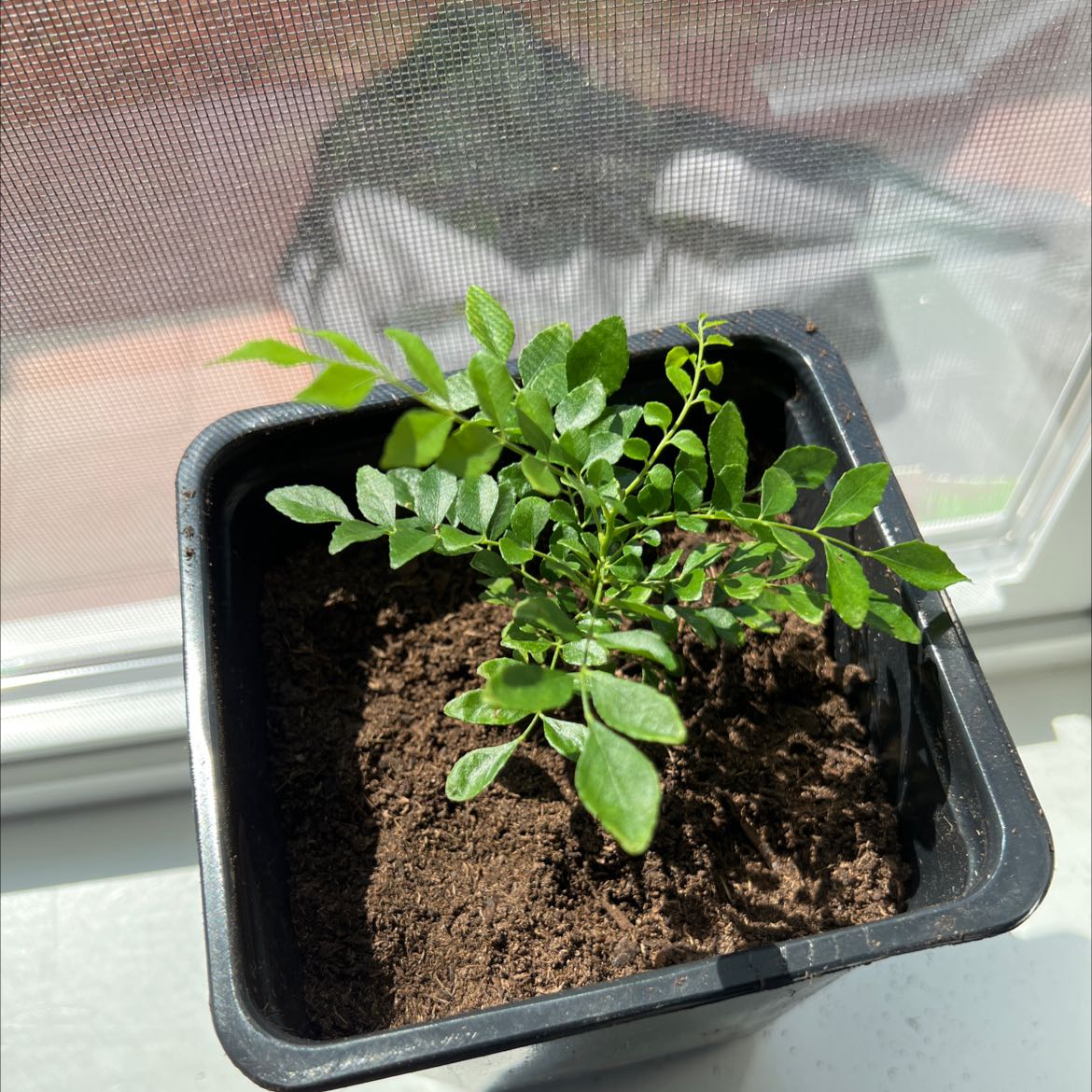
When to Repot a Curry Tree
Curry Trees want a fresh pot every two to three years while they're putting on size, stretching to every three to four years once mature. Move into a container two to three inches wider than the current one in late spring, and use a rich, well-draining mix of two parts standard potting soil to one part perlite with a generous handful of compost worked in.

How to Know It's Time to Repot
Every Curry Tree is a little different, so the two-to-three-year cadence is a starting point rather than a strict rule. The tree itself is the best gauge, and it gives a few clear signals when its roots have run out of room.
-
1Roots are visible at the drainage holes or have started circling the bottom of the pot.
-
2The tree has roughly doubled in size since you last potted it up.
-
3Soil dries out within a day or two of watering, and leaves wilt between drinks.
-
4New leaf flushes have slowed and the fresh leaves come in noticeably smaller than past flushes.
A single sign on its own is worth keeping an eye on, but two or more together means the roots have outgrown the pot and waiting any longer usually means smaller leaves and a slower harvest. Curry Tree tolerates being slightly snug better than many tropicals, so there's no need to rush an upsize before the tree is actually asking for one.
The Best Time of Year to Repot
Late spring through early summer is the sweet spot for repotting a Curry Tree. Warm days and strong light give the tree everything it needs to push out fresh roots and a flush of new leaves while it recovers from the move. Avoid repotting in winter, when this tropical drops most of its leaves and goes dormant, since recovery drags on for weeks in cool indoor conditions. The exact window shifts a bit depending on your latitude, so use the map below to find yours.

How to Choose a Pot and Soil Mix
Pot Size
Move up by two to three inches in diameter, no more than that. Curry Tree grows at a steady moderate pace and rewards a generous pot once it's established, but sizing up too far traps water around small roots and quickly leads to root rot. A 10-inch pot suits a young 2-foot tree nicely, while a 14 to 16-inch pot will fit a mature 4 to 6-foot Curry Tree comfortably for years.
Pot Material
Plastic and glazed ceramic both work beautifully for Curry Tree because they hold moisture longer than terracotta, which matches this tree's preference for steady soil moisture. Pick a pot with some real weight to it, since Curry Tree gets tall and top-heavy fast and a lightweight pot tips over in a stiff breeze. Whichever you choose, the pot needs at least one drainage hole.
Soil Mix
A simple recipe of two parts standard potting soil, one part perlite, and a generous handful of compost gives Curry Tree the rich, well-draining home it really wants. The compost feeds steady leaf production through the growing season, while the perlite keeps the mix loose enough that roots get plenty of oxygen between waterings. A teaspoon of slow-release fertilizer mixed in at potting time carries the tree through the first few months, and you can skip dense moisture-control formulas and garden soil entirely.
How to Repot a Curry Tree, Step by Step
-
1Water the day before. Give the tree a thorough drink the day before you plan to repot. Moist soil releases the root ball cleanly as a single piece, instead of crumbling away and tearing the fine feeder roots in the process.
-
2Slide it out gently. Squeeze the sides of the pot to loosen the root ball, tip the whole thing on its side, and ease the tree out by holding the base of the trunk where it meets the soil. Never pull by the branches, since Curry Tree wood is fairly brittle and a snapped branch sets back a year of growth.
-
3Check for suckers. While the root ball is out, look around the base for young suckers pushing up from the roots. These are baby Curry Trees and the easiest way to propagate the plant at home. You can either pot them up separately with a sharp knife cut through the connecting root, or leave them attached for a fuller mother plant.
-
4Loosen and inspect. Tease apart any tightly circling roots with your fingers, working slowly so the fine feeder roots stay intact. Healthy Curry Tree roots are pale and fibrous, so trim away anything dark or mushy with clean scissors before settling the tree into its new home.
-
5Set at the same depth. Add three to four inches of fresh mix to the bottom of the new pot, then position the tree so the soil line sits exactly where it did before. Burying the trunk invites rot at the base, and Curry Tree does not root along its stem the way some woody plants do.
-
6Fill, firm, water deeply. Fill in around the root ball with more mix, press gently to remove air pockets, and water thoroughly until you see drainage coming through the holes. Return the tree to its usual bright spot, ideally somewhere with several hours of direct sun each day.
What to Expect After Repotting
Week 1
Some leaf drop and a little overall droop is completely normal during the first week. The tree is busy rebuilding its root system, not failing. Keep it in bright, indirect light, water lightly when the top inch of soil feels dry, and hold off on fertilizer for now.
Weeks 2 to 6
New leaf flushes start emerging at the branch tips, often a brighter green than the older growth around them. Resume normal watering once the top inch of soil dries between sessions, and move the tree back into direct sun gradually over a few days. A balanced liquid fertilizer at half strength every two weeks supports the steady leaf production that keeps a Curry Tree harvest-ready.
Got More Questions?
About This Article
