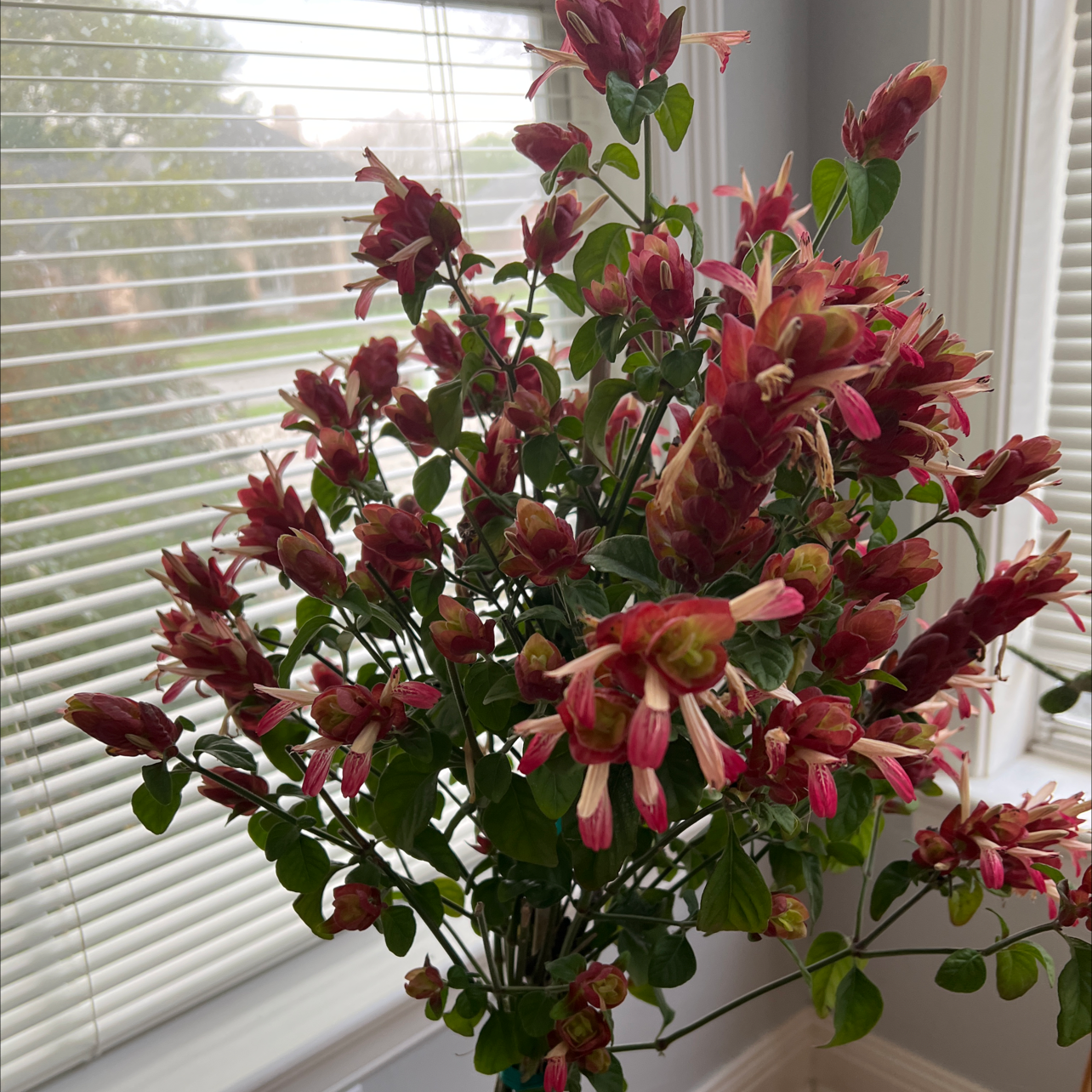
Shrimp Plant

How to Prune Shrimp Plant

Justicia brandegeeana
Reviewed by Kiersten Rankel M.S.
Quick Answer
Prune your Shrimp Plant in early spring before new growth starts, or lightly after each flush of blooms. Focus on cutting back long, leggy stems to a node, removing any dead or crossing branches, and snipping off spent flower spikes. Never remove more than one-third of the plant at once, as hard pruning can stress it significantly.

When is the best time to prune?

Pruning timing shifts by a few weeks depending on your region's last frost date, since Shrimp Plant breaks dormancy earliest where winters are mildest.

US pruning regions map
Pacific
Feb–Mar
Mountain
Apr–May
Midwest
Apr–May
Northeast
Apr–May
Southeast
Mar–Apr
Stay on top of plant care
Get seasonal reminders for watering and fertilizing — personalized for your plants.
Try Greg Free

Why Should I Prune My Shrimp Plant?

Shrimp Plant gets leggy fast. Without pruning, the stems stretch and flop, and the plant puts energy into long bare branches rather than those colorful shrimp-shaped flower spikes it's known for. A good prune in early spring resets the plant and encourages dense, branchy new growth loaded with blooms.

The most useful cut is a simple tip pinch: snip back each long stem to just above a leaf node, which is where the leaves attach to the stem. This forces two new stems to sprout where one was, doubling the branching and the number of potential flower sites.

You can also deadhead throughout the growing season by removing spent flower bracts as they brown and fade. This keeps the plant looking tidy and may push out another round of flowers sooner.

Avoid cutting into old woody stems at the base unless you are doing a deliberate rejuvenation prune. If the plant has gotten very woody and sparse, you can cut the whole thing back by half in early spring and it will usually rebound, but give it a few weeks of warmth and consistent watering before expecting new shoots.

Know Before You Cut

Difficulty Easy
Max removal 1/3 of total growth per session
Growth pattern Branching shrub
Tools Pruners or sharp scissors

What Should I Remove?

Cut leggy stems back to a healthy leaf node
Remove spent or browning flower bracts
Pinch stem tips to encourage branching
Clear out dead or crossing branches
Don't remove more than one-third of the plant at once
Don't cut back hard in fall or winter
Don't skip pruning if stems are flopping or bare at the base

How Do I Prune Step by Step?

1
Wait for early spring growth signals
Begin just as you see new buds swelling or tiny leaf shoots emerging at the stem tips. This signals the plant is ready to push new growth in response to cuts.
2
Remove dead and damaged stems
Cut any fully dead stems back to where they meet a live stem or the soil. Dead wood carries no buds, so there is nothing to preserve.
3
Shorten leggy stems to a node
Find a healthy leaf node on each long, bare stem and cut just above it at a slight angle. The node is where leaves or a pair of leaves attach to the stem.
4
Pinch tips on shorter stems
For stems that are not yet leggy, simply pinch or snip off the last half inch to an inch of the tip. This prompts two new side shoots to form at that spot.
5
Deadhead spent flower spikes throughout the season
As each shrimp-shaped bract fades and browns, snip it off at the base of the flower stem. This keeps the plant tidy and encourages the next round of blooms.

Frequently Asked Questions

Can I prune my Shrimp Plant while it's flowering?
Yes. You can pinch tips and remove spent bracts at any time during the growing season without harming the plant. Save the harder cutback for early spring when it will prompt the most vigorous regrowth.
My Shrimp Plant got really leggy and bare at the base. Can I cut it way back?
You can cut it back by about half in early spring and the plant will usually bounce back within a few weeks. Going further than half in one session is risky, so if the plant is extremely overgrown, spread the cutback over two seasons.
What happens if I prune my Shrimp Plant in fall?
Pruning in fall removes the growth the plant has built up and can leave wounds that are slow to heal as temperatures drop. It is better to wait until late winter or early spring when the plant is about to push new growth.
Why does my Shrimp Plant have long stems with no leaves near the base?
This is a sign the plant has not been pruned for a while. Regular tip pinching earlier in the season prevents this. A hard prune back to a healthy node in spring will restore a fuller shape.
Stay on top of plant care
Get seasonal reminders for watering and fertilizing — personalized for your plants.
Try Greg Free

About This Article

Kiersten Rankel M.S.
Botanical Data Lead at Greg · Plant Scientist
About the Author
Kiersten Rankel holds an M.S. in Ecology & Evolutionary Biology from Tulane University. A certified Louisiana Master Naturalist, she has over a decade of experience in science communication, with research spanning corals, cypress trees, marsh grasses, and more. At Greg, she curates species data and verifies care recommendations against botanical research.
See Kiersten Rankel's full background on LinkedIn.
Editorial Process
Pruning guidance verified against Justicia brandegeeana growth data from Greg's botanical database, cross-referenced with USDA hardiness zone data and published horticultural research.
310+ Greg users growing this plant
USDA hardiness zones 8a–11b
Grow plants with confidence