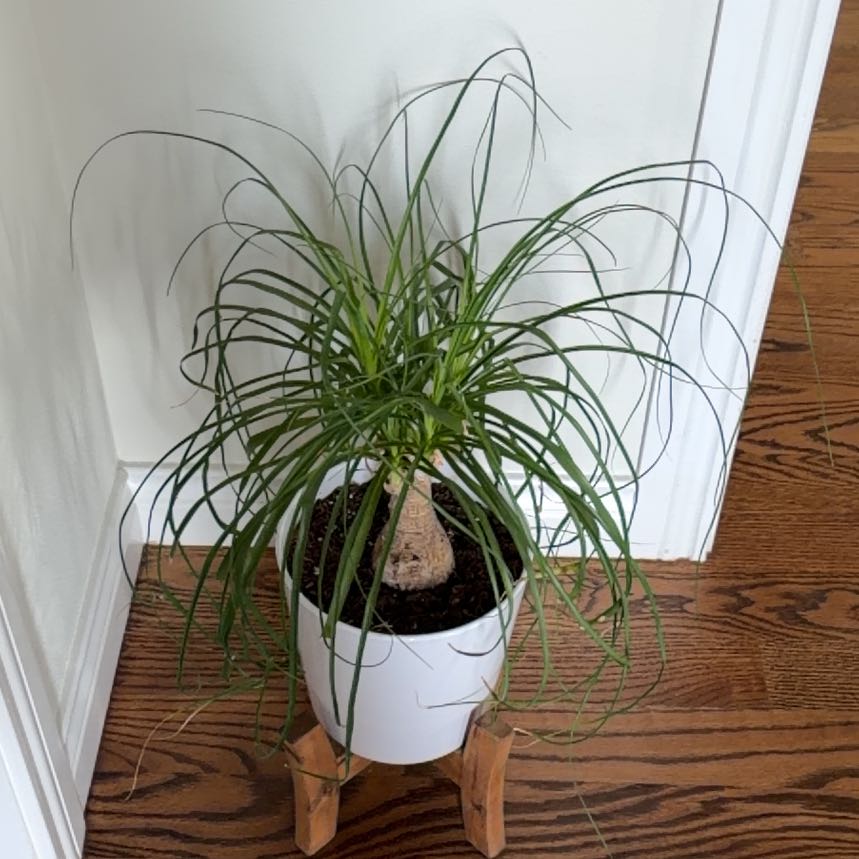
Ponytail Palm

How to Prune Ponytail Palm

Beaucarnea recurvata
Reviewed by Kiersten Rankel M.S.
Quick Answer
Prune your Ponytail Palm in spring or early summer when active growth begins. Focus on removing brown or crispy leaf tips and fully dead fronds at the base of the rosette. Never cut the central growing point, and limit removal to dead or damaged material only.

When is the best time to prune?

Timing matters least for Ponytail Palm compared to most plants, since it grows slowly and tolerates pruning year-round in warm climates, but spring is ideal to tidy up after any winter stress.

US pruning regions map
Pacific
Mar–May
Mountain
May–Jul
Midwest
Apr–Jun
Northeast
Apr–Jun
Southeast
Mar–May
Stay on top of plant care
Get seasonal reminders for watering and fertilizing — personalized for your plants.
Try Greg Free

Why Should I Prune My Ponytail Palm?

Ponytail Palms are slow growers with a very forgiving nature, but they still benefit from occasional cleanup. The long, strappy leaves naturally develop brown or split tips over time, especially in dry indoor conditions. Trimming those tips keeps the plant looking tidy without harming it.

The most important pruning task is removing fully dead leaves. Dead fronds at the base of the rosette can trap moisture and invite rot near the trunk. Pull them away gently first; if they don't come free easily, snip them close to where they attach to the trunk.

One rule matters above all: never cut the central growing point at the top of the trunk. That single growing tip is the only place new leaves emerge. Cutting it will permanently stop upward growth and can kill the plant.

You can trim brown leaf tips with scissors to restore a cleaner look. Cut at a slight angle to mimic the natural leaf shape rather than leaving a blunt horizontal line.

Know Before You Cut

Difficulty Easy
Max removal Dead and damaged leaves only
Growth pattern Rosette on swollen trunk
Tools Sharp scissors or pruning shears

What Should I Remove?

Remove fully brown or dead leaves at the base
Trim brown leaf tips with scissors at a slight angle
Pull away loose dead fronds by hand first
Clean blades with rubbing alcohol before pruning
Never cut the central growing tip at the top
Don't remove green healthy leaves to shape the plant
Avoid cutting deep into brown tips where green tissue begins

How Do I Prune Step by Step?

1
Wipe your blades clean
Wipe scissors or pruning shears with rubbing alcohol before starting. Ponytail Palms are resistant to pests but clean tools prevent spreading any fungal issues.
2
Pull away loose dead fronds
Grip dead fronds near the base and tug gently downward. Many will detach cleanly. If a frond resists, use scissors rather than pulling harder to avoid tearing trunk tissue.
3
Snip remaining dead fronds at the base
For any dead leaves still attached, cut close to where the leaf meets the trunk. Leave a short stub rather than cutting flush to avoid nicking the trunk.
4
Trim brown leaf tips
Cut brown tips at a slight angle following the leaf's natural taper. Stop cutting where the brown meets living green tissue.
5
Check the central growing point
Look at the top of the rosette and confirm the emerging green center is untouched. This is the only growing point, so it must remain intact.

Got More Questions?

Can I prune my Ponytail Palm in winter?
Yes, removing dead leaves is fine any time of year. For any shaping, spring is better since the plant is entering its active growth phase, but the slow growth rate means timing is flexible.
Will my Ponytail Palm grow back if I cut too many leaves?
It will, very slowly. New leaves emerge only from the central growing tip, so recovery takes months to years depending on how much was removed. Stick to dead and damaged material only.
Why does my Ponytail Palm keep getting brown tips?
Brown tips are almost always caused by low humidity or inconsistent watering rather than a pruning problem. Trimming the tips is cosmetic; address the root cause if they keep appearing.
How do I make my Ponytail Palm branch?
In the wild, Ponytail Palms branch after flowering or damage. Cutting the tip can theoretically induce branching but it's risky and often just stops growth. It's not recommended for home plants.
Stay on top of plant care
Get seasonal reminders for watering and fertilizing — personalized for your plants.
Try Greg Free

About This Article

Kiersten Rankel M.S.
Botanical Data Lead at Greg · Plant Scientist
About the Author
Kiersten Rankel holds an M.S. in Ecology & Evolutionary Biology from Tulane University. A certified Louisiana Master Naturalist, she has over a decade of experience in science communication, with research spanning corals, cypress trees, marsh grasses, and more. At Greg, she curates species data and verifies care recommendations against botanical research.
See Kiersten Rankel's full background on LinkedIn.
Editorial Process
Pruning guidance verified against Beaucarnea recurvata growth data from Greg's botanical database, cross-referenced with USDA hardiness zone data and published horticultural research.
20,019+ Greg users growing this plant
USDA hardiness zones 9a–11b
Grow plants with confidence