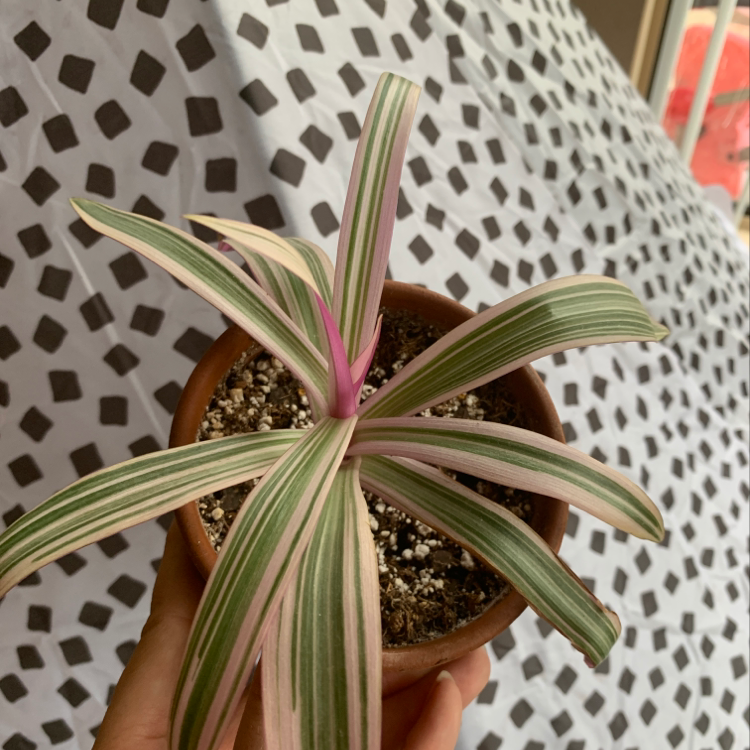
Moses-in-the-Cradle

How to Prune Moses-in-the-Cradle

Tradescantia spathacea
Reviewed by Kiersten Rankel M.S.
Quick Answer
Moses-in-the-Cradle doesn't need traditional pruning, but removing old outer leaves and dividing the clump in spring keeps it looking tidy and prevents overcrowding. Snap off individual leaves at the base when they yellow or dry out, and divide the rosette when it gets too crowded for its pot. Wear gloves -- the sap is a mild irritant.

When is the best time to prune?

Moses-in-the-Cradle is a tropical perennial (zones 9–11) grown mainly as a houseplant, so tidying is best done in spring and summer when growth is active.

US pruning regions map
Pacific
Mar–May
Mountain
Apr–Jun
Midwest
Apr–Jun
Northeast
Apr–Jun
Southeast
Feb–Apr
Stay on top of plant care
Get seasonal reminders for watering and fertilizing — personalized for your plants.
Try Greg Free

Why Should I Prune My Moses-in-the-Cradle?

Moses-in-the-Cradle grows as a rosette, adding new leaves from the center while older outer leaves gradually age and die. Regular removal of those old outer leaves keeps the plant looking sharp and prevents dead material from trapping moisture near the base.

This isn't pruning in the traditional sense. You're not shaping a canopy -- you're doing housekeeping. Remove individual leaves when they turn fully yellow or brown by snapping or cutting them off at the base, as close to the main stem as you can get.

The other major maintenance task is dividing. As the clump matures, it produces offsets around the base. Once the pot feels crowded or the plant starts leaning, it's time to separate those offsets and repot them individually. Spring is the best time for this.

Wear gloves when handling Moses-in-the-Cradle. The sap contains compounds that can irritate skin and cause a rash in sensitive people. Keep the plant away from cats and dogs, as it's toxic to pets.

Know Before You Cut

Difficulty Easy
Max removal No more than 2–3 outer leaves at a time
Growth pattern Clumping rosette
Tools Gloves, sharp scissors or pruners

What Should I Remove?

Remove fully yellow or brown outer leaves at the base
Wear gloves to avoid skin irritation from sap
Divide clumps in spring when pot becomes crowded
Cut damaged leaves cleanly rather than tearing
Don't remove green leaves -- only yellow or dead ones
Don't cut through the center of the rosette
Don't divide in winter when growth is slower

How Do I Prune Step by Step?

1
Put on gloves before you start
The sap from Moses-in-the-Cradle irritates skin. Put on rubber or latex gloves before handling the plant, especially when cutting stems close to the base.
2
Remove yellow and brown outer leaves
Grasp each dying leaf near its base and snap it downward to detach it cleanly. If it resists, cut it as close to the base as possible with sharp scissors.
3
Trim any damaged sections on partially brown leaves
If a leaf is mostly green but has a brown tip or edge, trim the damaged section with scissors following the leaf's natural shape.
4
Divide crowded clumps in spring
Tip the plant out of its pot and gently tease apart the individual rosettes. Each division should have its own roots. Pot each division into fresh mix and water lightly.
5
Clean up and wash hands
Dispose of removed leaves and wash your hands and tools after working with this plant, even if you wore gloves.

Got More Questions?

Can I cut Moses-in-the-Cradle back hard if it gets too big?
Not quite -- since it grows as a rosette rather than a branching shrub, you can't cut the whole plant back and have it regrow. The right approach is to divide the clump or remove older outer leaves. Cutting the central growing point will damage or kill the plant.
The leaves on my Moses-in-the-Cradle have brown tips. Should I cut them?
Yes, you can trim brown tips with scissors following the natural shape of the leaf. Brown tips are usually caused by low humidity or inconsistent watering, not a pruning problem.
Is it okay to remove leaves in winter?
You can remove dead or fully yellow leaves any time of year. Just avoid dividing the plant in winter when growth is minimal, as divisions are slower to establish in low-light conditions.
Why does my skin itch after touching Moses-in-the-Cradle?
The plant's sap contains raphides (tiny calcium oxalate crystals) that irritate skin and mucous membranes. Always wear gloves when pruning or repotting, and wash any exposed skin thoroughly after contact.
Stay on top of plant care
Get seasonal reminders for watering and fertilizing — personalized for your plants.
Try Greg Free

About This Article

Kiersten Rankel M.S.
Botanical Data Lead at Greg · Plant Scientist
About the Author
Kiersten Rankel holds an M.S. in Ecology & Evolutionary Biology from Tulane University. A certified Louisiana Master Naturalist, she has over a decade of experience in science communication, with research spanning corals, cypress trees, marsh grasses, and more. At Greg, she curates species data and verifies care recommendations against botanical research.
See Kiersten Rankel's full background on LinkedIn.
Editorial Process
Pruning guidance verified against Tradescantia spathacea growth data from Greg's botanical database, cross-referenced with USDA hardiness zone data and published horticultural research.
9,146+ Greg users growing this plant
USDA hardiness zones 9a–11b
Grow plants with confidence