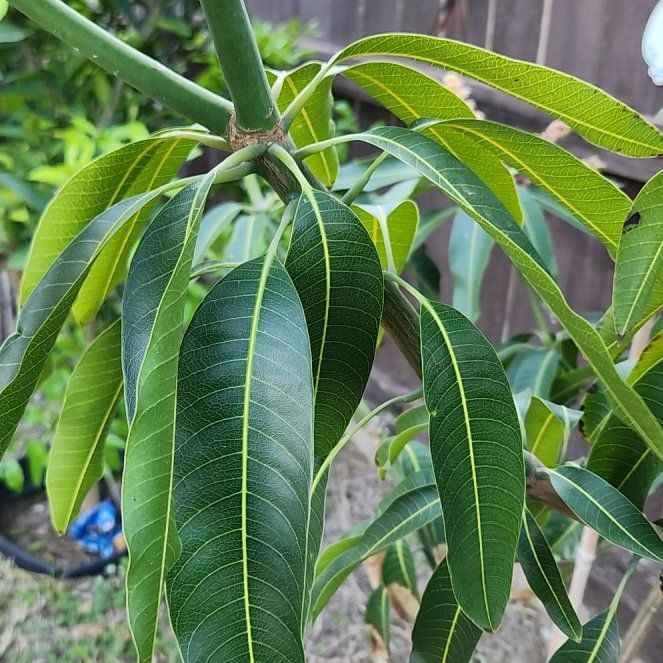
Mango

How to Prune Mango

Mangifera indica
Reviewed by Kiersten Rankel M.S.
Quick Answer
Prune Mango trees right after the harvest season ends, before the next flush of new growth begins. Focus on removing dead or crossing branches, tipping long shoots to encourage branching, and opening up the canopy for better airflow and light penetration. Always wear gloves and long sleeves — mango sap is a serious skin irritant in many people.

When is the best time to prune?

Mango trees are tropical and grow year-round in their preferred zones 10–11, so pruning is timed to the harvest cycle rather than the calendar.

US pruning regions map
Pacific
Aug–Oct
Mountain
N/A (not cold-hardy outdoors)
Midwest
N/A (not cold-hardy outdoors)
Northeast
N/A (not cold-hardy outdoors)
Southeast
Aug–Oct
Stay on top of plant care
Get seasonal reminders for watering and fertilizing — personalized for your plants.
Try Greg Free

Why Should I Prune My Mango?

Mango trees can grow enormous without intervention, making fruit difficult to harvest and the tree hard to manage. Regular pruning keeps the tree at a workable height, opens up the canopy so sunlight reaches fruit-bearing branches, and removes wood that can harbor disease.

The best time to prune is right after you finish harvesting the fruit. This gives the tree time to push new growth and set flower buds before the next fruiting cycle. Pruning during flowering or fruit development knocks off potential fruit.

For young trees in their first few years, light pruning to shape a strong, open framework pays off long-term. Once the main branching structure is established, annual maintenance pruning is mostly about tipping new growth to encourage branching, removing dead or diseased wood, and thinning crowded areas.

Sap warning: Mango sap contains compounds that cause contact dermatitis in many people, similar to poison ivy. Always wear gloves, long sleeves, and eye protection when pruning. Wash tools and skin thoroughly after finishing.

Know Before You Cut

Difficulty Moderate
Max removal Up to 1/4 of canopy per season
Growth pattern Large spreading tree
Tools Pruners, loppers, saw, gloves

What Should I Remove?

Prune after fruit harvest, before new flush of growth
Wear gloves and long sleeves to protect against sap
Remove dead, damaged, or crossing branches
Tip new growth to encourage branching and more fruiting wood
Open up the center of the canopy for light and airflow
Don't prune during flowering or fruit development
Don't remove more than 1/4 of the canopy at one time
Don't touch sap with bare skin — it causes contact dermatitis

How Do I Prune Step by Step?

1
Put on protective gear first
Before making any cuts, put on gloves, long sleeves, and eye protection. Mango sap drips from cut ends and can cause a rash similar to poison ivy on skin and eyes.
2
Remove dead and diseased wood
Start by cutting out any dead, broken, or diseased branches. Cut back to healthy wood, making your cut just above a healthy side branch or bud. Wipe your tools with rubbing alcohol between cuts on diseased wood.
3
Thin crowded and crossing branches
Look for branches that cross each other or grow toward the center of the tree rather than outward. Remove the weaker of any two crossing branches by cutting back to the point where it joins a larger limb.
4
Tip long new growth
Shorten new growth shoots by about a third to encourage side branching. More branches means more fruiting tips, which is where mango flowers and fruit emerge.
5
Step back and assess height
If the tree is getting too tall to harvest easily, cut back the tallest leaders. Aim to keep the tree at a height you can work with a standard ladder. Make these cuts just above a strong outward-facing branch.

Got More Questions?

When is the best time to prune a mango tree?
Right after you finish harvesting the fruit, before the tree pushes its next flush of new growth. In Southern California and South Florida, this is typically late summer through early fall. Pruning during flowering or fruiting knocks off developing fruit.
Can I prune a mango tree in containers?
Yes — container mangos benefit from regular tipping to keep them compact. Pinch or snip the growing tips of new shoots to encourage branching and keep the tree from getting leggy. The same sap precautions apply.
I got mango sap on my skin. What should I do?
Wash the area immediately with soap and water. Avoid touching your face or eyes. If redness or itching develops, treat like a mild poison ivy reaction with hydrocortisone cream. Wear gloves every time you prune going forward.
My mango tree hasn't fruited in years. Can pruning help?
Yes, sometimes. Heavy shade inside the canopy can reduce flowering. Thinning out crossed and inward-facing branches to let more light into the center sometimes improves flowering the following season. Also check that the tree is in full sun and not over-fertilized with nitrogen.
Can I cut a mango tree back hard to reduce its height?
Mango trees tolerate fairly hard pruning and will regrow, but removing more than a quarter of the canopy at once stresses the tree and can delay fruiting for a season or two. Reduce height gradually over 2-3 years for best results.
Stay on top of plant care
Get seasonal reminders for watering and fertilizing — personalized for your plants.
Try Greg Free

About This Article

Kiersten Rankel M.S.
Botanical Data Lead at Greg · Plant Scientist
About the Author
Kiersten Rankel holds an M.S. in Ecology & Evolutionary Biology from Tulane University. A certified Louisiana Master Naturalist, she has over a decade of experience in science communication, with research spanning corals, cypress trees, marsh grasses, and more. At Greg, she curates species data and verifies care recommendations against botanical research.
See Kiersten Rankel's full background on LinkedIn.
Editorial Process
Pruning guidance verified against Mangifera indica growth data from Greg's botanical database, cross-referenced with USDA hardiness zone data and published horticultural research.
2,179+ Greg users growing this plant
USDA hardiness zones 10a–11b
Grow plants with confidence