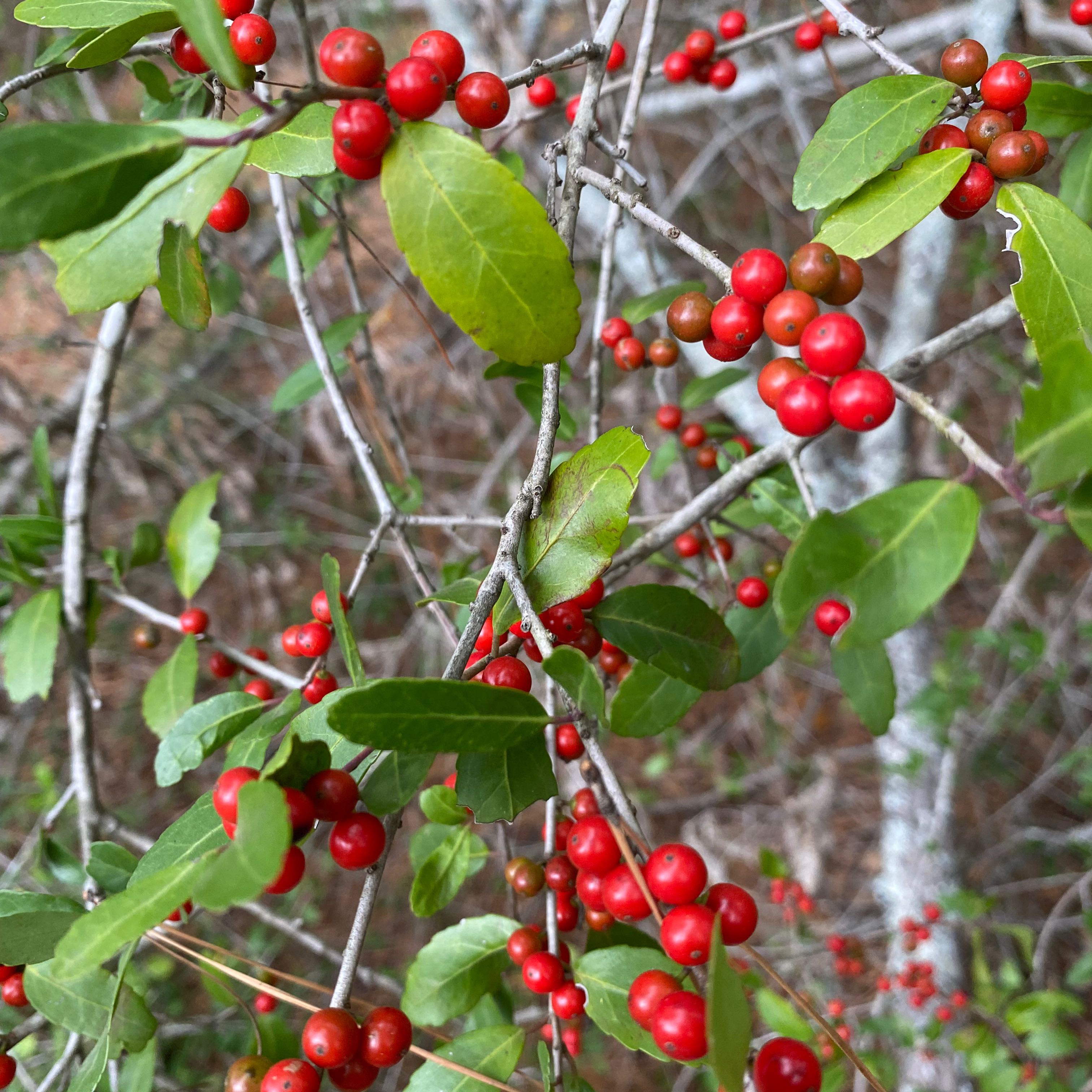
Yaupon

How to Prune Yaupon

Ilex vomitoria
Reviewed by Kiersten Rankel M.S.
Quick Answer
Prune Yaupon in late winter (February–March) before the new growth flush, or right after new growth hardens in late spring. Focus on shaping and removing any crossing or dead branches. Yaupon is extremely tolerant of pruning and can even be cut back hard if you want to rejuvenate an overgrown shrub.

When is the best time to prune?

Because Yaupon is an evergreen native to the Southeast, it tolerates a wide pruning window, though late winter to early spring is ideal before new growth begins.

US pruning regions map
Pacific
Feb–Mar
Mountain
Mar–Apr
Midwest
Mar–Apr
Northeast
Mar–Apr
Southeast
Feb–Mar
Stay on top of plant care
Get seasonal reminders for watering and fertilizing — personalized for your plants.
Try Greg Free

Why Should I Prune My Yaupon?

Yaupon (Ilex vomitoria) is one of the toughest native shrubs in the Southeast. It grows densely and can be shaped into a formal hedge, left as a naturalistic shrub, or even trained as a small multi-stem tree by removing the lower branches.

Pruning in late winter, before new growth pushes out, gives the plant a clean start to the season. Because Yaupon is an evergreen, you can see the shrub’s shape year-round and plan your cuts accordingly.

For an overgrown Yaupon, you can cut it back hard — even to 12–18 inches from the ground — in late winter. It will resprout vigorously. This is a good option if the plant has become leggy or you want to change its form.

If you want berries (on female plants only), avoid heavy pruning in late summer or fall, as you’ll remove the developing fruit.

Know Before You Cut

Difficulty Easy
Max removal Up to 1/3 per season; tolerates harder cuts
Growth pattern Dense evergreen shrub
Tools Hand pruners, hedge shears, loppers

What Should I Remove?

Prune in late winter before new growth begins
Remove dead, crossing, or inward-pointing branches
Cut suckers at the base for a clean trunk line
Hard rejuvenation cuts are fine in late winter for overgrown plants
Don’t prune female plants in fall if you want winter berries
Don’t use hedge shears if training as a specimen tree
Don’t touch the berries or leaves without gloves, plant parts are toxic if ingested

How Do I Prune Step by Step?

1
Decide on your goal
Are you maintaining a hedge, shaping a specimen shrub, or rejuvenating an overgrown plant? Your goal determines how aggressively you prune.
2
Remove dead and crossing branches first
Clear out any dead wood back to live growth, and remove branches that cross or rub against each other, cutting back to the main stem.
3
Shape the outer canopy
For hedges, use shears to trim to your desired outline. For specimen shrubs, use hand pruners to selectively thin and shape, preserving a natural look.
4
Remove basal suckers if needed
If training as a small tree, cut any stems emerging from the base close to the soil. For multi-stem shrubs, leave them.
5
Follow up in late spring if needed
A light second pass in late spring after new growth hardens can refine the shape for the rest of the season.

Got More Questions?

Can I prune Yaupon in summer?
Yes, light shaping in early summer after the new growth hardens is fine. Avoid heavy pruning in summer heat, as it stresses the plant and can leave it susceptible to pests.
What if I cut it back really hard?
Yaupon is one of the most resilient shrubs you can grow. It will resprout from hard rejuvenation cuts, even from old wood. Expect vigorous new growth within one growing season.
How often do I need to prune for a formal hedge?
Two passes a year — late winter and early summer — keeps a formal hedge sharp. For a looser look, once in late winter is usually enough.
Will pruning affect the berry display?
Pruning in late winter before flowering doesn’t affect berry production. Heavy pruning in late summer or fall, when berries are developing, will reduce the display.
Stay on top of plant care
Get seasonal reminders for watering and fertilizing — personalized for your plants.
Try Greg Free

About This Article

Kiersten Rankel M.S.
Botanical Data Lead at Greg · Plant Scientist
About the Author
Kiersten Rankel holds an M.S. in Ecology & Evolutionary Biology from Tulane University. A certified Louisiana Master Naturalist, she has over a decade of experience in science communication, with research spanning corals, cypress trees, marsh grasses, and more. At Greg, she curates species data and verifies care recommendations against botanical research.
See Kiersten Rankel's full background on LinkedIn.
Editorial Process
Pruning guidance verified against Ilex vomitoria growth data from Greg's botanical database, cross-referenced with USDA hardiness zone data and published horticultural research.
144+ Greg users growing this plant
USDA hardiness zones 7a–9b
Grow plants with confidence