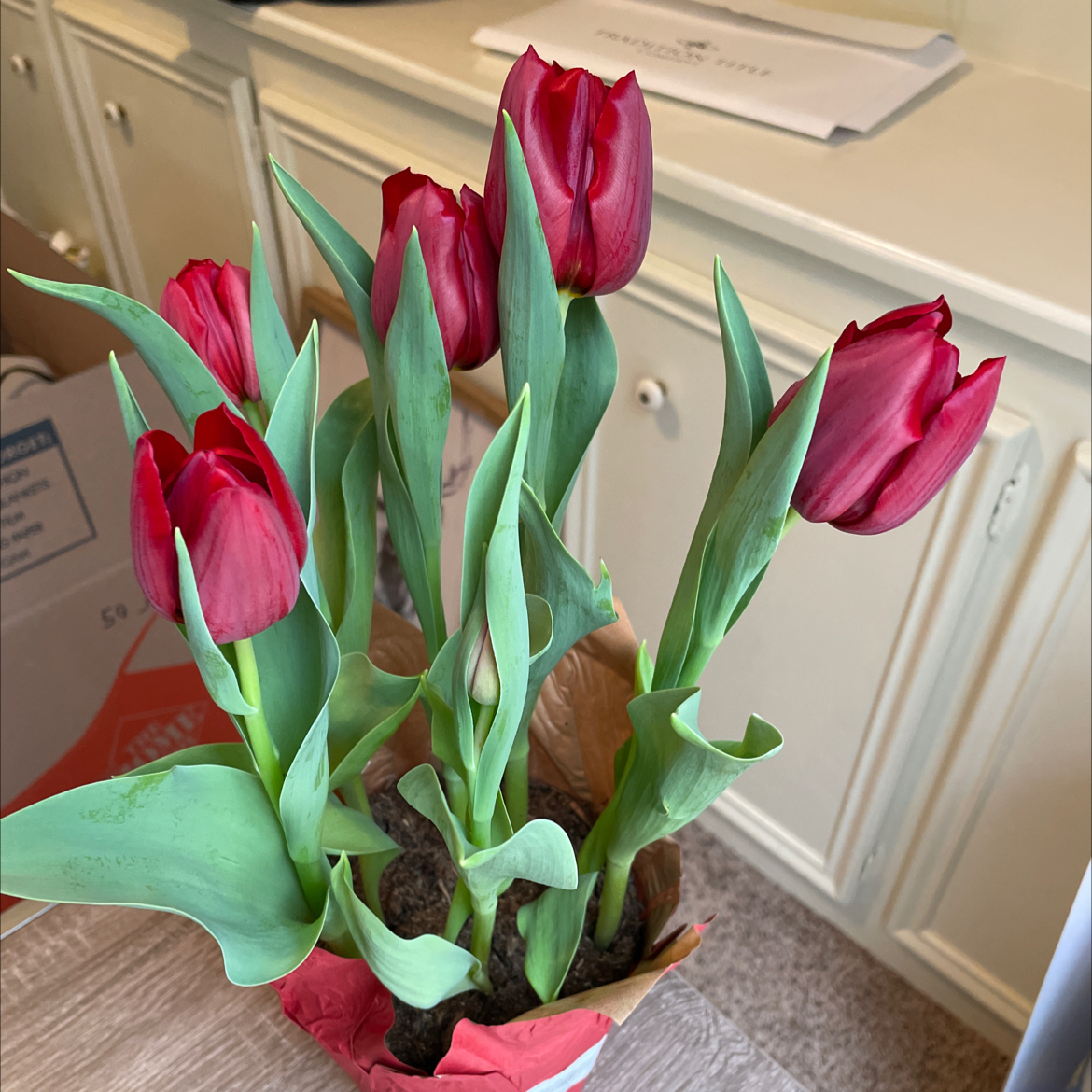
Garden Tulip

How to Prune Garden Tulip

Tulipa gesneriana
Reviewed by Kiersten Rankel M.S.
Quick Answer
After your Garden Tulips finish blooming, cut off the spent flower head but leave all the leaves intact. The foliage needs to stay until it yellows and dies back on its own, because that process feeds the bulbs for next year. Cutting the leaves off early is the single most common mistake tulip growers make.

When is the best time to prune?

Garden Tulips bloom in spring (zones 3–8), so deadheading happens in April through May depending on your region, followed by a foliage-down period that lasts four to six weeks.

US pruning regions map
Pacific
Mar–Apr (deadhead after bloom)
Mountain
May–Jun (deadhead after bloom)
Midwest
Apr–May (deadhead after bloom)
Northeast
Apr–May (deadhead after bloom)
Southeast
Mar–Apr (deadhead after bloom)
Stay on top of plant care
Get seasonal reminders for watering and fertilizing — personalized for your plants.
Try Greg Free

Why Should I Prune My Garden Tulip?

Tulip "pruning" is really about two simple tasks done at the right time: remove the spent flower, then leave everything else alone until the leaves die back naturally.

Once a tulip flower fades, snip off the flower head to stop the plant from putting energy into making seeds. Cut the flower stem down to the first leaf. Do this promptly after petals drop, but don't touch the leaves yet.

The leaves are the most important part. After blooming, tulip leaves photosynthesize and send energy back into the bulb underground. That stored energy powers next year's flowers. If you cut the leaves off while they're still green, the bulb doesn't get that energy and often fails to bloom again.

Leave the leaves completely alone until they've yellowed and gone limp on their own. This usually takes four to six weeks after the flower fades. Once the foliage is fully yellow and collapses, pull or cut it away at the base. Don't braid or tie the leaves -- that reduces their light capture and works against you.

Know Before You Cut

Difficulty Easy
Max removal Flower heads only; all foliage removed only after full yellowing
Growth pattern Bulb, upright stems
Tools Sharp scissors or pruners

What Should I Remove?

Deadhead spent flowers by cutting the stem to the first leaf
Leave all foliage until it yellows and collapses naturally
Remove yellowed foliage cleanly at the base
Don't cut back green leaves after bloom -- bulbs need them
Don't braid or tie leaves together -- reduces photosynthesis
Don't remove foliage just because it looks untidy while still green

How Do I Prune Step by Step?

1
Wait for the flower to finish blooming
Leave the flower on the plant through peak bloom. Once petals start to drop or the flower looks finished, it's time to deadhead.
2
Cut the spent flower stem to the first leaf
Use sharp scissors or pruners to cut the flower stem down to just above where it meets the first leaf. Don't cut the leaves themselves.
3
Leave the foliage alone for four to six weeks
The leaves look untidy but they're working. Let them be. Removing them before they yellow will weaken or kill the bulb's ability to bloom next year.
4
Remove yellowed foliage when fully collapsed
Once leaves are completely yellow and limp -- not just starting to yellow -- pull or cut them away at the base. They detach easily when they're ready.

Got More Questions?

Can I cut the tulip leaves back earlier if they look messy?
No -- cutting the leaves while they're green deprives the bulb of the energy it needs for next year's bloom. Plant annuals or perennials nearby to hide the dying foliage if the look bothers you.
My tulips didn't bloom this year. Did I prune them wrong last year?
Possibly. If you cut the foliage back while it was still green last year, the bulbs may not have stored enough energy. Other causes include bulbs planted too shallow, insufficient winter chill, or bulbs that simply run out of steam after several years.
Do tulips in warmer climates need any different pruning approach?
In warmer zones (7b–8b), tulips are often treated as annuals and the bulbs are dug up after foliage dies. In these areas, letting foliage die back still matters for the current season's bulb health, even if you plan to discard and replant fresh bulbs next fall.
Should I remove the whole stem after deadheading?
Just cut the flower stem down to the first leaf. You don't need to remove the stem entirely -- it will yellow and dry up along with the leaves over the following weeks.
Stay on top of plant care
Get seasonal reminders for watering and fertilizing — personalized for your plants.
Try Greg Free

About This Article

Kiersten Rankel M.S.
Botanical Data Lead at Greg · Plant Scientist
About the Author
Kiersten Rankel holds an M.S. in Ecology & Evolutionary Biology from Tulane University. A certified Louisiana Master Naturalist, she has over a decade of experience in science communication, with research spanning corals, cypress trees, marsh grasses, and more. At Greg, she curates species data and verifies care recommendations against botanical research.
See Kiersten Rankel's full background on LinkedIn.
Editorial Process
Pruning guidance verified against Tulipa gesneriana growth data from Greg's botanical database, cross-referenced with USDA hardiness zone data and published horticultural research.
3,321+ Greg users growing this plant
USDA hardiness zones 3a–8b
Grow plants with confidence