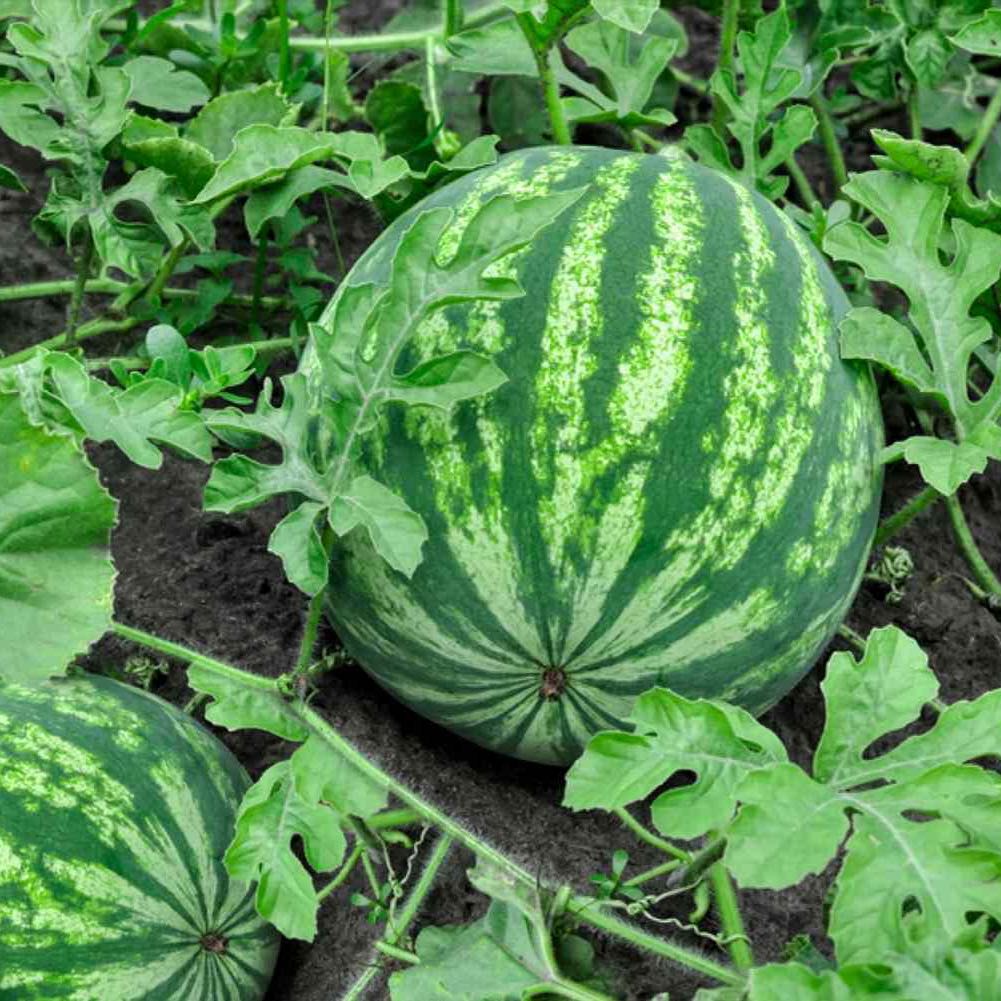
Watermelon

How to Prune Watermelon

Citrullus lanatus
Reviewed by Kiersten Rankel M.S.
Quick Answer
Prune watermelon vines in early summer once the main vine reaches about 60 cm long. Remove weaker secondary vines and limit the plant to two or three fruiting vines to concentrate energy into larger fruits. Once fruits are set, pinch the tip of each fruiting vine a few leaves beyond the fruit to stop further vine growth.

When is the best time to prune?

As an annual warm-season crop, watermelon pruning timing aligns with your local planting schedule after the last frost.

US pruning regions map
Pacific
May–Jul
Mountain
Jun–Aug
Midwest
Jun–Jul
Northeast
Jun–Jul
Southeast
May–Jul
Stay on top of plant care
Get seasonal reminders for watering and fertilizing — personalized for your plants.
Try Greg Free

Why Should I Prune My Watermelon?

Watermelon is a sprawling vine that naturally puts energy into producing as many fruits as possible, but most of those fruits stay small. Pruning focuses the plant's resources into fewer, larger, better-flavored melons.

The main technique is removing secondary or tertiary lateral shoots, called side vines, early in the season. Keep two or three of the strongest secondary vines alongside the main vine. Remove any additional lateral shoots that emerge from those, especially ones growing back toward the center or shading the main fruiting area.

Once small fruits are visible and about the size of a golf ball, select the best one or two per vine and remove any other developing fruits on that vine. Then pinch the growing tip of the vine three or four leaves beyond your chosen fruit. This stops the vine from extending further and directs all remaining energy to the selected melon.

Watermelons on very long vines in small gardens can also be trained by redirecting vines and cutting back excess length. In large open gardens with plenty of space, minimal pruning is needed.

Know Before You Cut

Difficulty Moderate
Max removal Remove all but 2–3 main fruiting vines
Growth pattern Sprawling annual vine
Tools Sharp pruners or scissors

What Should I Remove?

Keep 2–3 strong secondary vines alongside the main vine
Remove all other lateral shoots when they are still small
Select one fruit per vine once fruits are golf-ball sized
Pinch vine tips 3–4 leaves beyond the chosen fruit
Don't prune when vines are wet to avoid fungal spread
Don't remove the main growing tip before fruits have set
Don't remove all secondary vines, some are needed for photosynthesis

How Do I Prune Step by Step?

1
Let the main vine reach 60 cm before pruning
Wait until the primary vine is about 60 cm long and has begun to branch. Pruning too early reduces the leaf area available for photosynthesis and can slow fruit development.
2
Select and keep two to three secondary vines
Choose the two or three strongest lateral vines growing from the main stem. These will become your fruiting vines. Remove all other lateral shoots at their base while they are still small and easy to cut.
3
Remove any further side shoots on selected vines
Once your main fruiting vines are growing, pinch off any new lateral shoots that emerge from them. This keeps the plant focused rather than branching indefinitely.
4
Select one fruit per vine and remove others
When you can see small fruits forming, choose the best-positioned fruit on each vine and pinch off all other developing fruits on that vine. Leave the ones that are round, undamaged, and growing from a healthy node.
5
Pinch vine tips beyond the fruit
Count three to four leaves past your chosen fruit and pinch or cut off the growing tip of the vine. This stops further vine extension and redirects energy into the maturing fruit.

Got More Questions?

Do I have to prune watermelons to get fruit?
No. Watermelons will produce fruit without pruning. Pruning is about getting fewer but larger, better-quality melons. In a small garden where space is tight, pruning also helps keep vines manageable.
What if I accidentally cut off a fruit that was forming?
The plant will likely produce another fruit from a different flower. As long as male and female flowers are still being produced, the plant will keep setting fruit through the season.
Why is my watermelon vine not producing fruit after pruning?
Watermelons need both male and female flowers present at the same time, and bees to pollinate them. Make sure you have not removed too many vines, as flowers form along the length of each vine.
Can I prune watermelon in a container?
Yes, and it is especially useful in containers. Train one or two vines over the edge and remove everything else. Select just one fruit per plant for containers, as root space is limited.
Stay on top of plant care
Get seasonal reminders for watering and fertilizing — personalized for your plants.
Try Greg Free

About This Article

Kiersten Rankel M.S.
Botanical Data Lead at Greg · Plant Scientist
About the Author
Kiersten Rankel holds an M.S. in Ecology & Evolutionary Biology from Tulane University. A certified Louisiana Master Naturalist, she has over a decade of experience in science communication, with research spanning corals, cypress trees, marsh grasses, and more. At Greg, she curates species data and verifies care recommendations against botanical research.
See Kiersten Rankel's full background on LinkedIn.
Editorial Process
Pruning guidance verified against Citrullus lanatus growth data from Greg's botanical database, cross-referenced with USDA hardiness zone data and published horticultural research.
1,216+ Greg users growing this plant
USDA hardiness zones 3a–11b
Grow plants with confidence