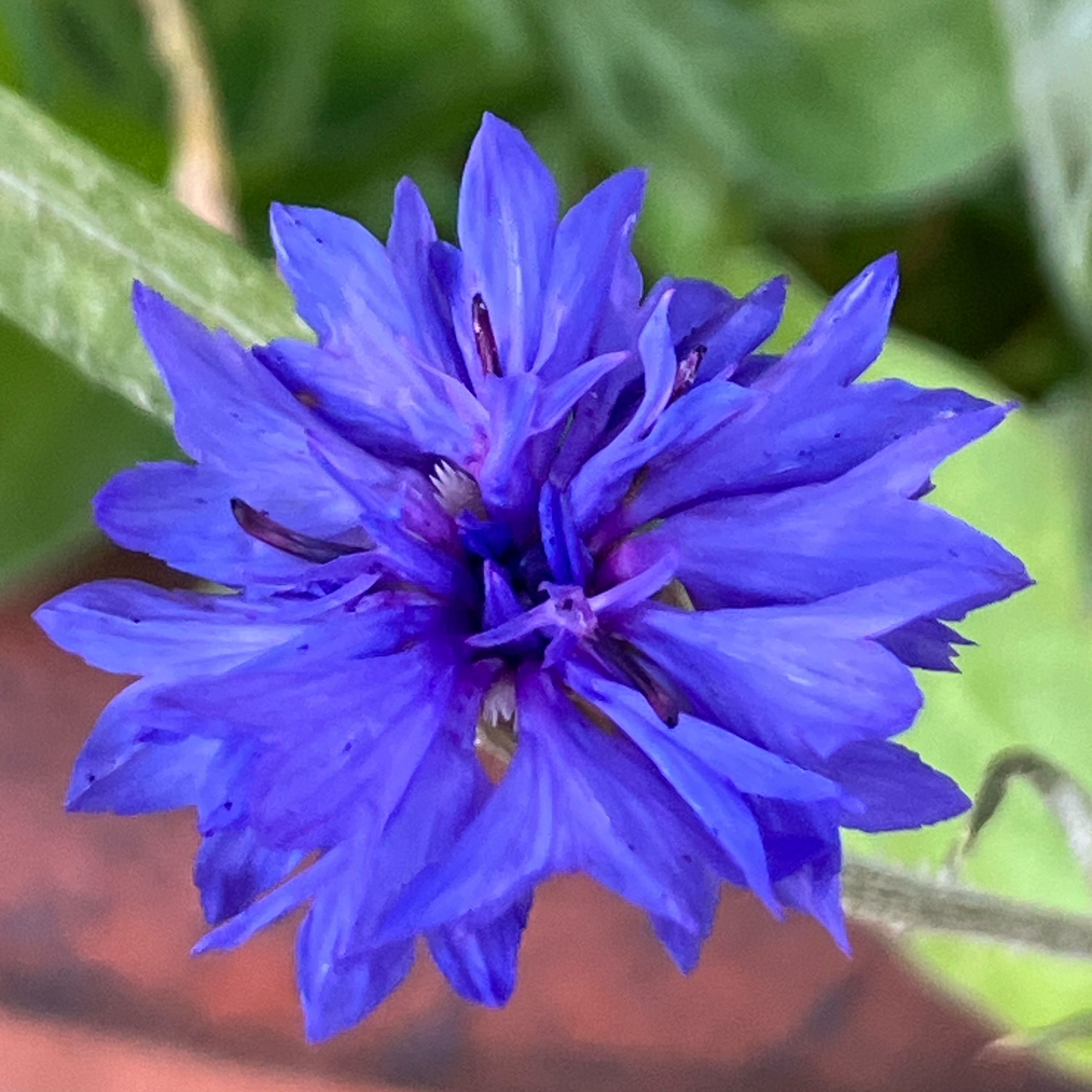
Cornflower

How to Prune Cornflower

Centaurea cyanus
Reviewed by Kiersten Rankel M.S.
Quick Answer
Deadhead Cornflowers regularly throughout the blooming season -- late spring through summer -- by cutting spent flowers back to the next bud or branch junction. This extends flowering significantly. In fall, cut plants to the ground or let them drop seed for a naturalistic return next year.

When is the best time to prune?

Cornflower is a cool-season annual that blooms in spring and early summer in most regions, so deadheading begins as soon as the first flowers fade.

US pruning regions map
Pacific
Apr–Jul (deadhead during bloom)
Mountain
May–Aug (deadhead during bloom)
Midwest
May–Jul (deadhead during bloom)
Northeast
May–Jul (deadhead during bloom)
Southeast
Mar–Jun (deadhead during bloom)
Stay on top of plant care
Get seasonal reminders for watering and fertilizing — personalized for your plants.
Try Greg Free

Why Should I Prune My Cornflower?

Cornflowers are annuals with one goal: bloom, set seed, and die. Deadheading -- removing spent blooms before they go to seed -- tricks the plant into producing more flowers instead of finishing its lifecycle. Regular deadheading can double or triple how long your Cornflowers bloom.

Deadhead by cutting each spent flower back to just above the next bud lower on the stem, or back to a branching point. Don't just snap off the flower head -- cut the whole spent stem section back. This keeps the plant tidy and redirects energy toward new buds.

In late summer, as heat builds and the plants start to look ragged, you can let a few flowers go to seed intentionally. Cornflowers self-seed readily and will often return without any effort on your part. Just leave some spent heads on the plant and let them dry and drop.

Once plants are fully done for the season, cut them to the ground or pull them out. There's no winter structure worth preserving -- Cornflowers are annuals and won't return from the same plant.

Know Before You Cut

Difficulty Easy
Max removal 1/3 of stem length per deadhead cut
Growth pattern Upright annual
Tools Sharp scissors or pruners

What Should I Remove?

Cut spent blooms back to the next bud or branch junction
Deadhead every 1–2 weeks throughout the bloom period
Leave a few late blooms to set seed for natural reseeding
Cut plants to the ground when fully finished for the season
Don't just snap off flower heads without cutting the stem back
Don't deadhead every single bloom if you want self-seeding

How Do I Prune Step by Step?

1
Check for spent blooms every 1–2 weeks
Walk through your Cornflowers regularly during the bloom season. Look for flowers that have lost their petals and are showing a small brown seed-forming base.
2
Cut each spent bloom back to the next bud
Trace the stem down from the spent flower to the next visible bud or branch junction below it. Cut just above that point. Avoid just snipping off the flower head.
3
Remove crossing or crowded stems
If the plant is dense and stems are tangling, cut out a few of the most crowded stems at their base. Good airflow reduces the risk of powdery mildew, which Cornflowers are prone to.
4
Allow late-season blooms to set seed if desired
In late summer, leave some spent flowers on the plant rather than cutting them. They'll dry and drop seed naturally, which may give you Cornflowers next year without replanting.
5
Cut to the ground at season's end
Once plants look truly done -- stems turning brown, no new buds -- cut them to the ground or pull them entirely. Clear the bed for next season's planting.

Got More Questions?

Will Cornflowers bloom again if I deadhead them?
Yes. Regular deadheading significantly extends the blooming period by preventing the plant from going to seed. A well-deadheaded Cornflower can bloom for two to three months instead of a few weeks.
My Cornflowers look raggedy and tired in July. Can I cut them way back?
You can cut the whole plant back by about half to encourage a late-season flush if the weather cools down. In warm summer regions, Cornflowers often just give out by midsummer regardless -- they're cool-season plants that decline in heat.
If I let Cornflowers self-seed, will I get the same color next year?
Usually, especially with straight blue varieties. Hybrid colors may revert toward blue or vary. Self-seeded plants tend to be more vigorous than transplants.
Do I need to deadhead Cornflowers if I just want them for cutting?
Yes -- cut flowers regularly for bouquets and it works the same way as deadheading. Every stem you cut for a vase is one less stem setting seed, so the plant keeps producing.
Stay on top of plant care
Get seasonal reminders for watering and fertilizing — personalized for your plants.
Try Greg Free

About This Article

Kiersten Rankel M.S.
Botanical Data Lead at Greg · Plant Scientist
About the Author
Kiersten Rankel holds an M.S. in Ecology & Evolutionary Biology from Tulane University. A certified Louisiana Master Naturalist, she has over a decade of experience in science communication, with research spanning corals, cypress trees, marsh grasses, and more. At Greg, she curates species data and verifies care recommendations against botanical research.
See Kiersten Rankel's full background on LinkedIn.
Editorial Process
Pruning guidance verified against Centaurea cyanus growth data from Greg's botanical database, cross-referenced with USDA hardiness zone data and published horticultural research.
263+ Greg users growing this plant
USDA hardiness zones 3a–8b
Grow plants with confidence