Plant Care
›
Propagation
›
Douglas Fir
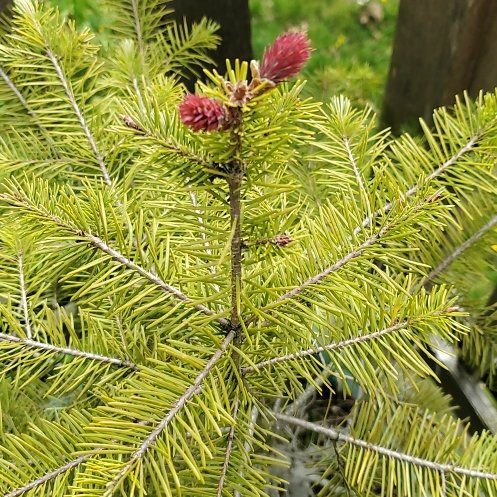
Pseudotsuga menziesii
Reviewed by Kiersten Rankel M.S.
QUICK ANSWER
Seed sowing after 28 to 60 days of cold stratification is the home grower's only reliable path and produces a viable seedling in 12 to 18 months. Hardwood cuttings root only 10 to 25 percent of the time and rarely produce a normal upright tree, so most home growers stick with seed despite the longer wait.
Stay on top of plant care
Get seasonal reminders for watering and fertilizing, personalized for your plants.
Try Greg Free
Pick your method
Tap one to jump to the walkthrough.
From seed
Best for raising true-to-species seedlings from scratch
Hardwood cuttings
Best when you must clone a specific parent tree
From seed
Time
12–18 months
Level
Intermediate
Success rate
Moderate
You'll need
Fresh Douglas fir cones or cleaned seed
Damp sand or vermiculite
Sealable plastic bag
Refrigerator at 34 to 40 degrees F
Deep pots, 4 inches or taller, with drainage
Sandy potting mix
1
Source fresh seed
Collect ripe cones in late summer when scales begin to lift but before they fully open. Dry indoors for 1 to 2 weeks until seeds release naturally.
Purchased seed should come from a recent collection. Discard any seed that floats after a 24-hour soak.
Purchased seed should come from a recent collection. Discard any seed that floats after a 24-hour soak.
2
Cold stratify for 28 to 60 days
Mix seeds with damp sand or vermiculite in a sealed bag and place in the refrigerator at 34 to 40 degrees F. Check weekly and re-moisten if the medium dries out.
This chilling mimics a Pacific Northwest winter and is required to break dormancy.
This chilling mimics a Pacific Northwest winter and is required to break dormancy.
3
Sow shallow in deep pots
Fill 4-inch deep pots with sandy potting mix and press one seed a quarter inch below the surface. Douglas fir develops a long taproot fast, so depth matters more than width.
4
Keep cool and moist
Place pots in bright indirect light at 60 to 70 degrees F. Mist daily so the top half inch never dries out. Avoid full sun until seedlings have hardened off.
Germination starts in 3 to 6 weeks once stratification is complete.
Germination starts in 3 to 6 weeks once stratification is complete.
5
Grow on through the first year
Once seedlings show their first true needles, move them outside to dappled shade. Water when the surface dries and skip fertilizer the first growing season.
Protect young seedlings from full afternoon sun and from slugs.
Protect young seedlings from full afternoon sun and from slugs.
6
Transplant in the second autumn
By month 12 to 18 the seedling will be 4 to 8 inches tall with a sturdy stem and a deep taproot. Move to its permanent spot in early autumn so roots settle before winter. Avoid late spring or summer transplanting.
WATCH FOR
Seedlings that flop over with a dark pinched spot at soil level. That is damping off, a fungal collapse caused by wet, stagnant conditions. Reduce watering, increase airflow, and water from below.
Douglas fir is especially prone to damping off in the first 8 weeks, so sterile seed-starting mix and bottom watering matter from day one.
Douglas fir is especially prone to damping off in the first 8 weeks, so sterile seed-starting mix and bottom watering matter from day one.
Hardwood cuttings
Time
6–9 months
Level
Advanced
Success rate
Low
You'll need
6 to 8 inch hardwood cuttings from a young tree
Sterile pruning shears
Rooting hormone (IBA 0.8 percent)
50/50 perlite and peat mix
Clear humidity dome
Bottom heat mat set to 65 to 70 degrees F
1
Take cuttings in late winter
Choose 6 to 8 inch shoots from the previous season's growth on a young, vigorous tree. Cuttings from trees under 10 years old root far better than cuttings from mature specimens.
Make a clean cut just below a needle bundle with sterile shears.
Make a clean cut just below a needle bundle with sterile shears.
2
Strip the lower needles
Pull or cut needles from the bottom 2 inches of each cutting. The bare zone develops roots, so leave needles only on the top third of the stem.
3
Dip in rooting hormone
Tap the bare end into IBA 0.8 percent powder and shake off excess. Conifer cuttings need a stronger hormone concentration than most softwood cuttings.
Without hormone, take rates drop close to zero for Douglas fir.
Without hormone, take rates drop close to zero for Douglas fir.
4
Insert into rooting medium
Push each cutting 2 inches deep into a 50/50 perlite and peat mix in a 4-inch pot. Firm the medium gently so the cutting stands upright without wobbling. Space cuttings 2 inches apart in shared trays.
5
Cover and apply bottom heat
Set the tray on a heat mat at 65 to 70 degrees F and cover with a clear dome to hold humidity at 80 percent or higher. Place under a grow light for 14 hours a day or in a north window.
Vent the dome for 10 minutes every other day to prevent mold.
Vent the dome for 10 minutes every other day to prevent mold.
6
Test for roots at month 6
Tug gently. Resistance means roots have formed. Pot up rooted cuttings in sandy mix and harden off outside in spring. Expect roots to take much longer than for broadleaf cuttings.
WATCH FOR
Brown, dried-out needles within the first month. That is desiccation from low humidity inside the dome. Check that condensation forms on the dome walls each morning. If not, mist the inside and re-seal. Conifer cuttings have no root system to replace lost moisture, so humidity is non-negotiable for the full 6 months. Many cuttings also drop needles, root, and produce horizontal growth from a side branch instead of upright leader growth, which is normal for Douglas fir.
Stay on top of plant care
Get seasonal reminders for watering and fertilizing, personalized for your plants.
Try Greg Free
About This Article

Kiersten Rankel M.S.
Botanical Data Lead at Greg · Plant Scientist
Editorial Process
Propagation methods verified against Pseudotsuga menziesii growth data from Greg's botanical database, cross-referenced with USDA hardiness zone data and published horticultural research.
109+ Greg users growing this plant
USDA hardiness zones 4a–6b