Plant Care
›
Propagation
›
Peach Tree
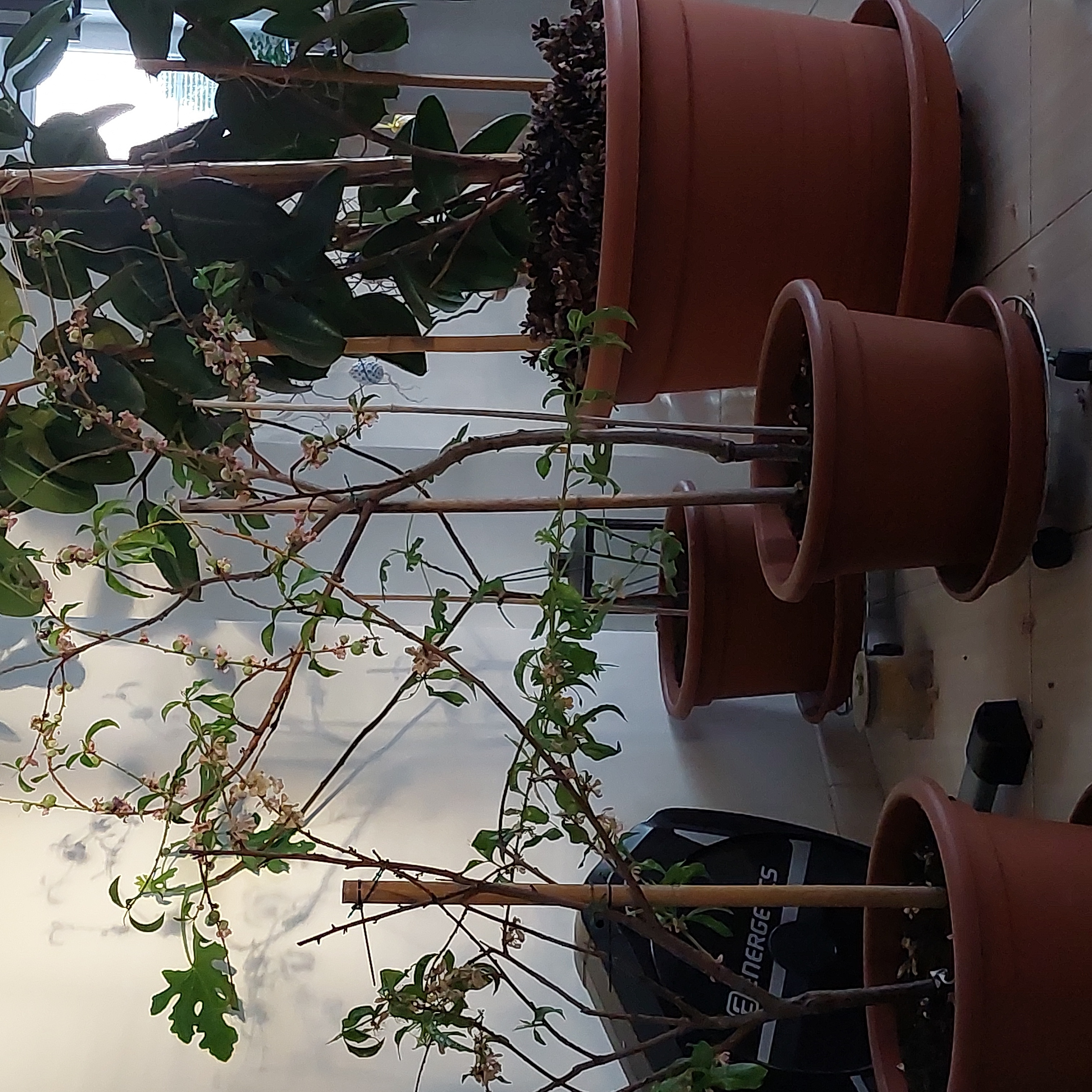
Prunus persica
Reviewed by Kiersten Rankel M.S.
QUICK ANSWER
Seed germinates after 90 to 120 days of cold stratification and is the easiest home method, but seedlings will not match the parent fruit. Softwood cuttings root in 6 to 10 weeks under mist and are the best way to clone a specific tree.
T-budding onto a rootstock is the standard nursery method and gives a fruiting tree fastest at 1 to 2 years. Hardwood cuttings root in 8 to 12 weeks but have a low home success rate.
T-budding onto a rootstock is the standard nursery method and gives a fruiting tree fastest at 1 to 2 years. Hardwood cuttings root in 8 to 12 weeks but have a low home success rate.
Stay on top of plant care
Get seasonal reminders for watering and fertilizing, personalized for your plants.
Try Greg Free
Pick your method
Tap one to jump to the walkthrough.
From seed
Best when you don't need to match the parent fruit
Softwood cuttings
Best for cloning a specific tree's fruit
Hardwood cuttings
Best when you have lots of dormant prunings to test
T-budding
Best for fast fruit on a chosen rootstock
From seed
Time
90–120 days cold + 4–6 weeks germination
Level
Beginner
Success rate
High
You'll need
Pit from a fresh ripe peach
Plastic zip bag
Damp peat moss or paper towel
Refrigerator
4-inch pot with drainage holes
Seed-starting or potting mix
1
Save the pit and let it dry
Eat the peach and clean the pit thoroughly under running water to remove all flesh. Let it air-dry on a paper towel for 1 to 2 days.
Flesh left on the pit attracts mold during stratification.
Flesh left on the pit attracts mold during stratification.
2
Crack the pit (optional but speeds germination)
Carefully crack the hard pit with a nutcracker to release the inner seed. This is optional. Whole pits germinate too, just slower and less reliably.
Seedlings from this seed will not produce the same fruit as the parent. Most home-grown peach seedlings have edible but smaller and less flavorful fruit.
Seedlings from this seed will not produce the same fruit as the parent. Most home-grown peach seedlings have edible but smaller and less flavorful fruit.
3
Cold stratify for 90 to 120 days
Place the seed (or whole pit) in a zip bag with damp peat moss or a damp paper towel. Refrigerate at 33 to 41 degrees Fahrenheit for 90 to 120 days. Check monthly and re-dampen if it dries out.
4
Sow when sprouts emerge
After 90 days, check the bag weekly. Once a small white root tip emerges from the seed, plant it 2 inches deep in a 4-inch pot of seed-starting mix with the root tip pointing down.
5
Keep warm and bright
Place the pot in bright indirect light at 70 degrees Fahrenheit. Water lightly to keep the mix damp but not soggy. The shoot pushes through the soil within 2 to 4 weeks.
6
Pot up and grow on
Once the seedling has 4 true leaves at about 8 weeks old, pot up into a 1-gallon container with regular potting mix. Plant outside the following spring. Plan for 3 to 5 years before the tree fruits.
WATCH FOR
The seed shriveled or moldy in the bag. Shrivel comes from peat that dried out. Mold comes from peat that was too wet. Squeeze the peat until no water drips before bagging, and check moisture every 3 weeks during the chill.
Softwood cuttings
Time
6–10 weeks
Level
Advanced
Success rate
Low
You'll need
Sterile sharp shears
Rooting hormone gel (recommended)
Half peat, half perlite mix
4-inch pots with drainage holes
Clear humidity dome
Heat mat (recommended)
1
Take cuttings in early summer
Cut 4 to 6 inch tips from the current year's growth in late spring or early summer when the wood has begun to firm but still bends without snapping. Cut early in the morning when stems are fully turgid.
Fully soft tips wilt before they root. Fully hardened wood almost never roots.
Fully soft tips wilt before they root. Fully hardened wood almost never roots.
2
Strip the bottom leaves
Remove all leaves from the bottom 2 inches of the cutting. Leave 3 to 4 leaves at the top, halving each remaining leaf if they are large to reduce moisture loss.
3
Wound the base and apply hormone
Make a half-inch vertical scrape along the bottom of the stem with the knife to expose the cambium. Dip the wounded base into rooting hormone gel.
Peach has a very low natural rooting rate. Both wounding and high-strength hormone are needed to clear 30 percent success.
Peach has a very low natural rooting rate. Both wounding and high-strength hormone are needed to clear 30 percent success.
4
Insert into a 50/50 peat-perlite mix
Push the cutting 2 inches deep into a pre-moistened mix of half peat and half perlite. Firm the mix gently around the stem so the cutting stands on its own.
5
Cover and bottom-heat
Tent a clear dome over the pot to hold humidity at 80 percent or higher. Set the pot on a heat mat at 70 to 75 degrees Fahrenheit in bright indirect light, never direct sun.
Mist the dome daily and vent for a few minutes to prevent fungal growth.
Mist the dome daily and vent for a few minutes to prevent fungal growth.
6
Test for roots at 8 weeks
Tug gently at week 8. Resistance means roots have anchored. Once new growth appears, gradually open the dome over a week to harden off, then keep the cutting protected in a cold frame or unheated garage through its first winter before planting out.
WATCH FOR
Top leaves wilting and shriveling within the first 3 days. That is moisture loss outpacing what the cutting can replace. Re-seal the dome with no gaps, mist heavily inside the dome, and shade the setup more aggressively to drop the temperature.
Hardwood cuttings
Time
8–12 weeks
Level
Advanced
Success rate
Low
You'll need
Sterile sharp pruning shears
Rooting hormone powder
Half perlite, half coarse sand mix
Deep pots or trench in well-drained soil
Mulch (for outdoor sticking)
1
Cut dormant pencil-thick wood in late winter
Take 8 to 12 inch sections of pencil-thick one-year-old wood after the last hard freeze but before buds swell. Cut just below a bud at the base and just above a bud at the top. Mark the bottom end with an angled cut so you don't plant upside down.
2
Wound the base and dust with hormone
Make a half-inch vertical scrape on opposite sides of the bottom inch with a sharp blade. Dip the wounded base into rooting hormone powder and tap off excess.
Untreated peach hardwood cuttings root at well under 20 percent. Hormone is mandatory.
Untreated peach hardwood cuttings root at well under 20 percent. Hormone is mandatory.
3
Insert into well-drained mix
Push each cutting 4 to 6 inches deep into a pot of 50/50 perlite and coarse sand, or directly into a sandy outdoor trench. Only the top inch with two buds should be exposed.
4
Place in a cool sheltered spot
Outdoors, mulch around the cuttings and place where they get morning sun and afternoon shade. Indoors, keep the pot at 50 to 60 degrees Fahrenheit, not warmer.
Warm conditions force buds to break before roots form, and the leaves wilt the cutting to death.
Warm conditions force buds to break before roots form, and the leaves wilt the cutting to death.
5
Wait through spring
Buds will begin to push at normal spring leaf-out. This is not proof of rooting. Roots form in parallel with bud break in successful cuttings.
6
Confirm rooting in early summer
Test by gently tugging at the base in late spring. Resistance means roots have formed. Lift carefully and pot up into a 1-gallon container, or leave in place until fall.
WATCH FOR
Buds leafed out fully but the cutting wilts within a few days. That means leaves are pulling water faster than the un-rooted base can supply. The cutting is doomed once this happens. Reduce the bud number on future attempts by removing all but the top 2 buds before sticking, and keep cuttings cold longer to delay leaf-out.
T-budding
Time
1–2 years to fruit
Level
Advanced
Success rate
Moderate
You'll need
Healthy peach rootstock seedling (1 to 2 years old)
Bud stick from the variety you want to propagate
Sharp budding knife
Budding rubber or grafting tape
Sterilizing alcohol
1
Start with a young rootstock
T-budding works on a 1 to 2 year old peach seedling rootstock that is at least pencil thick. The rootstock is what controls the eventual size and disease resistance of the tree.
Rootstock seedlings are the easiest part. Save peach pits, stratify, and grow them on for a year before budding.
Rootstock seedlings are the easiest part. Save peach pits, stratify, and grow them on for a year before budding.
2
Take a bud stick in late summer
In late August or early September, cut a healthy current-year shoot from the variety you want to clone. Strip off all leaves but leave the leaf stems (petioles) attached as handles for each bud.
3
Cut a T into the rootstock bark
On a smooth section of rootstock about 6 inches above ground, cut a T-shaped slit through the bark with a sharp budding knife. The slit should be about an inch long vertically and half an inch across horizontally.
The bark should slip off the wood easily this time of year. If it tears, the rootstock is not ready.
The bark should slip off the wood easily this time of year. If it tears, the rootstock is not ready.
4
Slice a bud from the bud stick
Slice a thin shield-shaped piece of bark with one bud in the center. The shield should be about an inch long with a sliver of wood underneath. Hold the shield by the leaf petiole, not the bud.
5
Slip the bud into the T
Lift the flaps of the T cut and slide the bud shield down into place under the bark, with the bud facing up. Trim any excess shield sticking out above the cut.
6
Wrap and wait through winter
Wrap the union firmly with a budding rubber or grafting tape, leaving the bud itself exposed. Remove the wrap after 3 to 4 weeks. The bud stays dormant through winter, then leafs out in spring. Cut off the rootstock just above the new bud once it has grown 6 inches.
WATCH FOR
The bud turning brown and shriveling 2 weeks after budding. That means the bud failed to take. Look at timing first. Budding too early in summer or too late in fall both have low success. Try again next late August on a different rootstock with a fresh bud stick.
Stay on top of plant care
Get seasonal reminders for watering and fertilizing, personalized for your plants.
Try Greg Free
About This Article

Kiersten Rankel M.S.
Botanical Data Lead at Greg · Plant Scientist
Editorial Process
Propagation methods verified against Prunus persica growth data from Greg's botanical database, cross-referenced with USDA hardiness zone data and published horticultural research.
1,276+ Greg users growing this plant
USDA hardiness zones 5a–9a