Plant Care
›
Propagation
›
Blue Spruce
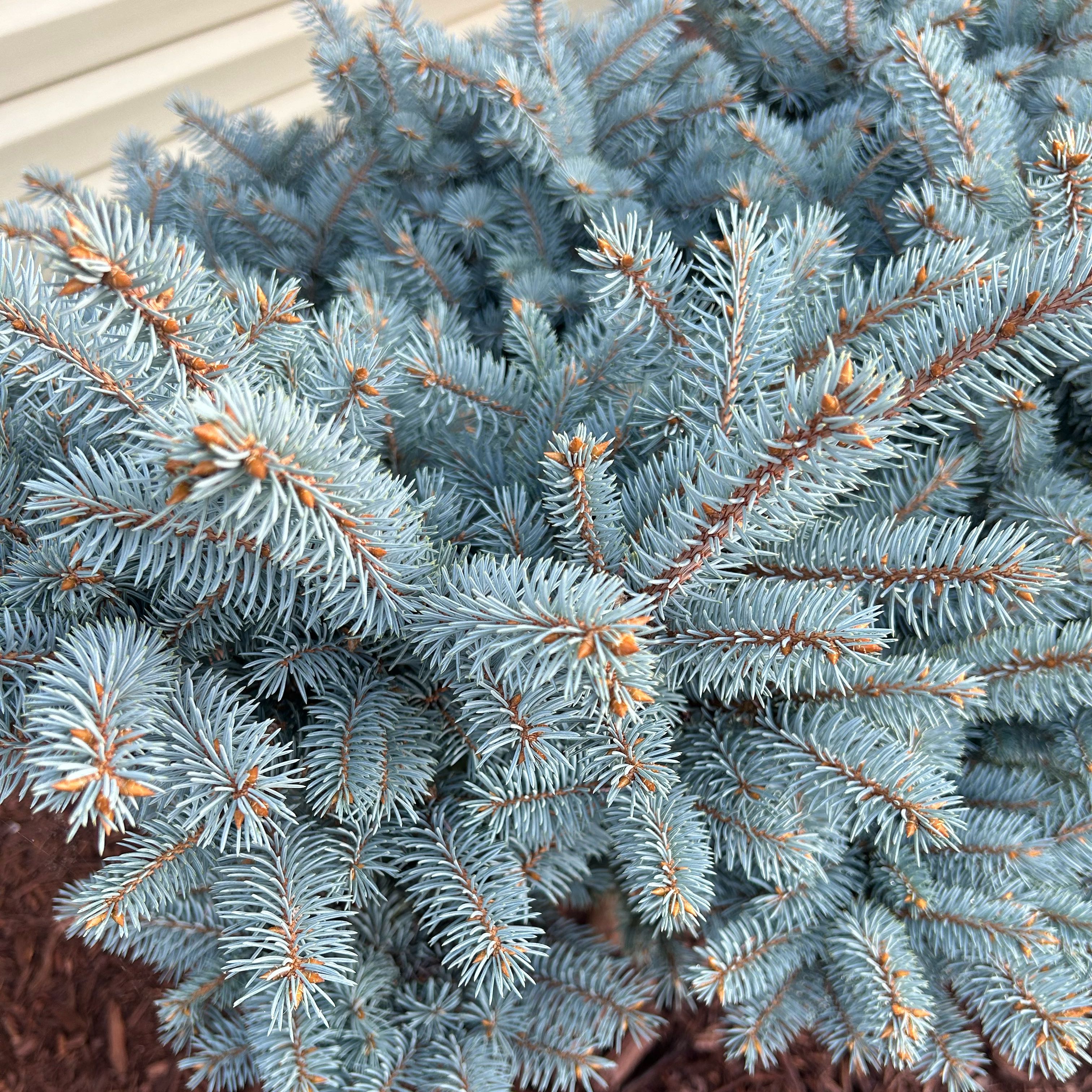
Picea pungens
Reviewed by Kiersten Rankel M.S.
QUICK ANSWER
Seed starting after a 1 to 3 month cold stratification is the most reliable home method but seedlings vary in color and only a fraction will be true blue. Germination takes 3 to 6 weeks once seeds finish stratifying.
Semi-hardwood cuttings preserve the exact color of a chosen parent but root very slowly over 6 to 12 months and have a low home-grower success rate. Most named blue cultivars are produced commercially by grafting, which is impractical at home.
Semi-hardwood cuttings preserve the exact color of a chosen parent but root very slowly over 6 to 12 months and have a low home-grower success rate. Most named blue cultivars are produced commercially by grafting, which is impractical at home.
Stay on top of plant care
Get seasonal reminders for watering and fertilizing, personalized for your plants.
Try Greg Free
Pick your method
Tap one to jump to the walkthrough.
From seed
Best for growing many trees from a fresh cone harvest
Semi-hardwood cuttings
Best for preserving the exact silver-blue color of a chosen parent
From seed
Time
1–3 months stratification + 3–6 weeks germination
Level
Intermediate
Success rate
Moderate
You'll need
Fresh blue spruce cones (current season)
Bowl of warm water
Damp sand or peat for stratification
Sealed plastic bag
Seed-starting trays with drainage
Light well-drained seed mix
1
Collect cones in early autumn
Pick brown but still-closed cones in September or October before they open and shed seed. Place them in a paper bag in a warm dry spot for 1 to 2 weeks. The cones will open as they dry and release winged seeds.
2
Float test the seed
Drop seeds into a bowl of warm water and let them sit for a few hours. Discard floaters, which are usually empty. Sinkers are filled and have a chance of sprouting.
Typically only 30 to 50 percent of seeds from a single cone are viable, so collect more cones than you think you need.
Typically only 30 to 50 percent of seeds from a single cone are viable, so collect more cones than you think you need.
3
Cold stratify for 1 to 3 months
Mix the viable seeds into a handful of damp sand or peat, seal in a plastic bag, and place in the refrigerator at 35 to 40 degrees. Stratification breaks dormancy and triggers spring germination cues. Check weekly for mold and remoisten if the medium dries.
4
Sow shallowly in spring
After stratification, press the seeds onto the surface of a moistened seed-starting mix and cover with a quarter-inch layer of mix. Water gently from below to avoid washing the seeds out of place.
5
Keep at 65 to 70 degrees with bright light
Place trays in bright indirect light. Seedlings emerge in 3 to 6 weeks as fine green needles in a starburst pattern.
Keep the surface lightly damp at all times during germination. Once seedlings are up, give the surface a chance to dry between waterings to prevent damping off.
Keep the surface lightly damp at all times during germination. Once seedlings are up, give the surface a chance to dry between waterings to prevent damping off.
6
Grow on slowly for 2 to 3 years
Blue spruce seedlings grow only 2 to 4 inches per year for the first 3 years. Transplant to deeper pots once they are 4 to 6 inches tall and grow in a sheltered nursery bed before moving to a permanent spot. Expect color variation, since seed-grown plants do not all inherit the parent's silver-blue tone.
WATCH FOR
Fuzzy white mold or sudden collapse of seedlings at the soil line. This is damping off, a fungal infection of young conifer seedlings. Improve airflow with a small fan, water from below only, let the surface dry between waterings, and discard affected seedlings before the infection spreads.
Semi-hardwood cuttings
Time
6–12 months
Level
Advanced
Success rate
Low
You'll need
Sterile pruning shears
Strong rooting hormone (IBA-based)
Deep pots or nursery flat
Coarse sand and perlite mix (50/50)
Cold frame or unheated shaded greenhouse
1
Cut in late summer from a young tree
Take cuttings in August or September from a tree that is younger than 10 years old. Older trees give cuttings that root much worse, sometimes near zero. Pick lateral side branches 4 to 6 inches long with a healthy growing tip and firm tan-brown wood at the base.
2
Strip the bottom needles and wound
Pull the needles off the bottom 2 inches of the cutting. Slice a thin sliver of bark from one side at the base, about half an inch long. The wound exposes more cambium and gives roots more places to emerge.
Spruce roots reluctantly even with hormone. The wound is not optional for this species.
Spruce roots reluctantly even with hormone. The wound is not optional for this species.
3
Dip in strong rooting hormone
Use the strongest IBA-based rooting hormone you can find, since standard powders often are not enough for spruce. Tap the wounded base in the powder and knock off the excess.
4
Insert into the rooting medium
Push each cutting 1 to 2 inches deep into a moist coarse sand and perlite mix. Firm the medium around the stem. Water gently to settle and place in a cold frame or unheated greenhouse where temperatures stay 40 to 60 degrees.
5
Overwinter undisturbed
Spruce cuttings need a cool dormant period followed by spring warmth to root. Keep the medium barely damp, not wet, through winter. Do not check or move cuttings, since disturbance breaks the early callus.
6
Check in late spring
By May or June, gently tug each cutting. Resistance means roots have formed, though many cuttings will still be at the callous stage with no true roots yet. Pot up successful cuttings into deep pots and grow on for at least 2 years before considering the tree garden-ready.
WATCH FOR
Cuttings yellowing and shedding needles by midwinter with no callous at the base. The wood was too old, the parent too mature, or the medium stayed too wet. Try again next summer with cuttings from a young vigorous side branch and use a grittier mix that drains within seconds. Be prepared for under 30 percent success even when everything goes right.
Stay on top of plant care
Get seasonal reminders for watering and fertilizing, personalized for your plants.
Try Greg Free
About This Article

Kiersten Rankel M.S.
Botanical Data Lead at Greg · Plant Scientist
Editorial Process
Propagation methods verified against Picea pungens growth data from Greg's botanical database, cross-referenced with USDA hardiness zone data and published horticultural research.
499+ Greg users growing this plant
USDA hardiness zones 2a–7b