Plant Care
›
Propagation
›
Orchid Tree
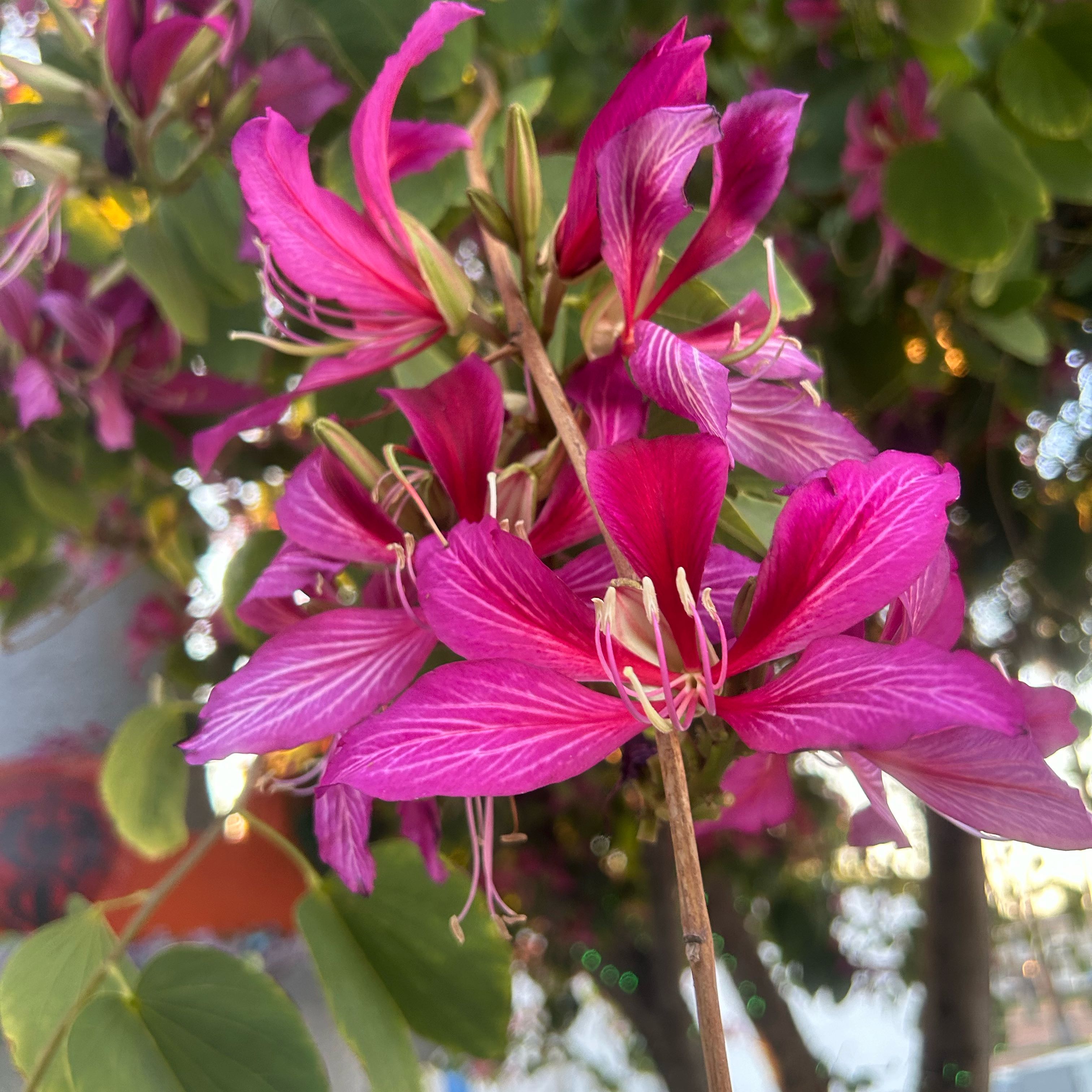
Bauhinia variegata
Reviewed by Kiersten Rankel M.S.
QUICK ANSWER
Seed sowing is the easiest method and germinates in 2 to 3 weeks after a quick water soak, producing a flowering tree in 4 to 6 years. Semi-hardwood cuttings root in 8 to 12 weeks and bloom sooner but only succeed about half the time. Air layering takes 8 to 16 weeks and produces a near full-sized branch ready to flower the following season, which suits patient growers who already have a parent tree.
Stay on top of plant care
Get seasonal reminders for watering and fertilizing, personalized for your plants.
Try Greg Free
Pick your method
Tap one to jump to the walkthrough.
From seed
Best for raising several trees cheaply from fresh pods
Semi-hardwood cuttings
Best when you want a clone of a parent tree's flower color
Air layering
Best when you want a near-mature, ready-to-flower branch
From seed
Time
2–3 weeks germination
Level
Beginner
Success rate
High
You'll need
Fresh ripe seed pods (long brown bean-like pods)
Bowl of warm water
Deep seedling pots, 6 inches or taller
Standard potting mix with extra perlite
Bright warm spot at 75 to 85 degrees F
Plastic dome or bag (optional)
1
Collect ripe seed
Harvest the long flat pods when they turn fully brown but before they split open and scatter seeds. Each pod holds 5 to 10 hard, dark seeds. Use seeds within a year for best germination.
2
Soak for 24 hours
Place seeds in a bowl of warm water and leave overnight. The hard coat softens and lets water reach the embryo. Discard any seeds that still float after 24 hours since they are usually empty.
Swollen, sunken seeds are ready to plant.
Swollen, sunken seeds are ready to plant.
3
Sow in deep pots
Press one seed half an inch deep into a deep pot filled with potting mix and extra perlite. Orchid tree develops a long taproot fast, so depth matters more than width. Water in gently.
4
Keep warm and bright
Place pots in a spot that holds 75 to 85 degrees F with bright indirect light. A heat mat speeds germination by a few days.
Keep the surface evenly moist but not waterlogged.
Keep the surface evenly moist but not waterlogged.
5
Watch for emergence
Seedlings push up in 2 to 3 weeks. The first set of leaves splits into the classic two-lobed butterfly shape within a few weeks. Move to bright filtered sun once true leaves appear.
6
Pot up and grow on
Move to a 1-gallon pot at month 3 and a 5-gallon pot by year 1. Plant in the ground after the second growing season in zones 9b and warmer. Expect first flowers in year 4 to 6.
WATCH FOR
Seedlings that grow tall and floppy with thin pale stems. That is etiolation from too little light. Move to a brighter spot with several hours of direct or strong filtered sun. Orchid tree seedlings grow stocky in full sun and weak in dim light. Stake floppy seedlings until they thicken up.
Semi-hardwood cuttings
Time
8–12 weeks
Level
Intermediate
Success rate
Moderate
You'll need
8 to 10 inch semi-hardwood cuttings
Sterile pruning shears
Rooting hormone (IBA 0.3 percent)
1-gallon pots with 50/50 perlite and peat
Clear humidity dome
Bottom heat at 75 to 80 degrees F
1
Take cuttings in early summer
Choose 8 to 10 inch sections of this year's growth that have started to firm up but still bend. Take cuttings in the morning while the plant is fully turgid. Cut just below a node with sterile shears.
2
Strip lower leaves
Remove leaves from the bottom 4 inches and trim the largest remaining leaves in half to reduce moisture loss. Keep only 2 or 3 leaf pairs at the top.
3
Dip in rooting hormone
Tap the cut end into IBA 0.3 percent powder and shake off excess. Hormone is essential for orchid tree cuttings, raising take rates from 20 percent to over 50 percent.
4
Insert into rooting medium
Push cuttings 3 inches deep into a 50/50 perlite and peat mix. Firm the medium so the cutting stands upright without wobbling. Space cuttings at least 4 inches apart.
5
Cover and apply heat
Set the pot on a heat mat at 75 to 80 degrees F and cover with a clear dome. Place in bright shade with no direct sun.
Vent the dome 10 minutes daily to prevent mold and check soil moisture.
Vent the dome 10 minutes daily to prevent mold and check soil moisture.
6
Test for roots at week 10
Tug gently. Resistance means roots have formed. Pot up rooted cuttings into 1-gallon containers with regular potting mix and harden off over 2 weeks before planting out.
WATCH FOR
Wilting leaves that don't recover even with high humidity. That is the cutting failing to take up water faster than it loses it. Re-cut the bottom inch with a sterile blade, dip in fresh hormone, and replant. Trim leaf area further if the cutting still has large leaves. Lost cuttings usually die in the first 2 weeks, so heavy losses early is normal.
Air layering
Time
8–16 weeks
Level
Intermediate
Success rate
High
You'll need
A pencil-thick branch on a healthy parent tree
Sterile knife or grafting blade
Rooting hormone
Damp sphagnum moss
Clear plastic wrap
Twist ties or electrical tape
1
Pick a healthy branch
Choose a pencil-thick to thumb-thick branch from the previous year's growth. The branch should be straight and have several side shoots above the chosen layering point.
Layer in late spring once the tree is in active growth.
Layer in late spring once the tree is in active growth.
2
Make a wound
Use a sterile knife to cut a 1-inch wide ring of bark cleanly around the branch. Scrape away the green cambium underneath so only the white wood is exposed.
This cut interrupts the flow of sugars, which build up above the wound and trigger root formation.
This cut interrupts the flow of sugars, which build up above the wound and trigger root formation.
3
Apply rooting hormone
Dust the upper edge of the wound with IBA powder. The upper edge is where roots emerge, so focus the hormone there.
4
Wrap with damp sphagnum
Pack a fist-sized handful of pre-soaked sphagnum moss around the wound. Squeeze gently to remove excess water but keep the moss saturated.
5
Seal with plastic
Wrap clear plastic tightly around the moss and secure both ends with twist ties or tape. The package should hold humidity for the entire layering period without drying.
Check weekly through the wrap for white roots.
Check weekly through the wrap for white roots.
6
Sever and pot
Once you see a dense network of white roots through the moss, cut the branch off just below the layer. Carefully unwrap, leave the moss in place, and pot in a 5-gallon container with potting mix. Keep shaded for 2 weeks before moving to full sun.
WATCH FOR
Brown, mushy roots when you finally unwrap the layer. That is rot from a wrap that held too much water for too long. Squeeze excess moisture from sphagnum before packing it next time, and use thicker plastic that doesn't develop holes. Failed layers usually rot in the second month, so checking weekly catches issues early.
Stay on top of plant care
Get seasonal reminders for watering and fertilizing, personalized for your plants.
Try Greg Free
About This Article

Kiersten Rankel M.S.
Botanical Data Lead at Greg · Plant Scientist
Editorial Process
Propagation methods verified against Bauhinia variegata growth data from Greg's botanical database, cross-referenced with USDA hardiness zone data and published horticultural research.
138+ Greg users growing this plant
USDA hardiness zones 9a–11b