What's Wrong with My Tradescantia Zebrina?

Common Tradescantia Zebrina Problems
Leggy stems
Tradescantia zebrina is a fast grower that stretches hard toward any light source when conditions are dim. The trailing stems elongate with wide gaps between leaves and the foliage loses its characteristic density. Because this plant grows so quickly, a dim spot turns into a sparse, stringy mess faster than it would on most houseplants.
Even in good light, Tradescantia zebrina puts all its energy into elongating its existing stems rather than branching at the base. Without regular pinching, the plant naturally becomes a few long ropes with a bare center. Pinching redirects growth energy and keeps the plant bushy.
Faded color
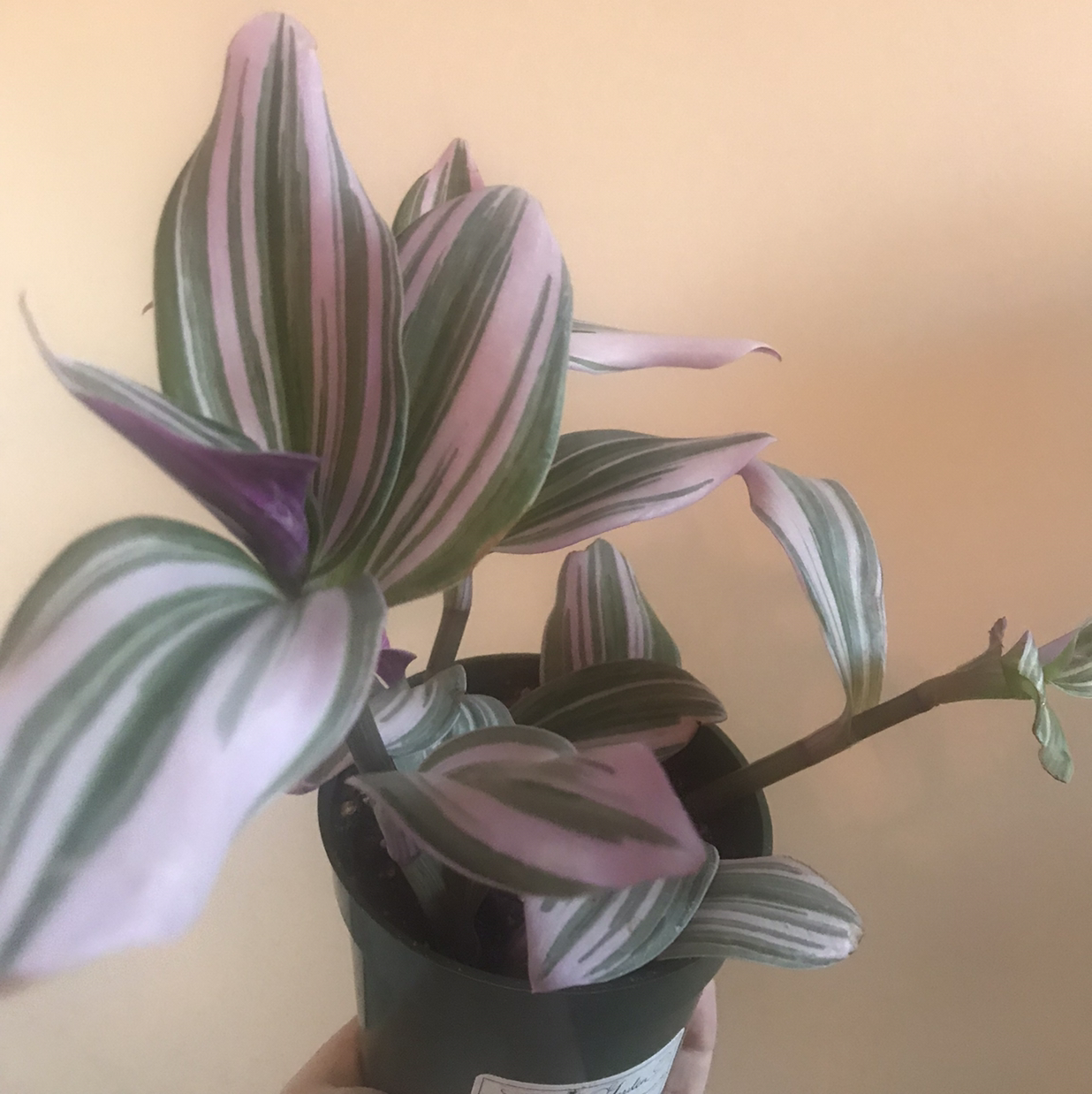
The silver zebra stripes and deep purple undersides on Tradescantia zebrina leaves are produced by specialized pigment cells that require strong light to stay saturated. In dim conditions, the plant shifts resources toward chlorophyll and the stripes wash to a dull green while the purple underside fades to near-gray. This happens gradually and is fully reversible in new growth once light improves.
Crispy brown tips
Tradescantia zebrina is native to humid Mexican forests and its long, soft leaves lose moisture fast in dry indoor air. The leaf tips and edges are the first to brown and crisp when humidity drops below 40%. Heated rooms in winter pull moisture out of the foliage faster than the shallow roots can replace it.
When the soil goes dry, Tradescantia zebrina's soft stems lose water pressure and the leaf tips are the first to desiccate and brown. The plant wilts quickly and dramatically when thirsty because its stems hold very little water in reserve. Dry soil alongside limp stems and crispy tips points here rather than to low humidity.
Yellow leaves
Tradescantia zebrina has fine, shallow roots that rot quickly in persistently soggy soil. When those roots fail, the plant pulls resources back from its oldest leaves first and they turn yellow. Yellowing at the base of the plant working upward, with soil that feels wet or damp, is the classic pattern.
As Tradescantia zebrina extends its trailing stems, it sheds the oldest interior leaves to redirect energy to actively growing tips. A few yellowing leaves tucked deep in the plant while the stem ends look healthy and colorful is normal. No action needed.
Pests
Spider mites are the most common pest on Tradescantia zebrina indoors. Dry heated air invites them, and the plant's soft, densely packed trailing stems give mites sheltered spots to breed. Look for pale stippling on the upper leaf surface and fine webbing between stems and in leaf axils. The distinctive stripes can make early stippling easy to miss.
White cottony clusters in the leaf axils and at stem nodes where leaves meet the trailing stem. On Tradescantia zebrina the dense, overlapping leaves create sheltered spots along every stem that mealybugs exploit. They suck sap and leave sticky honeydew behind.
Small black flies hovering around the soil that lift off when you water. Larvae live in the top inch of damp potting mix. Tradescantia zebrina prefers evenly moist soil, which creates ideal conditions for fungus gnat larvae to breed if watering is slightly overdone.
Preventing Tradescantia Zebrina Problems
About This Article
