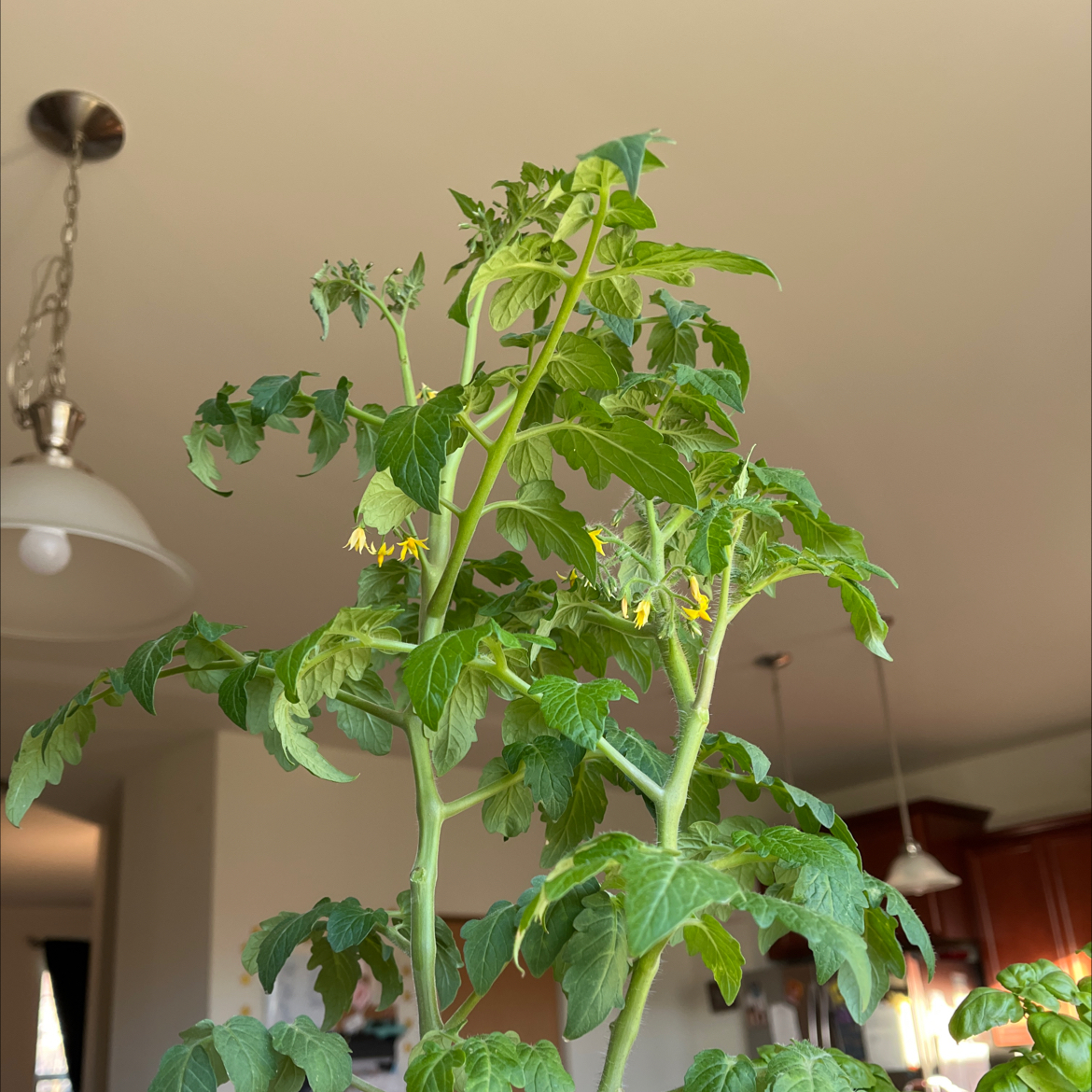
Tomato Plant

What's Wrong with My Tomato Plant?

Solanum lycopersicum
Reviewed by Kiersten Rankel M.S.
Quick Answer
1.
Most fruit problems trace back to uneven watering.
Swings from dry to wet cause cracked fruit, blossom-end rot, and split skin.
2.
Fungal leaf spot spreads fast in wet conditions.
Watering at the base and pruning lower leaves limits it before it defoliates the plant.
3.
Healthy top growth means you still have a crop.
Tomatoes bounce back from setbacks if the growing tip is alive. Trim what's dying, focus on the top.
Stay on top of plant care
Get seasonal reminders for watering and fertilizing โ€” personalized for your plants.
Try Greg Free

Common Tomato Plant Problems

Dark sunken patch on fruit

Blossom-end rot

The dark, leathery patch at the bottom of the fruit is a calcium-delivery failure, not a disease. Tomatoes pull calcium through water movement, and when the soil swings from dry to saturated the plant can't keep up with demand at the far end of each developing fruit even when calcium is present in the soil.

1. Water deeply and on a consistent schedule, aiming to keep soil evenly moist at the root zone
2. Mulch around the plants to buffer soil moisture swings between rains and waterings
3. Remove affected fruit so the plant redirects energy to healthy ones
4. If your soil is acidic or sandy, add garden lime to improve calcium availability

Leaf spots

Early blight

Early blight is a fungal disease that starts on the oldest, lowest leaves as dark brown spots with concentric rings and a yellow halo. Tomato foliage stays damp longer than most vegetables because the dense canopy traps humidity, and the warm-season growing window lines up perfectly with the conditions this fungus loves.

1. Remove and bag any affected leaves immediately. Do not compost them
2. Water at the base of the plant, never overhead
3. Prune the bottom 6โ€“12 inches of foliage to improve airflow and reduce splash
4. Apply a copper fungicide spray if spots are spreading to new leaves
Septoria leaf spot

Septoria causes small, round spots with a dark border and a pale tan center, usually appearing first on lower leaves after the first fruits set. Like early blight it spreads by rain or irrigation splash, but the spots are smaller and more numerous. Both fungi overwinter in soil and debris and return season after season in the same beds.

1. Strip affected leaves at the base and dispose of them in the trash
2. Keep water off the foliage when irrigating
3. Apply copper fungicide and repeat every 7โ€“10 days in wet weather
4. Rotate tomatoes to a different bed next season since the fungus overwinters in soil

Cracked fruit

Uneven watering

When a tomato plant gets a sudden surge of water after a dry spell, the inside of the fruit expands faster than the skin can stretch. Indeterminate varieties with larger fruit are more prone because the skin is under more tension as the fruit grows. Cracks can run radially from the stem end or circle the fruit near the top.

1. Water deeply and consistently rather than letting the soil dry out between sessions
2. Mulch heavily around the base to slow soil moisture evaporation between waterings
3. Harvest fruit as soon as it reaches full color, since fruit left on the vine during a rain event is the most vulnerable

Branches stripped overnight

Hornworms

Tomato hornworms are among the largest caterpillars in the garden and can eat an entire branch in a single night. They are bright green with white diagonal stripes and blend in almost perfectly with tomato stems and foliage. Their frass (dark pellets on the leaves below) usually gives them away before you spot the caterpillar itself.

1. Look for dark green or black pellets on leaves, then trace upward to find the caterpillar on the stem above
2. Pick them off by hand and drop into soapy water
3. Check daily until no new damage appears, since a second generation can arrive mid-season
4. Apply Bacillus thuringiensis (Bt) spray if hand-picking isn't keeping up, which kills caterpillars without harming beneficial insects

Yellow leaves

Nitrogen deficiency

Tomatoes are heavy feeders and exhaust nitrogen from the root zone quickly, especially in container soil or after heavy rain. The yellowing starts on the oldest lower leaves and moves up, since the plant pulls nitrogen out of aging tissue to feed new growth and developing fruit.

1. Side-dress with a balanced vegetable fertilizer or a nitrogen source such as fish emulsion
2. In containers, feed every 2โ€“3 weeks since nutrients leach out with each watering
3. Avoid excess nitrogen once fruit is forming, since it pushes leaf growth at the expense of fruit
Early blight (lower leaves)

Early blight announces itself as yellowing around the brown spots on lower leaves before the spots are obvious. The whole lower canopy can turn yellow-green as the fungus spreads upward, which is sometimes mistaken for a nutrient issue. If you see any brown spots or concentric rings in the yellow area, blight is the culprit.

1. Remove and bin affected leaves
2. Confirm you are watering at the base, not overhead
3. Treat with copper fungicide if the yellowing is advancing up the plant

Flowers dropping, no fruit

Temperature out of range

Tomato pollen goes sterile when daytime temperatures stay above 90ยฐF or nights dip below 55ยฐF. The flowers open, look normal, and then drop without setting fruit. This is a physiological response built into the plant as a warm-season Solanaceae crop, and fruit set resumes on its own once temperatures return to the 65โ€“85ยฐF range.

In a heat wave, shade the plant with row cover or shade cloth during the hottest part of the afternoon. Do not increase fertilizer during a flower-drop period -- the plant is stressed, not hungry. Once temperatures return to range, fruit set will resume on its own.
Too much nitrogen

A tomato pushed hard on nitrogen produces lush, dark green foliage but delays flowering and drops flowers before they set. Indeterminate varieties are more susceptible because they keep vegetative growth running all season alongside fruiting.

Switch to a low-nitrogen fertilizer with a higher phosphorus number once flowering starts. Hold off all fertilizing for 2โ€“3 weeks and let the plant refocus on flowering.

Preventing Tomato Plant Problems

A few consistent habits prevent most of what goes wrong with tomatoes.
Weekly Check
1
Water deeply and on a regular schedule.
Aim for 1โ€“2 inches per week at the root zone, delivered consistently. Irregular watering is the single biggest cause of blossom-end rot and cracked fruit.
2
Mulch the soil surface thickly.
A 3โ€“4 inch layer of straw or wood chips holds soil moisture, buffers temperature swings, and stops soil-borne fungal spores from splashing up onto the lower leaves.
3
Water at the base, not on the leaves.
Wet foliage triggers early blight and septoria leaf spot. Use drip irrigation or a soaker hose, or direct the hose at ground level in the morning.
4
Strip the lowest 6โ€“12 inches of foliage once plants are established.
Removing the lowest leaves improves airflow and eliminates the easiest path for soil fungi to reach the plant.
5
Check plants daily during peak summer.
Hornworms and pest populations can explode overnight. A 60-second scan of the undersides of leaves and main stems catches most problems before they become a crisis.
Stay on top of plant care
Get seasonal reminders for watering and fertilizing โ€” personalized for your plants.
Try Greg Free

About This Article

Kiersten Rankel M.S.
Botanical Data Lead at Greg ยท Plant Scientist
About the Author
Kiersten Rankel holds an M.S. in Ecology & Evolutionary Biology from Tulane University. A certified Louisiana Master Naturalist, she has over a decade of experience in science communication, with research spanning corals, cypress trees, marsh grasses, and more. At Greg, she curates species data and verifies care recommendations against botanical research.
See Kiersten Rankel's full background on LinkedIn.
Editorial Process
Every problem and fix in this article was verified against Greg's botanical database, cross-referenced with USDA hardiness zone data and published horticultural research from Cornell Cooperative Extension, the University of Minnesota Extension, and NC State Extension. The tomato care profile reflects decades of vegetable-pathology research, regional disease and pest patterns, and years of grower feedback in Greg, where tomato drives the highest volume of questions every summer.
14,599+ Greg users growing this plant
USDA hardiness zones 3aโ€“11b