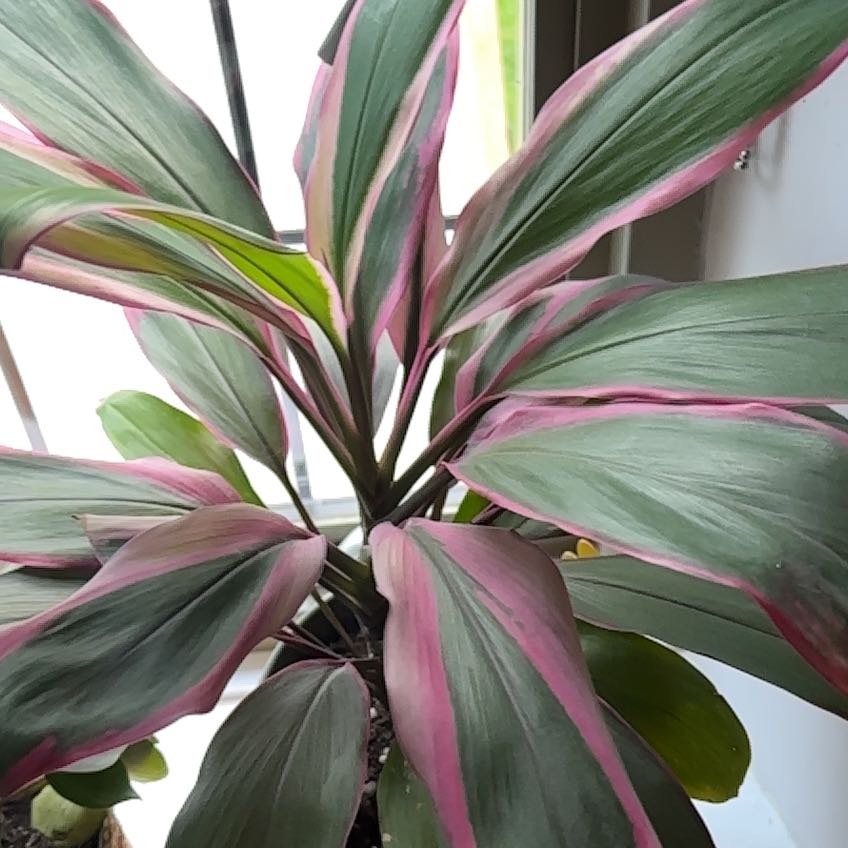
What's Wrong with My Ti Plant?

Common Ti Plant Problems
Brown tips
Cordyline fruticosa is among the most fluoride-sensitive houseplants commonly grown indoors. Fluoride from municipal water accumulates in the long strappy leaves over many waterings and kills cells at the tip first, leaving a characteristic brown margin bordered by a pale yellow band. The damage is permanent and worsens with every fluoride-laden drink.
Ti Plant is native to the humid tropical forests of the Pacific Islands and Southeast Asia. Dry indoor air pulls moisture from the tips of its long leaves faster than the roots can replace it. The tips brown and dry out first because they are the furthest point from the water supply.
Yellow leaves
Ti Plant likes evenly moist soil but not waterlogged conditions. When the roots sit in soggy mix, they suffocate and rot, and the plant pulls nutrients back from the oldest leaves first. Yellowing starts at the base of the plant and moves upward, often accompanied by leaves that feel limp despite wet soil.
As Ti Plant puts energy into pushing new colorful leaves from the cane tip, it sheds the oldest leaves at the base. If only one or two bottom leaves are yellowing while the upper foliage and new growth look vibrant, this is normal and nothing needs to change.
Faded color
The reds, pinks, and burgundies in Cordyline fruticosa cultivars are produced by anthocyanin pigments that require bright light to form. In low light, the plant prioritizes chlorophyll over pigmentation. New leaves come in duller and greener than older ones, and the effect compounds over time. Plain green cultivars tolerate lower light, but colored varieties do not.
Crispy leaf edges
When indoor air drops below 40% humidity, Ti Plant's long leaves lose moisture faster than the roots supply it. The edges crisp and turn brown along their full length rather than just at the tips. This is a more advanced form of the same drought stress that causes tip browning, and it signals that the air is consistently too dry.
Leaf drop
Ti Plant is a tropical plant that cannot handle temperatures below 50°F or sudden cold air from drafts. Cold exposure causes the long leaves to detach cleanly at the base in a short period of time. The same shock happens when the plant is moved to a significantly different environment, even if temperatures are not extreme.
Rotting roots cannot support the long leaves, and Ti Plant sheds them to reduce the burden on a failing root system. Leaf drop from overwatering typically follows yellowing rather than appearing suddenly, and the soil will feel wet or smell stale.
Pests
Fine webbing between the strappy leaves and pale stippling on the leaf surface are the main signs. Dry indoor air invites spider mites, and Ti Plant is particularly prone when kept in low-humidity rooms. The long overlapping leaves create sheltered tunnels where mites multiply before the infestation becomes visible.
White cottony clusters at the base of the leaves where they meet the cane and in the tight sheaths along the stem. Ti Plant's overlapping leaf bases and densely packed lower stems create sheltered pockets that mealybugs colonize before they are easy to spot. They suck sap and leave sticky honeydew trailing down the cane.
Preventing Ti Plant Problems
About This Article
