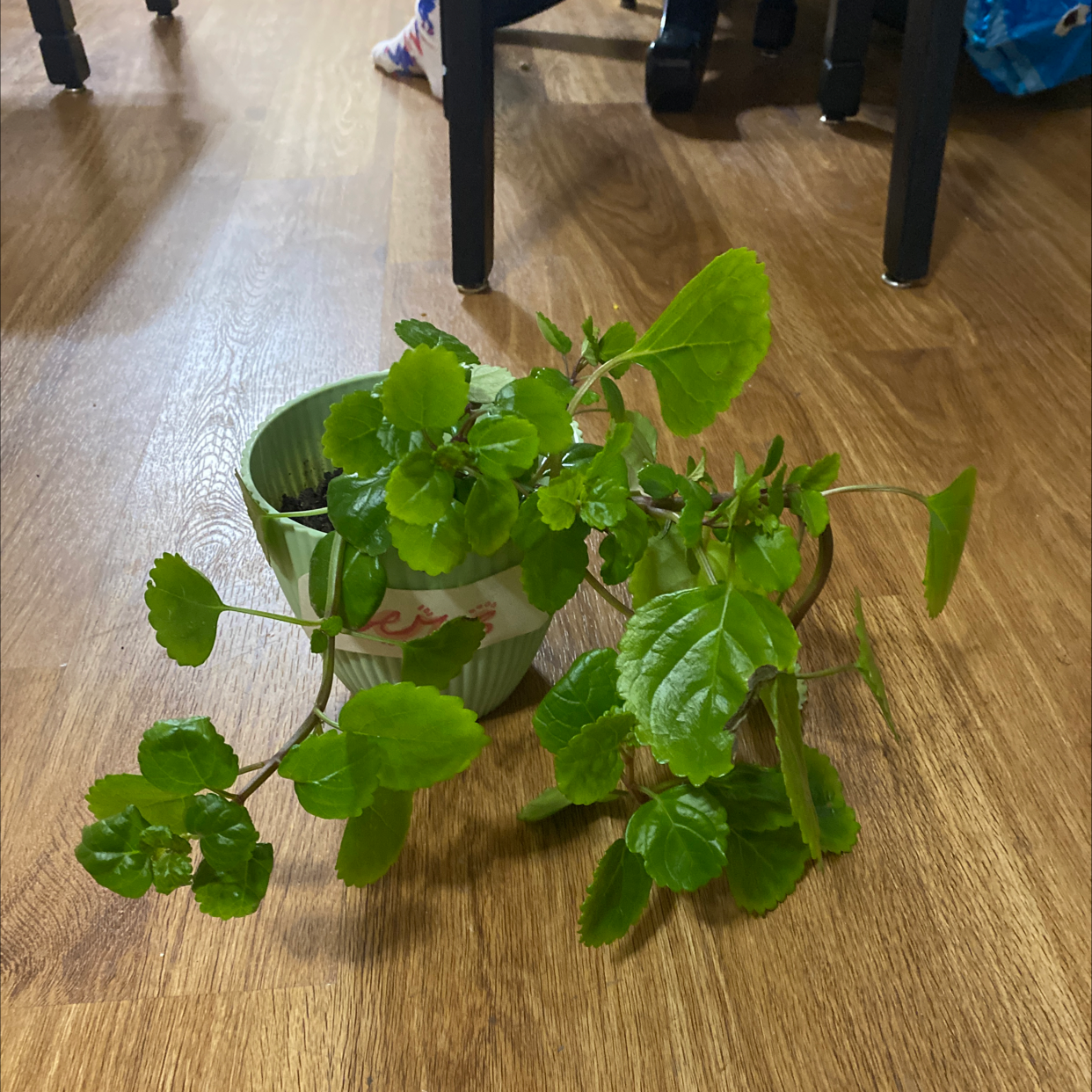
What's Wrong with My Swedish Ivy?

Common Swedish Ivy Problems
Leggy stems
Swedish Ivy is a fast grower that stretches aggressively toward any light source when conditions are dim. The trailing stems elongate with wide gaps between leaves instead of the dense, bushy growth the plant is capable of. Because it grows so quickly, a dim spot turns into a sparse, stringy plant faster than it would on a slower species.
Yellow leaves
Swedish Ivy is a member of the mint family with shallow, fibrous roots that rot quickly in soggy soil. When those roots fail, the plant pulls nutrients back from the oldest leaves first and they turn yellow. Yellowing at the base of the plant working upward, with soil that feels wet or damp, is the classic pattern.
As Swedish Ivy pushes out new trailing growth, it sheds its oldest interior leaves to redirect energy to the actively growing tips. A few yellowing leaves tucked deep in the plant while the stem tips look healthy is normal. No action needed.
Crispy brown edges
Swedish Ivy is native to South Africa and naturally wants moderate to good humidity. Its trailing stems push moisture far from the roots, and the scalloped leaf edges are the first to dry out and brown when indoor air is too dry. Heated and air-conditioned rooms pull moisture out of the leaves faster than the plant can replace it.
When the soil runs dry, Swedish Ivy's fast-growing stems lose water pressure and the leaf edges crisp first. The waxy surface of the leaves slows overall moisture loss but can't protect the thin edges indefinitely. Dry soil alongside crispy tips points here rather than to low humidity.
Pale leaves
Swedish Ivy's glossy dark green leaves lose their color in low light as the plant reduces chlorophyll production. The leaves turn pale green or yellowish-green across the whole plant rather than the bottom-up yellowing of overwatering. This happens gradually, so a plant that looked fine in a dim corner in summer can look washed out by midwinter.
Direct afternoon sun bleaches and scorches the glossy leaves of Swedish Ivy, washing out the deep green to a pale yellowish color and leaving dry, bleached patches. The waxy leaf surface does not protect it from intense direct sun.
Pests
Spider mites are the most common pest on Swedish Ivy indoors. The dense trailing stems and dry heated air create ideal conditions for them. Look for pale stippling or a dusty, dull appearance on the upper leaf surface and fine webbing on the undersides where stems meet. The waxy leaf surface can make early infestations easy to miss.
Small black flies that hover around the soil and lift off when you water. The larvae live in the top inch of damp potting mix. Swedish Ivy is often kept evenly moist, which creates the right conditions for fungus gnat larvae to breed in the upper soil layer.
Preventing Swedish Ivy Problems
About This Article
