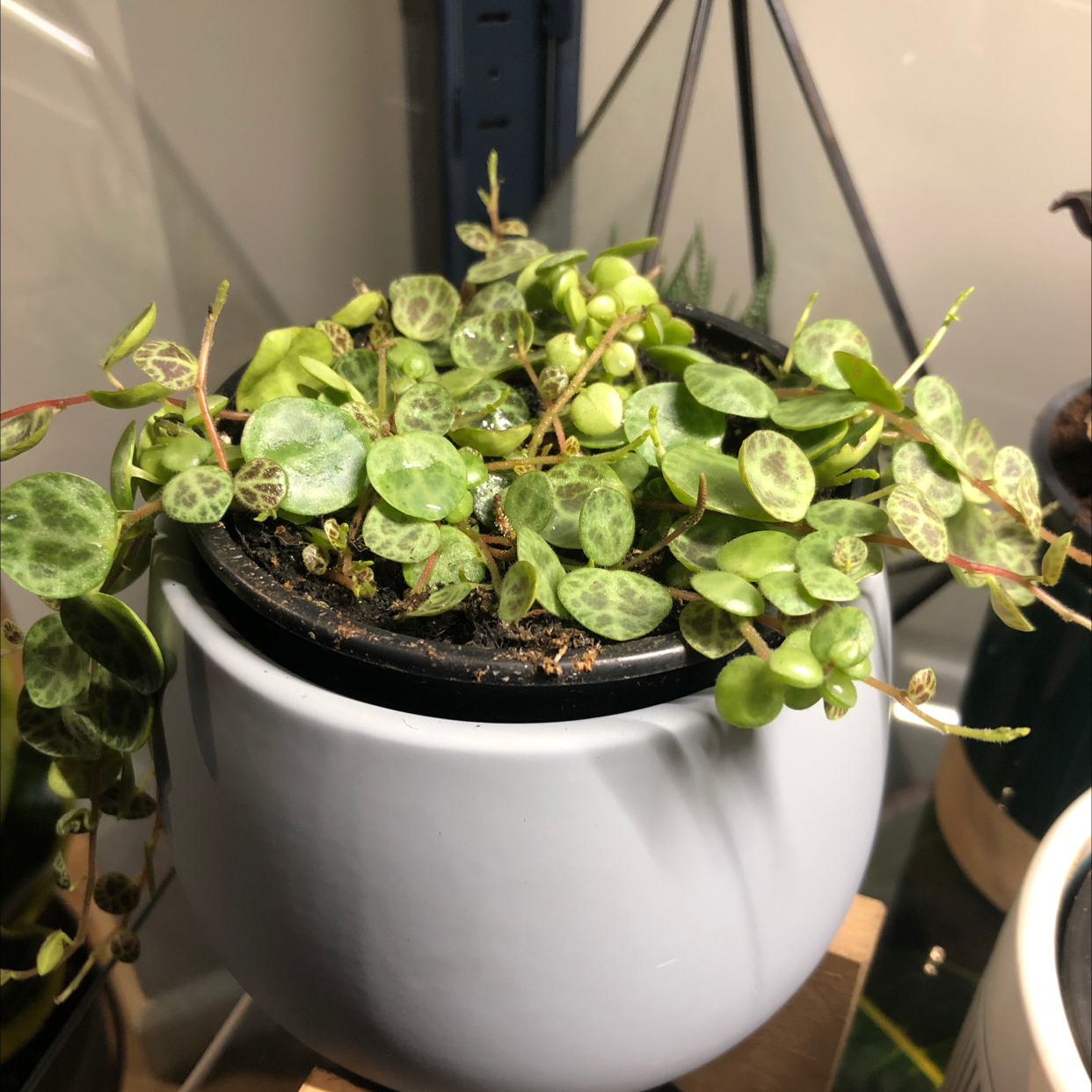
String of Turtles

What's Wrong with My String of Turtles?

Peperomia prostrata
Reviewed by Kiersten Rankel M.S.
Quick Answer
1.
Most problems trace back to water.
String of Turtles has tiny, shallow roots that sit just below the soil surface. Soggy soil is behind most rot, leaf drop, and pest problems. Check the soil before doing anything else.
2.
Faded pattern points to low light.
The turtle-shell veining on each leaf develops and stays sharp only in bright indirect light. Dim conditions are behind most dulling and sparse growth.
3.
New patterned leaves at vine tips mean recovery.
Fresh tiny leaves pushing out at the end of each trailing stem, with a clear turtle-shell pattern, are the clearest sign this plant is still healthy and actively growing.
Stay on top of plant care
Get seasonal reminders for watering and fertilizing โ€” personalized for your plants.
Try Greg Free

Common String of Turtles Problems

Mushy stems

Root rot from overwatering

String of Turtles has very fine, shallow roots packed just beneath the surface of the soil. They rot within days in waterlogged conditions, and the damage travels up the delicate trailing stems fast. A stem that was firm yesterday can turn soft and translucent overnight once rot sets in.

1. Remove the plant from its pot and brush away the soil from the root zone
2. Cut back all soft, dark, or slimy roots and stem tissue to firm, healthy growth
3. Let the cut ends air-dry for a few hours before repotting in fresh, fast-draining mix
4. Hold off watering for a week and keep the soil barely moist going forward

Wrinkled leaves

Underwatering

The small round leaves of String of Turtles store very little water compared to thicker Peperomia relatives. When the soil runs dry, the leaves shrink and pucker noticeably fast. The turtle-shell pattern still shows but the leaf surface loses its slight fullness and looks deflated.

1. Water thoroughly until it drains from the bottom of the pot
2. Leaves should plump back out within a day or two
3. Water slightly more often going forward, checking the soil every few days

Faded pattern

Low light

The dark-green veining that forms the turtle-shell pattern on each leaf develops in response to bright filtered light. In dim conditions, new leaves come in pale and the contrast between the lighter base and darker veins flattens out. Leaves already formed will not recover their sharpness, but leaves grown after a move to better light will show the full pattern.

1. Move to a spot with bright indirect light, a few feet from an east or west window
2. Avoid direct midday or afternoon sun, which scorches the small delicate leaves
3. New leaves should show stronger turtle-shell contrast within a few weeks

Leaf drop

Root rot

When root rot advances far enough, the trailing stems can no longer move water and nutrients to the leaves above. Leaves drop in clusters rather than one at a time, and the remaining leaves on the vine may feel limp despite damp soil. The compact, vine-like growth habit of String of Turtles means rot can affect many leaves at once.

1. Remove the plant from its pot and inspect the roots
2. Cut back all soft or dark root tissue and any affected stems to firm growth
3. Repot in fresh, fast-draining mix and hold off watering for a week
Cold shock

String of Turtles is native to Brazilian rainforests and cannot tolerate cold air. A brief exposure to temperatures below 50 F, a cold draft from a window, or contact with a cold glass pane causes the delicate petioles to collapse and leaves to detach within a day or two.

1. Move the plant away from cold windows, exterior doors, and AC vents
2. Keep it in a spot that stays above 60 F year-round
3. New growth from the vine tips will resume once the plant adjusts to stable warm conditions

Pests

Fungus gnats

Small black flies that hover at soil level and scatter when you water. The larvae live in the top inch of damp potting mix and can damage the fine, shallow roots of String of Turtles more than they would on a plant with deeper, tougher roots. Overwatered plants attract them most.

1. Let the top inch of soil dry fully between waterings to make the surface inhospitable to larvae
2. Set yellow sticky traps near the pot to catch adults
3. Top-dress the soil with mosquito bits to kill larvae in the mix
4. Bottom-water temporarily to keep the top layer dry
Mealybugs

White cottony clusters tucked at the joints where leaves meet the trailing stem, or deep in the crown where new vines emerge. The many small leaf nodes along each string of this trailing Peperomia give mealybugs plenty of sheltered spots to hide and feed without being spotted.

1. Dab each cluster with a cotton swab dipped in 70% isopropyl alcohol
2. Follow up with an insecticidal soap spray over all the vines, reaching into each leaf joint
3. Check every week for three weeks, since eggs hatch in waves and require repeat treatment

Preventing String of Turtles Problems

A few consistent habits prevent most of what goes wrong with String of Turtles.
Weekly Check
1
Water only when the top inch of soil is dry.
The fine, shallow roots sit just below the surface and rot fast in soggy conditions. Letting the top inch dry out before watering prevents most rot, leaf drop, and fungus gnat problems.
2
Use a chunky, fast-draining mix in a pot with a drainage hole.
A blend with perlite or coarse grit gives the delicate root system the air it needs between waterings. Dense potting soil stays wet too long and is how rot starts.
3
Place in bright indirect light.
Bright filtered light keeps the turtle-shell pattern sharp and the vine growth compact. Dim light fades the markings and causes weak, stretched growth.
4
Keep it above 60 F and away from cold drafts.
Cold air from windows, AC vents, or exterior doors causes sudden leaf drop. A stable warm spot prevents cold shock, which is the main non-watering cause of mass leaf loss.
5
Empty the saucer after watering.
The shallow roots sit close to the pot bottom. A full saucer wicks water back up and keeps the root zone wet, which causes rot even when you are watering correctly on top.
Stay on top of plant care
Get seasonal reminders for watering and fertilizing โ€” personalized for your plants.
Try Greg Free

About This Article

Kiersten Rankel M.S.
Botanical Data Lead at Greg ยท Plant Scientist
About the Author
Kiersten Rankel holds an M.S. in Ecology & Evolutionary Biology from Tulane University. A certified Louisiana Master Naturalist, she has over a decade of experience in science communication, with research spanning corals, cypress trees, marsh grasses, and more. At Greg, she curates species data and verifies care recommendations against botanical research.
See Kiersten Rankel's full background on LinkedIn.
Editorial Process
Every problem and fix in this article was verified against Greg's botanical database, cross-referenced with USDA hardiness zone data and published horticultural research from the Missouri Botanical Garden, university extension programs, and species-specific literature. The Peperomia prostrata care profile reflects documented species behavior combined with years of community grower feedback in Greg.
8,741+ Greg users growing this plant
USDA hardiness zones 10aโ€“12b