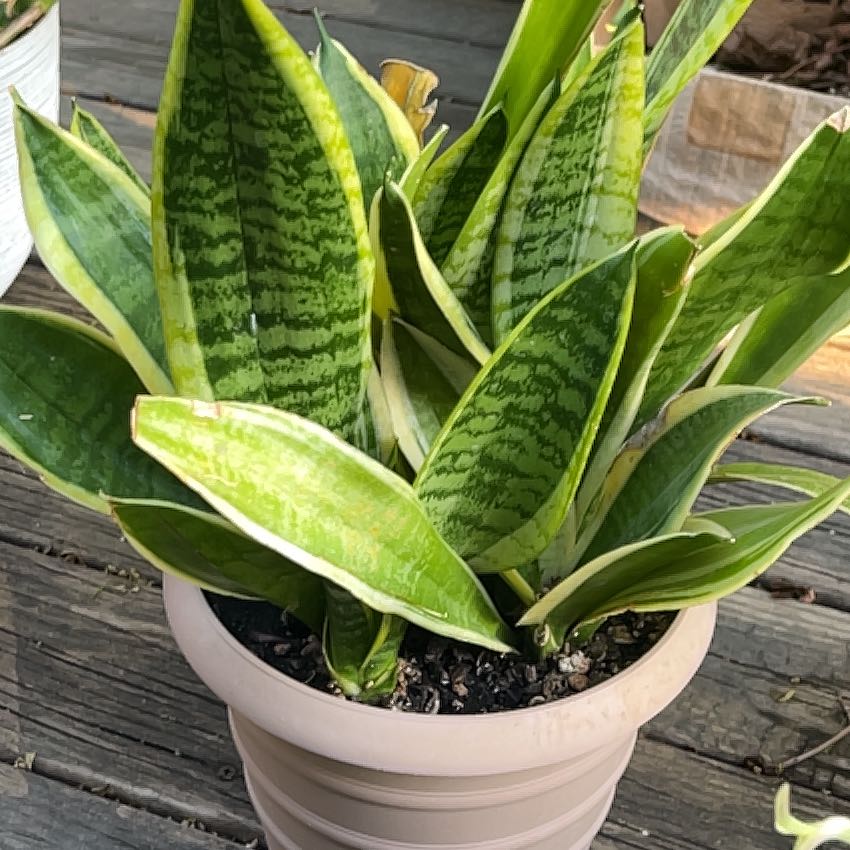
What's Wrong with My Snake Plant?

Common Snake Plant Problems
Mushy base
Snake plant sits on a shallow, horizontal rhizome just below the soil surface. When soil stays wet, that rhizome rots before the roots do, cutting off the whole plant from water and nutrients. Leaves turn yellow from the base up and go soft fast.
Brown tips
Snake plant is sensitive to fluoride and salts that build up in the soil over time. The tips are the farthest point from the roots, so they get the concentrated damage first and turn brown and crispy while the rest of the leaf stays green.
Though snake plant tolerates drought well, a truly dry pot or very low indoor humidity eventually pulls moisture from the leaf tips. The tips are the first to show it because the thick leaves prioritize water for the central tissue.
Leaves falling over
Snake plant leaves are stiff because they are filled with stored water. Overwatering softens the base of each leaf where it connects to the rhizome, and leaves that used to stand upright start to flop or fan outward.
In very low light, snake plant produces leaves with thinner cell walls that lack the rigidity to stay upright. The leaves lean outward over time rather than growing straight up.
Wrinkled leaves
Snake plant draws on reserves stored in its thick leaves and rhizome when the soil runs dry. Wrinkling or slight curling is the first sign those reserves are running low. Because the plant is so drought-tolerant, most owners see this only after weeks or months without water.
Pests
White cottony clusters appear at the base of leaves and in the tight spaces where leaves overlap. Snake plant's upright, dense leaf arrangement gives mealybugs good cover, so infestations are often well established before they are visible.
Fine webbing along leaf edges and faint yellow stippling on the surface. Spider mites thrive in hot, dry indoor conditions, and snake plant's long flat leaf surfaces give them plenty of space to spread before the damage becomes obvious.
Preventing Snake Plant Problems
About This Article
