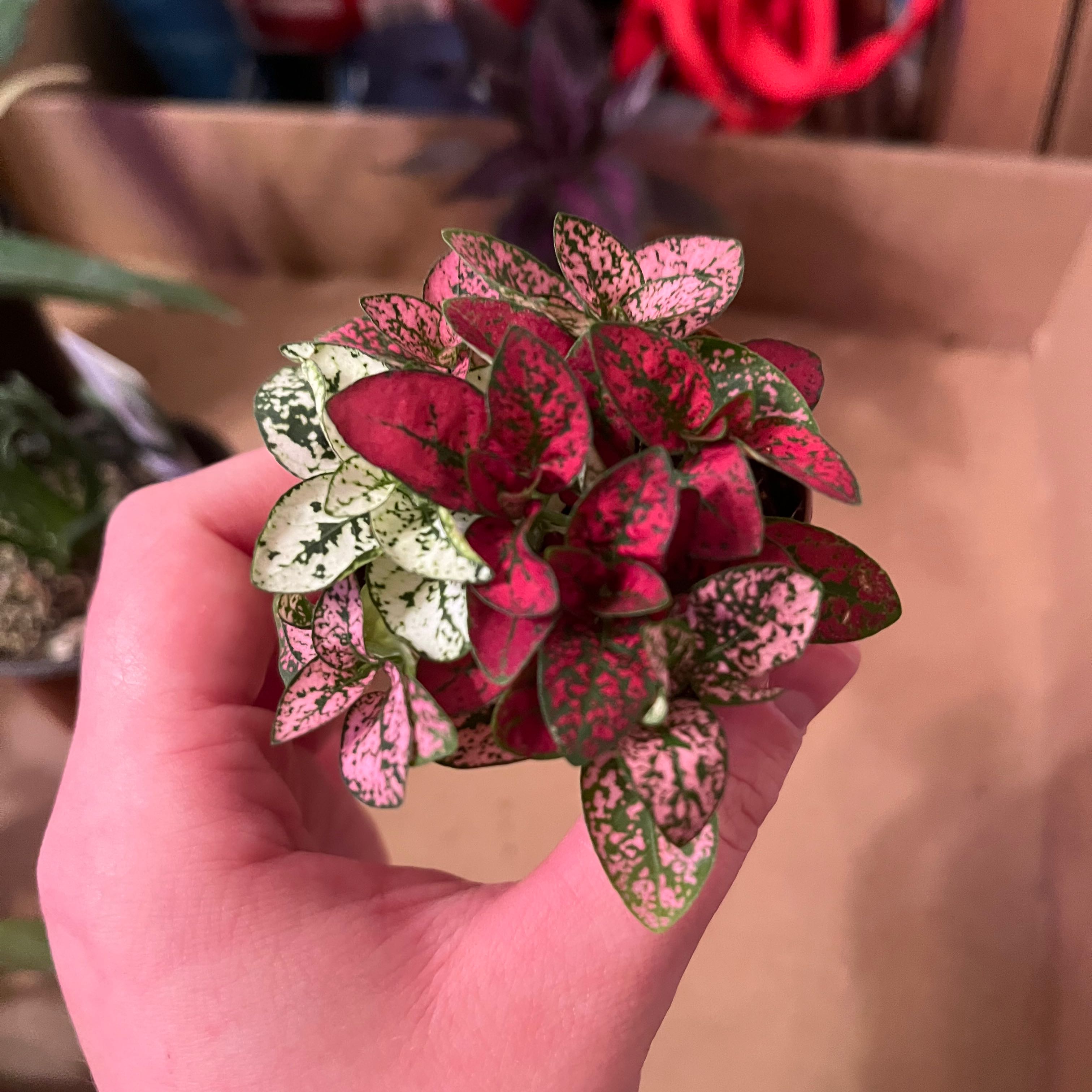
Polka Dot Plant

What's Wrong with My Polka Dot Plant?

Hypoestes phyllostachya
Reviewed by Kiersten Rankel M.S.
Quick Answer
1.
Light is behind most problems.
Leggy stems, faded spots, and weak growth all trace back to not enough light. Polka Dot Plant stretches fast in dim conditions and loses its color pattern quickly.
2.
Check moisture if light looks right.
Polka Dot Plant wilts dramatically within hours when the soil dries out. If the soil is already wet and the plant still looks limp, root rot from overwatering is likely.
3.
New bushy shoots after pinching mean it is responding.
Fresh spotted leaves pushing out at stem tips after a hard pinch are the sign this plant is bouncing back. Dull or tiny new leaves mean the underlying problem is still present.
Stay on top of plant care
Get seasonal reminders for watering and fertilizing โ€” personalized for your plants.
Try Greg Free

Common Polka Dot Plant Problems

Leggy stems

Insufficient light

Polka Dot Plant grows rapidly even in dim conditions, which sounds like a good thing but isn't. In low light, the fast growth gets channeled into long, bare stems with widely spaced, smaller leaves rather than the compact, colorful mound this plant is known for. The stretching can go from tidy to floppy in just a few weeks.

1. Move the plant to a spot with bright indirect light close to a window
2. Pinch back the longest bare stems just above a leaf pair to force branching
3. Expect denser, more spotted new growth within two to three weeks in better light
Flower spikes forming

When Polka Dot Plant starts to flower, it sends up small upright spikes and redirects energy from leaf production to seed-making. The stems below the spikes stop branching, foliage shrinks, and the plant begins its natural decline. Flowering is the plant's signal that it is finishing its lifecycle, but removing spikes early delays this significantly.

1. Pinch off any flower spike at its base as soon as you spot it
2. Cut back stems that have already started to flower to a healthy leaf pair
3. Check for new spikes weekly and remove them promptly to keep the plant in leaf mode

Wilting

Dry soil

Polka Dot Plant has broad, thin leaves with no water-storage capacity and a shallow, fibrous root system. It loses moisture fast and collapses dramatically when the soil runs dry, often within hours in a warm room. The dramatic wilt looks alarming, but the plant recovers quickly once it gets a thorough drink.

1. Water deeply until water runs from the drainage holes
2. Move to a shaded spot while it recovers if the room is warm
3. Check the soil every day or two and water before the next wilt
Root rot

Polka Dot Plant also wilts when its fine, soft roots are rotting in waterlogged soil and can no longer move water upward. The giveaway is soil that feels wet while the plant looks thirsty. Polka Dot Plant's shallow roots have very little tolerance for prolonged moisture and rot faster than many houseplants.

1. Press the soil before watering. If it is already wet and the plant is limp, stop watering
2. Tip the plant out and trim any brown or mushy roots back to firm tissue
3. Repot into fresh, well-draining potting mix and let the top inch dry before watering again

Yellow leaves

Overwatering

Polka Dot Plant's fine, fibrous roots have almost no tolerance for staying wet. In waterlogged soil they rot quickly, and the plant pulls nutrients back from the oldest leaves first. Yellowing starts at the base of the plant and climbs upward, with soil that stays damp long after watering.

1. Stop watering and let the soil dry out significantly before the next watering
2. Make sure the pot has a drainage hole and is not sitting in standing water
3. If yellowing keeps spreading after a dry-down, trim rotten roots and repot into fresh mix
Normal leaf turnover

Polka Dot Plant grows fast and sheds its oldest interior leaves as it pushes new growth at the tips. A few yellowing leaves low on the stem in an otherwise healthy, actively growing plant is normal. If the stem tips are producing fresh spotted leaves and only the bottom leaves are yellow, nothing is wrong.

Faded spots

Too little light

The pink, white, and red spots on Polka Dot Plant are pigments that require good light to maintain. In a dim spot, the plant gradually reduces those pigments and shifts toward plain green. Because this plant grows fast, the fading shows up quickly in new leaves rather than just the old ones. The spotted pattern that makes this plant distinctive can disappear within a month in a poor location.

1. Move the plant to a spot with bright indirect light for several hours a day
2. Expect new growth to show stronger color within two to three weeks
3. Avoid spots more than a few feet from a window for any variety with pink or red patterns

Pests

Spider mites

Spider mites are the most common pest on Polka Dot Plant indoors. Dry air is the trigger, and this plant's large, soft, moisture-rich leaves are prime targets. Look for pale stippling on the upper leaf surface and fine webbing on the undersides and at branching points. Infestations build fast in dry rooms.

1. Rinse the plant thoroughly in a sink or shower, soaking the undersides of every leaf
2. Wipe all leaf surfaces with insecticidal soap or a cloth dampened with 70% isopropyl alcohol
3. Repeat every three to four days for two weeks to catch newly hatched mites
4. Raise humidity to 50% or above, since mites struggle in moist air
Aphids

Soft-bodied green or black insects clustered on new growth and stem tips. Polka Dot Plant's soft, succulent stems and constantly flushing new growth are exactly what aphids look for. A large colony leaves sticky honeydew on the broad leaves, which attracts mold.

1. Knock aphids off with a strong spray of water, targeting new growth and stem tips
2. Follow up with insecticidal soap if they return within a few days
3. Check new growth weekly since aphid populations build fast on soft-stemmed plants
Whiteflies

Tiny white insects that lift off in a cloud when you brush the foliage. Whiteflies are drawn to Polka Dot Plant's large, tender leaves and often arrive on plants that spend time outdoors or near open windows. They feed on leaf undersides and leave behind honeydew that can coat the patterned leaves.

1. Hang yellow sticky traps near the plant to catch adults
2. Spray leaf undersides thoroughly with insecticidal soap or neem oil
3. Repeat every five to seven days for three weeks, since eggs survive single treatments

Preventing Polka Dot Plant Problems

A few consistent habits prevent most of what goes wrong with Polka Dot Plant.
Weekly Check
1
Place in bright indirect light, close to a window.
Polka Dot Plant needs genuinely bright indirect light to stay compact and keep its colored spots vivid. A dim spot is the fastest way to end up with a leggy, faded plant.
2
Water when the top inch of soil is dry, not before.
Polka Dot Plant wilts dramatically when dry but rots just as fast when overwatered. Checking the soil with a finger before every watering prevents both problems.
3
Pinch stem tips every two to three weeks.
Pinching is the single best habit for this species. Each pinch forces branching and delays flowering, keeping the plant bushy, colorful, and compact instead of leggy and sparse.
4
Keep humidity at 50% or above.
Polka Dot Plant's thin, moisture-rich leaves suffer in dry indoor air. Higher humidity keeps the foliage full and cuts the spider mite pressure that dry rooms invite.
5
Remove flower spikes the moment they appear.
Flowering triggers the plant's natural decline. Removing spikes before they open delays that cycle and keeps the plant in active leaf production for much longer.
Stay on top of plant care
Get seasonal reminders for watering and fertilizing โ€” personalized for your plants.
Try Greg Free

About This Article

Kiersten Rankel M.S.
Botanical Data Lead at Greg ยท Plant Scientist
About the Author
Kiersten Rankel holds an M.S. in Ecology & Evolutionary Biology from Tulane University. A certified Louisiana Master Naturalist, she has over a decade of experience in science communication, with research spanning corals, cypress trees, marsh grasses, and more. At Greg, she curates species data and verifies care recommendations against botanical research.
See Kiersten Rankel's full background on LinkedIn.
Editorial Process
Every problem and fix in this article was verified against Greg's botanical database, cross-referenced with USDA hardiness zone data and published horticultural research from the Missouri Botanical Garden, university extension programs, and species-specific literature. The Hypoestes phyllostachya care profile reflects documented species behavior combined with years of community grower feedback in Greg.
23,754+ Greg users growing this plant
USDA hardiness zones 10aโ€“11b