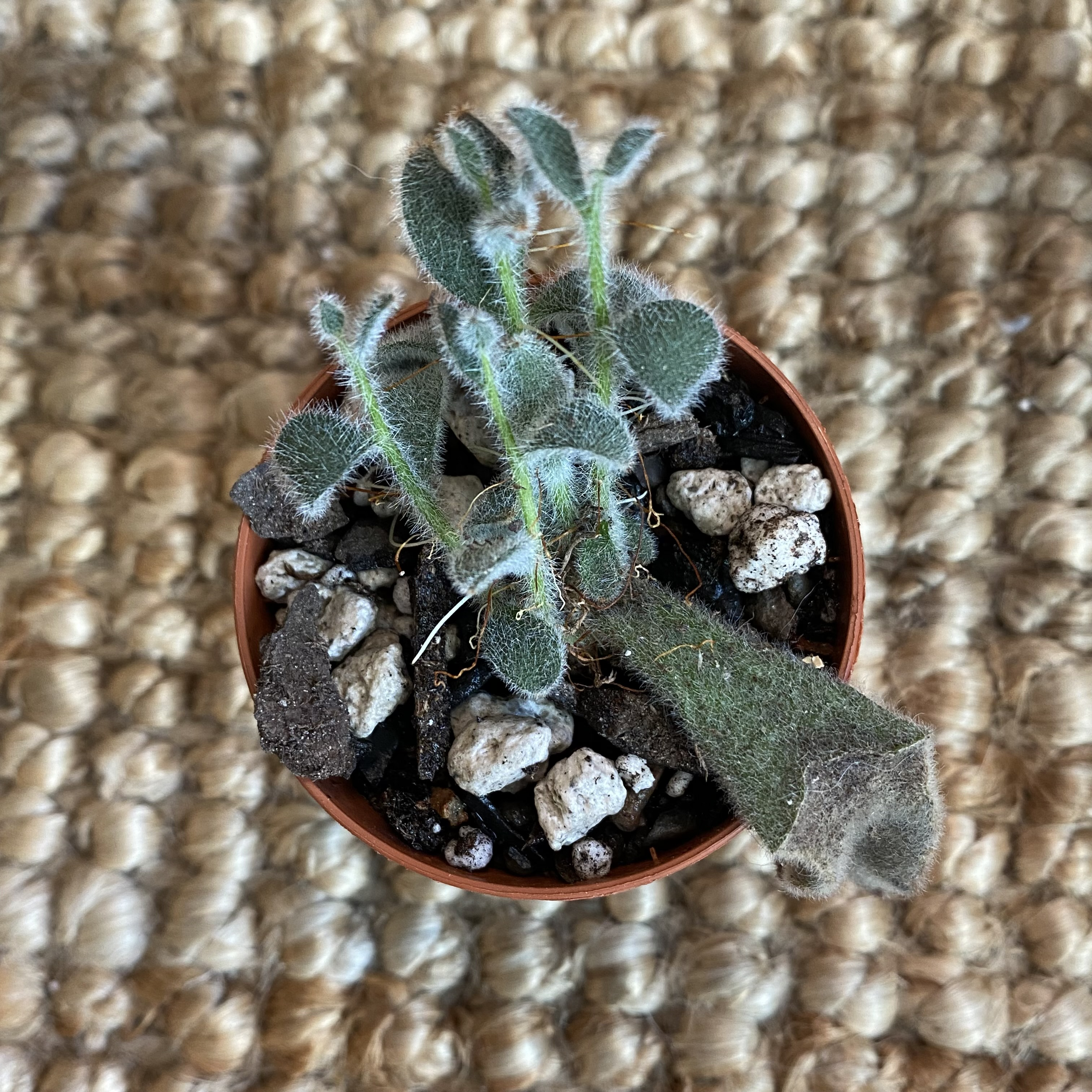
What's Wrong with My Panda Plant?

Common Panda Plant Problems
Mushy leaves
Panda Plant's thick leaves are packed with water-storing cells beneath that velvety felt coating. Wet soil keeps loading them with more water than they can hold, and they burst from the inside, turning soft and squishy starting at the bottom of the plant. Rot climbs the stem fast once it starts.
Wrinkled leaves
When Panda Plant exhausts its stored water, the thick felt-covered leaves deflate and wrinkle instead of plumping up. Recovery is usually fast once the plant drinks.
If they stay wrinkled after watering, press the base of the stem gently. Rot from overwatering can mimic drought from above while the roots are already gone below.
Leggy stems
Panda Plant is native to the sunny highland plateaus of Madagascar and needs strong, direct light to stay compact. Without it, the stems elongate and the fuzzy leaves become smaller and farther apart as the plant reaches toward any light source.
Trim stretched stems back to a healthy node to encourage bushy regrowth.
Leaves dropping
When Panda Plant's roots are damaged by soggy soil, the plant sheds leaves to reduce its water demand. The thick felt leaves detach cleanly at the base, often starting with the lower stem before mushiness becomes obvious.
Panda Plant comes from warm Madagascar and is sensitive to sudden cold. Temperatures below about 50°F (10°C) or a cold draft from a window cause the leaves to loosen and drop without warning.
Pests
White cottony clumps tucked into the fuzzy joints where leaves meet the stem. Panda Plant's dense felt coating gives mealybugs ideal cover, and colonies can build up deep in the leaf axils before the sticky honeydew makes them obvious.
Fine webbing between the stems and a dusty or stippled look on the felt-covered leaves signals spider mites. They move in when indoor air is very dry, and Panda Plant's fuzzy surface can mask early stippling until webbing appears.
Preventing Panda Plant Problems
About This Article
