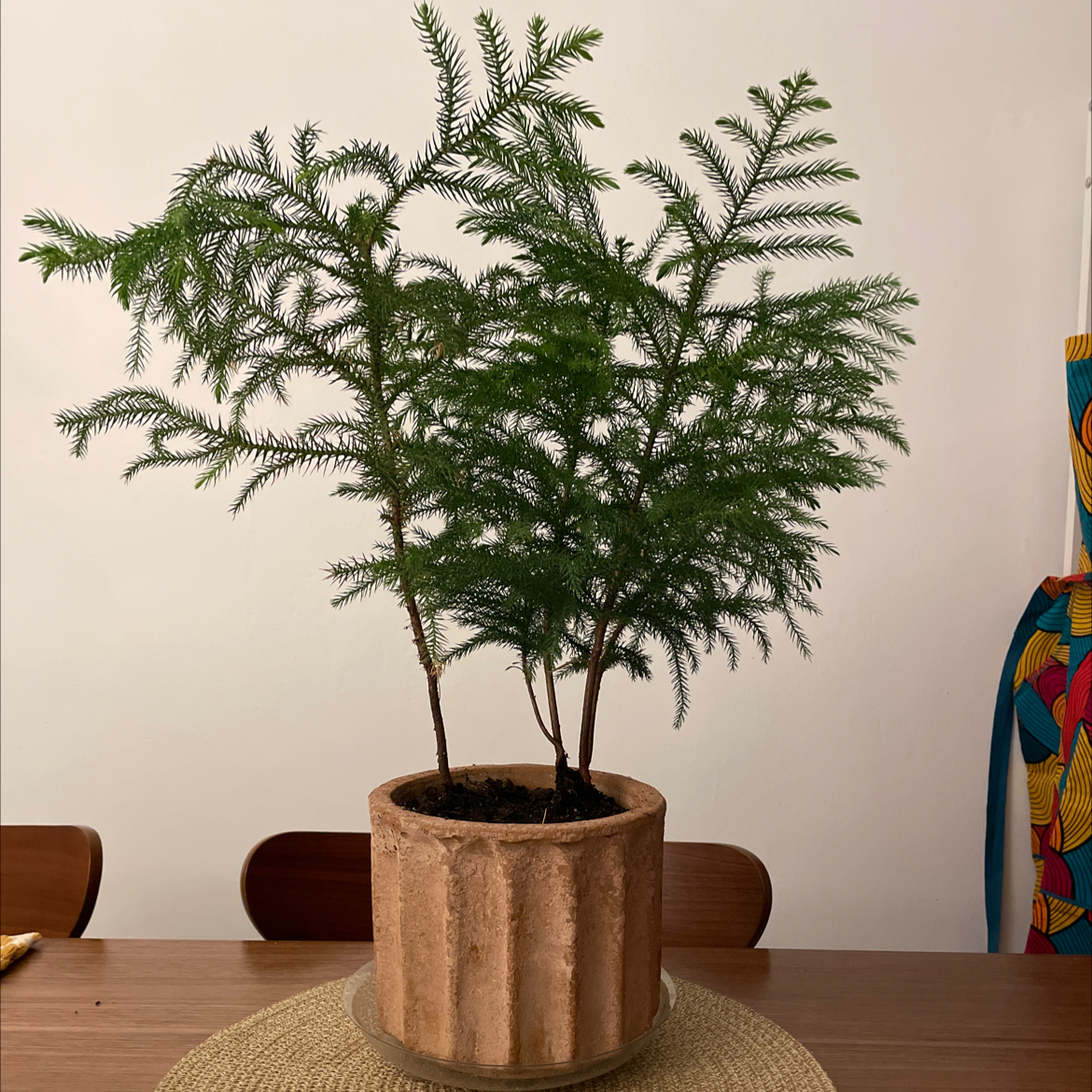
What's Wrong with My Norfolk Island Pine?

Common Norfolk Island Pine Problems
Branches dropping
Norfolk Island Pine is native to a humid oceanic island and its soft, scale-like needles lose moisture fast in dry indoor air. When the air stays dry for weeks, the lower branches desiccate and drop entirely rather than just browning at the tips. This is the most common reason indoor trees lose whole branches.
As a Norfolk Island Pine matures, it naturally drops its lowest whorl of branches over time, just as it does in the wild. This is an inherited behavior from a species that grows very tall and lets lower branches go as the canopy rises. If only the very lowest tier is affected, the rest of the tree looks full, and new growth is visible at the top, nothing is wrong.
Brown needle tips
The soft, fine needles of a Norfolk Island Pine are the first structure to show moisture stress. In dry indoor air, the tips brown and crisp outward from the needle ends because they are the farthest point from the stem's water supply. A home furnace running through winter is the most common trigger.
Norfolk Island Pine is a subtropical species that tolerates cool but not cold air. A cold draft from an exterior door or a poorly insulated window causes the needle tips to brown and can kill individual branches if the exposure is prolonged. The damage looks similar to humidity stress but appears faster, often within days of a cold spell.
Lopsided shape
Norfolk Island Pine has a strong phototropic response and will angle its whole trunk toward its brightest light source over weeks and months. Indoors near a window, one side of the tree gets far more light than the other. Branches on the bright side grow dense and full while the shaded side thins out, and the trunk itself curves. The symmetrical Christmas-tree shape is lost.
Yellow needles
Norfolk Island Pine roots sit in soil that can stay wet for a long time in a standard pot indoors. Waterlogged roots rot and stop supplying nutrients to the branches, and the needles yellow and fall rather than brown. Yellowing from overwatering usually starts on the lower branches and works upward.
Norfolk Island Pine is a full-sun tree in its native habitat and needs significantly more light than most houseplants to stay healthy. In low light, the needles lose their deep green color and turn pale yellow-green or yellow. The inner and lower needles go first because they are the most shaded.
Pests
Spider mites are the most common pest on Norfolk Island Pine and are almost always triggered by dry indoor air. They colonize the dense, overlapping needle clusters on each branch, where fine webbing appears between the needles before the infestation becomes obvious. The needles take on a dusty, stippled look as mites drain them.
Scale insects appear as small brown or tan waxy bumps along the stems and branch shafts. They are easy to miss on Norfolk Island Pine because the rough, scaly bark texture resembles the bumps. A sticky honeydew residue on the branches below or yellowing needles near the affected stems are the giveaways.
White cottony clumps appear where branches meet the central trunk and in the tight axils where needles cluster. Norfolk Island Pine's dense layered branch structure gives mealybugs well-sheltered spots to hide and feed, making them harder to spot until the population is large.
Preventing Norfolk Island Pine Problems
About This Article
