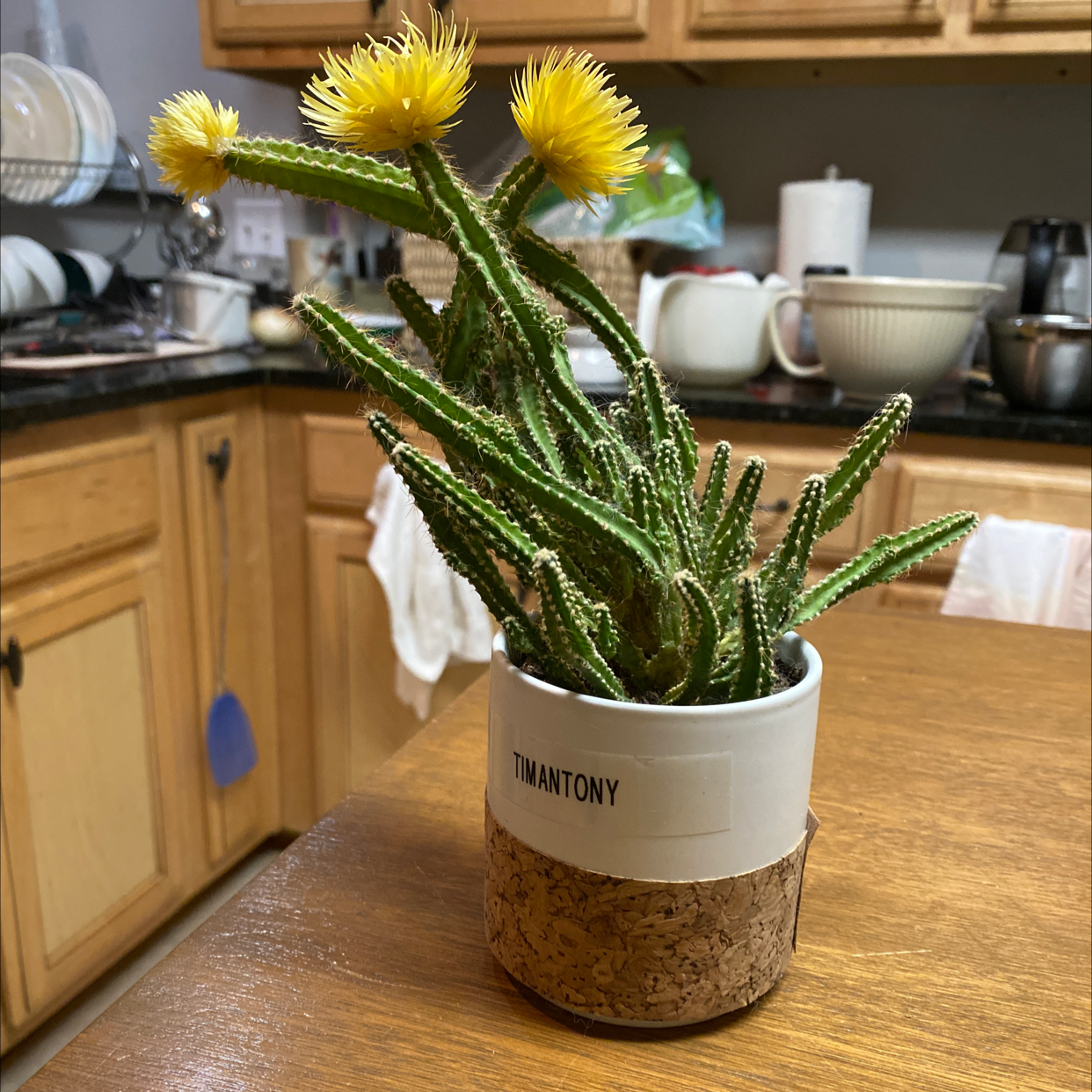
What's Wrong with My Fairy Castle Cactus?

Common Fairy Castle Cactus Problems
Mushy base
Fairy Castle Cactus has shallow, fine roots that are poorly equipped for prolonged soil moisture. When the roots suffocate in wet soil, rot climbs fast into the clustered stems at the base, turning them soft and dark. The multiple columns packed together trap moisture and hide early rot until a whole section collapses.
Brown patches on stems
As Fairy Castle Cactus matures, the lower portions of each column develop a brown, cork-like skin. This is normal aging. The plant replaces the green outer layer with a tougher tissue as it ages, the same way bark forms on a tree trunk. The patches are dry, firm, and often spread upward from the base over several years.
Moving the plant from indoors to intense direct sun too quickly bleaches patches of the columnar stems white or pale tan, which then dry and harden. Fairy Castle Cactus can handle full sun but needs a gradual transition. A sudden jump from a dim shelf to a sunny patio shows up as flat, discolored patches on the exposed sides of the columns.
Pale stems
Fairy Castle Cactus is native to the Americas and evolved in full sun. In low indoor light, the columnar stems lose their deep green color, turning pale or washed out, and new growth stretches thin and weak rather than forming the tight, compact turrets the plant is known for.
Pale or yellowing stems that feel slightly soft signal the early stages of root rot. Fairy Castle Cactus cannot pull nutrients through damaged roots, and the green coloring fades as the vascular tissue underneath breaks down. Check whether the base is also soft or darkening.
Wrinkled stems
Fairy Castle Cactus can tolerate drought, but its thin columns hold less water than stockier cactus forms. When the plant depletes its reserves, the columns wrinkle and pucker from the sides. The stems stay firm to the touch, which tells you apart from rot, where they go soft.
Pests
White cottony clusters hiding in the tight crevices between the clustered columns, where the stems press against each other. Fairy Castle Cactus is particularly vulnerable because the dense turret structure creates dozens of protected pockets where mealybugs can breed out of sight until the colony is large.
Small tan or brown waxy bumps stuck along the stem ridges that don't move when pressed. Scale insects blend into the ribbed texture of Fairy Castle Cactus columns and often go unnoticed until the plant shows yellowing or a sticky residue on the soil surface below.
Preventing Fairy Castle Cactus Problems
About This Article

Royal Horticultural Society