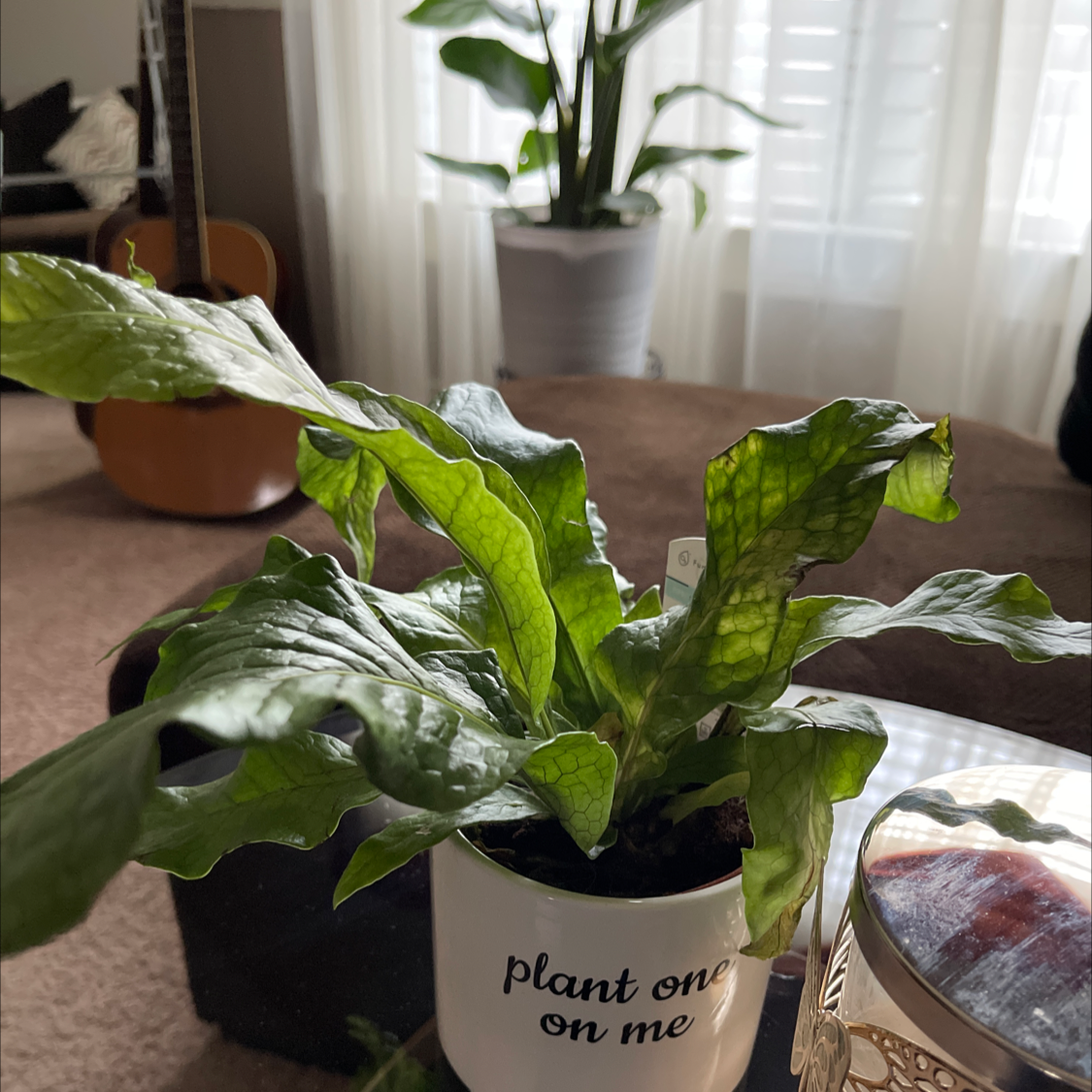
Crocodile Fern

What's Wrong with My Crocodile Fern?

Microsorum musifolium 'Crocodyllus'
Reviewed by Kiersten Rankel M.S.
Quick Answer
1.
Dry air is behind most problems.
Crocodile Fern evolved in humid Southeast Asian forests and needs 50% humidity or higher indoors. Crispy brown edges are the first sign the air is too dry. A humidifier nearby fixes most of what goes wrong.
2.
Check the soil if humidity looks fine.
Overwatering and underwatering both show up fast on this fern. Soggy soil leads to yellow fronds and root rot. Dry soil makes the fronds go limp, though they usually firm back up after a thorough drink.
3.
New fronds emerging from the center mean it's still healthy.
Fresh fronds unfurling from the center of the plant, showing the crisp reptilian pattern, are a sign the plant is still actively growing. If new fronds are coming in, problems are fixable.
Stay on top of plant care
Get seasonal reminders for watering and fertilizing โ€” personalized for your plants.
Try Greg Free

Common Crocodile Fern Problems

Brown crispy edges

Low humidity

Crocodile Fern grows as an epiphyte on tree trunks in humid Southeast Asian rainforests, where moisture in the air is nearly constant. Its wide, leathery fronds are more tolerant of drying out than softer ferns, but the edges still lose moisture and brown when indoor humidity drops below 40-50%. The crispy damage runs along the frond margins first and won't heal even if humidity improves later.

1. Move the plant away from heating vents, radiators, and air conditioning units
2. Run a humidifier nearby targeting 50-60% humidity
3. Group it with other plants to raise local humidity around the fronds
Tap water minerals

The textured fronds of Crocodile Fern are sensitive to fluoride and salt buildup from tap water. Minerals accumulate in the leaf tissue over time and cause brown tips and crispy edges that look like humidity damage but persist even when humidity improves. The browning tends to appear at frond tips and along edges in irregular patches.

1. Switch to filtered, distilled, or collected rainwater
2. Water into the soil rather than onto the fronds
3. Existing brown edges won't recover, but new growth should come in clean once the water source changes

Yellow fronds

Overwatering

Crocodile Fern grows on bark in the wild, so its roots are adapted to periods of moisture followed by drying out rather than sitting in wet substrate. Waterlogged soil suffocates the roots and causes them to rot. As the roots fail, the plant pulls nutrients from older outer fronds first, turning them yellow before the damage moves inward.

1. Check the soil. If it feels wet or soggy, stop watering and let it dry out
2. Make sure the pot has a drainage hole so water cannot pool at the bottom
3. Resume watering only when the top inch of the bark-based mix feels dry to the touch
Too much direct light

Crocodile Fern lives in the filtered shade of a rainforest canopy in the wild. Direct sun bleaches its normally dark green, patterned fronds to a washed-out yellow-green and can scorch pale patches into the surface within hours. The yellowing and bleaching often shows up first on the fronds facing the light source.

1. Move the plant out of any direct sun immediately
2. Place it in bright but filtered or indirect light, such as a few feet back from a window
3. Fronds that have already yellowed or scorched will not recover. Trim them at the base to encourage fresh growth

Wilting fronds

Underwatering

Crocodile Fern's leathery fronds tolerate some drying out better than softer ferns, but when the bark-based substrate dries out completely, the fronds go limp and lose their upright posture. Unlike root rot wilting, these fronds usually firm back up within a few hours of a thorough watering.

1. Water thoroughly until water drains freely from the pot
2. If the substrate has dried out completely, bottom-soak the pot for 15-20 minutes to fully rehydrate it
3. Check soil moisture more frequently going forward
Root rot from overwatering

Roots adapted to clinging to bark rot quickly when kept in dense, wet potting mix. Once roots fail, they cannot move water up into the fronds even when the substrate is soaked. The fronds go limp and stay limp after watering, which is the key sign distinguishing root rot from simple underwatering.

1. Press the substrate. If it is wet and the plant is still wilting, stop watering immediately
2. Remove the plant from its pot and inspect the roots. Healthy roots are pale and firm. Rotten ones are brown and soft
3. Cut away all soft, dark roots with clean scissors
4. Repot in fresh, chunky bark-based mix and hold off watering until the top inch is dry

Faded pattern

Normal aging of older fronds

The raised ridge-and-groove texture is always crispest on fresh young fronds. As each frond matures, the ridges naturally soften and the pattern dulls across the blade. A plant that looks uniformly faded all over has probably gone a long stretch without pushing new fronds, and the crocodile texture has mellowed on every frond at once. The pattern is a feature of new growth, not a permanent quality of every leaf.

1. Check the center of the plant for new fiddleheads or small fresh fronds unfurling. If new growth is coming in, the pattern on those fronds should be sharp and the old fronds softening is normal
2. If no new fronds have emerged in months, review the basics of light, water, and feeding. This fern pushes new fronds steadily through the growing season when the basics are met
3. Remove the oldest, most faded outer fronds at the base to redirect the plant's energy into fresh growth

Pests

Scale

Small brown or tan waxy bumps appear along the prominent midrib running down each frond, or on the undersides near the frond base. The ridged texture of Crocodile Fern's fronds gives scale insects sheltered surfaces to anchor and feed, making them easy to miss until a frond starts declining.

1. Scrape the bumps off with a soft toothbrush or the edge of a card
2. Wipe the fronds down with a cloth dampened in 70% isopropyl alcohol, working carefully along the midrib
3. Check every week for a month and repeat if new bumps appear
Fungus gnats

Small black flies that hover around the substrate and lift off when you water. Crocodile Fern is often potted in bark-based mix that retains moisture pockets, and if kept too wet, the top layer becomes ideal for fungus gnat larvae to breed.

1. Let the top inch of substrate dry out between waterings to make the surface inhospitable to larvae
2. Add yellow sticky traps near the pot to catch adults
3. Top-dress with mosquito bits to kill larvae already in the mix

Preventing Crocodile Fern Problems

A few consistent habits prevent most of what goes wrong with Crocodile Fern.
Weekly Check
1
Keep humidity at 50-60% or higher.
Crocodile Fern evolved in humid Southeast Asian forests where moisture is nearly constant. A humidifier nearby or a spot in a humid room is the single most effective defense against crispy edges, frond decline, and pest pressure.
2
Pot in a chunky bark-based mix with a drainage hole.
This fern grows on bark in the wild, not in dense soil. A bark and perlite mix drains quickly and gives roots the air gaps they need, preventing root rot from waterlogged substrate.
3
Water when the top inch of substrate feels dry.
Crocodile Fern is more tolerant of brief dry periods than softer ferns, but consistent waterlogging rots the roots. Checking the substrate before each watering and waiting until the top inch is dry prevents both extremes.
4
Place in bright, indirect light.
Strong filtered light keeps the crocodile pattern sharp and the fronds dark green. Too little light fades the patterning. Direct sun scorches the fronds.
5
Use filtered or distilled water.
Tap water minerals build up in the textured fronds over time and cause persistent brown tips and edges. Filtered or rainwater keeps the fronds clean and prevents browning that doesn't respond to humidity fixes.
Stay on top of plant care
Get seasonal reminders for watering and fertilizing โ€” personalized for your plants.
Try Greg Free

About This Article

Kiersten Rankel M.S.
Botanical Data Lead at Greg ยท Plant Scientist
About the Author
Kiersten Rankel holds an M.S. in Ecology & Evolutionary Biology from Tulane University. A certified Louisiana Master Naturalist, she has over a decade of experience in science communication, with research spanning corals, cypress trees, marsh grasses, and more. At Greg, she curates species data and verifies care recommendations against botanical research.
See Kiersten Rankel's full background on LinkedIn.
Editorial Process
Every problem and fix in this article was verified against Greg's botanical database, cross-referenced with USDA hardiness zone data and published horticultural research from the Missouri Botanical Garden, university extension programs, and species-specific literature. The Microsorum musifolium 'Crocodyllus' care profile reflects documented species behavior combined with years of community grower feedback in Greg.
1,604+ Greg users growing this plant
USDA hardiness zones 9aโ€“11b