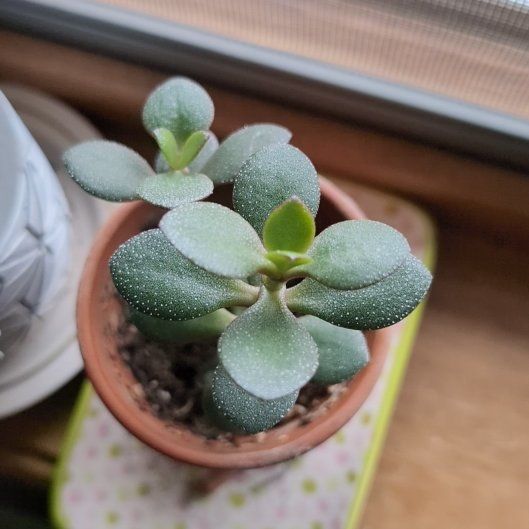
What's Wrong with My Jade?

Common Jade Problems
Yellow leaves
Jade leaves are filled with water-storing cells that burst when the soil stays wet too long. The oldest leaves go glassy and yellow first, starting at the base of the plant and working up.
A Jade slowly sheds its oldest lower leaves as it puts energy into new growth at the branch tips. If just one or two lower leaves are yellowing and the rest of the plant is firm and healthy, the plant is fine.
Dropping leaves
Jade drops leaves fast in response to temperature swings. Moving the plant, setting it near a cold window in winter, or catching an air-conditioning draft can trigger a mass drop within days.
When Jade roots rot, the plant can't support its leaves and sheds them quickly. The leaves often fall off while still green and plump, which is the tell that rot is behind it rather than a cold snap.
Check the base of the stem for softness. If the stem is still firm, let the soil dry fully before watering again. If the base is soft, the rot has reached the stem. Cut the plant above all soft tissue until you reach firm wood and replant the healthy top in dry, gritty mix.
Wrinkled leaves
Jade draws on water stored in its fleshy leaves before showing drought stress. When the reserves are finally depleted, the leaves pucker and wrinkle. Recovery is fast once the plant gets a thorough drink.
If they don't plump up, gently press the base of the stem. Rot can mimic underwatering from the outside while destroying the roots below.
Mushy stem
Jade's thick trunk and branches hold moisture, which means rot from a waterlogged pot can travel up the stem and turn it black and soft. Once the main stem is mushy, the roots are gone. Act fast.
Leggy growth
Jade is a sun-lover from South Africa's dry rocky hillsides. In low light, the stems elongate and the leaves become small and widely spaced as the plant reaches for the source. The compact, tree-like form is lost.
The stretched stems won't shrink back. Prune leggy branches back to a healthy node to encourage compact new growth from that point.
Pests
White cottony clumps tucked into the joints where leaves meet the stem. Jade's densely branched structure gives mealybugs excellent cover, and they can build up to a large colony before becoming visible.
Small brown or tan bumps along the stems that don't move when touched. Scale insects hide under a waxy shell and suck sap directly from Jade's woody stems, causing yellowing and weakened growth.
Preventing Jade Problems
About This Article
