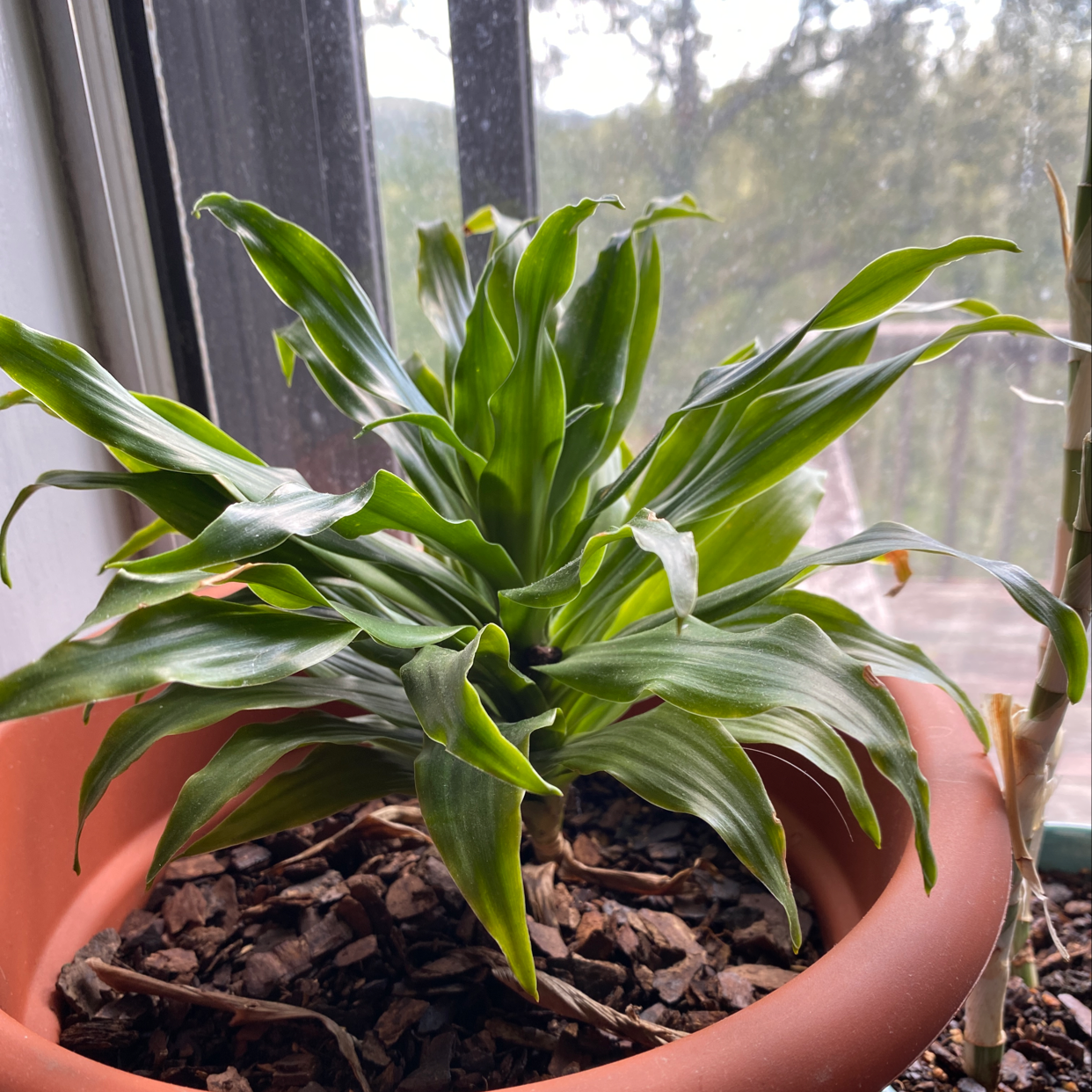
Cornstalk Dracaena

What's Wrong with My Cornstalk Dracaena?

Dracaena fragrans
Reviewed by Kiersten Rankel M.S.
Quick Answer
1.
Fluoride in tap water causes brown tips.
Dracaena fragrans is unusually sensitive to fluoride, and most municipal tap water has enough to cause brown tips ringed with a yellow halo. If your tips look like that, the water is the first thing to change, not your watering schedule.
2.
Overwatering is the top killer.
Soggy soil rots the roots and eventually climbs into the cane itself. Check the soil before every watering. If it's still damp two inches down, wait.
3.
New strappy leaves at the top mean it's still fighting.
Dracaena pushes new growth from the growing points at the top of each cane. Fresh leaves unfurling there means the plant is healthy and problems lower down are usually fixable.
Stay on top of plant care
Get seasonal reminders for watering and fertilizing โ€” personalized for your plants.
Try Greg Free

Common Cornstalk Dracaena Problems

Brown leaf tips

Fluoride in tap water

Dracaena fragrans is one of the most fluoride-sensitive houseplants grown indoors. Fluoride accumulates in leaf tissue over many waterings and kills the cells at the leaf tips. The brown tip appears with a pale yellow band separating the dead tissue from the green, which is the hallmark pattern for this species.

1. Switch to filtered, distilled, or rainwater immediately
2. Trim the brown tips back to healthy green tissue at a slight angle to match the natural leaf shape
3. Flush the soil thoroughly with your new water source two or three times to push accumulated minerals out of the root zone
4. New leaves should come in clean once the fluoride source is removed
Low humidity

Dracaena fragrans is native to humid highland forests in Africa. Dry indoor air pulls moisture from the long strappy leaves faster than the plant can replace it, and the tips die first because they are the furthest point from the roots.

1. Move the plant away from heating vents and radiators
2. Run a humidifier nearby or group it with other plants to raise local humidity
3. Brown tips will not recover, but new growth should come in clean once humidity improves

Yellow leaves

Overwatering

Dracaena fragrans stores water in its thick woody cane, which means it needs less frequent watering than most leafy houseplants. Soggy soil causes the roots to rot, and the plant pulls resources from the oldest leaves first. Yellowing starts at the lower leaves and moves upward.

1. Check the soil two inches down before watering. If it's still damp, wait
2. Pull back watering frequency and let the top half of the soil dry out between drinks
3. If lower leaves continue to yellow and the soil stays wet, check the base of the cane for soft tissue
Normal leaf aging

As Dracaena fragrans puts energy into new growth at the top, it sheds the lowest older leaves. If one or two leaves at the very base are yellowing and the rest of the plant looks good, this is normal. The cane gradually lengthens and the skirt of lower leaves drops away over time.

Mushy cane

Root rot climbing the cane

When the soil stays waterlogged long enough, rot moves up from the roots into the base of the cane itself. The cane goes soft, dark, and may smell. At this point the root system is gone and the rot is working upward through the dense woody stem.

1. Cut above all soft tissue until you reach firm, pale wood
2. Let the cut end dry in open air for one to two days
3. Pot the healthy cutting in fresh, barely moist mix and hold off watering for a week
4. Discard the original root ball as it will not recover

Droopy leaves

Severe underwatering

The long strappy leaves of Dracaena fragrans are stiff and upright when the plant is well-hydrated. Because the thick cane stores some moisture, this species holds out longer than most before showing drought stress. When drooping finally appears, the soil is usually bone dry and has been for a while.

1. Water thoroughly until it runs freely from the drainage hole
2. Bottom-soak the pot for 20 minutes if the soil has pulled away from the pot edges
3. Leaves should firm back up within a day or two once moisture reaches the roots

Leaf drop

Overwatering

Rotting roots can't support the long leaves, and the plant sheds them to reduce the load. Leaf drop from overwatering usually comes with yellowing first, then the leaves fall. The soil will feel wet or smell stale.

1. Stop watering and let the soil dry out
2. Remove fallen leaves and check the base of the cane for softness
3. Resume watering only when the top half of the soil is dry
Cold draft or sudden move

Dracaena fragrans drops leaves when jolted by a cold draft or a dramatic change in environment. The long leaves detach cleanly at the base. This often follows moving the plant, placing it near a drafty window in winter, or a sudden drop in room temperature.

1. Move the plant away from cold windows, exterior doors, and air conditioning vents
2. Keep it above 60ยฐF and away from direct drafts
3. New leaves should emerge from the growing tip once the environment stabilizes

Pests

Spider mites

Fine webbing between the long leaves and along the cane, with pale stippled speckling on leaf surfaces. Dry indoor air is the main driver, and Dracaena fragrans is particularly prone because it is often kept in low-humidity offices and living rooms.

1. Rinse the plant under a strong shower, directing water to leaf undersides and the cane
2. Wipe all leaf surfaces and the cane with insecticidal soap or 70% isopropyl on a cloth
3. Repeat every three to four days for two weeks
4. Raise humidity around the plant, since mites struggle in moist air
Mealybugs

White cottony clusters where the long leaves meet the cane and in the tight sheaths at the base of each leaf. Mealybugs thrive in the dense leaf clusters at the top of a Dracaena fragrans cane, where the overlapping leaf bases create sheltered pockets.

1. Dab each cluster with a cotton swab soaked in 70% isopropyl alcohol
2. Follow with an insecticidal soap spray over the whole plant, working into the leaf sheaths
3. Check weekly for three weeks and repeat as needed
Scale

Small brown waxy bumps on the cane and along leaf midribs. Scale insects are hard to spot on the woody brown cane of Dracaena fragrans because their coloring blends in, and an infestation can grow large before the owner notices.

1. Scrape bumps off the cane and leaves with a soft toothbrush
2. Wipe down the cane and all leaf surfaces with 70% isopropyl on a cloth
3. Check monthly and repeat if new bumps reappear

Preventing Cornstalk Dracaena Problems

A few consistent habits prevent most of what goes wrong with Cornstalk Dracaena.
Weekly Check
1
Use filtered, distilled, or rainwater.
Fluoride in tap water is the leading cause of the brown-tipped, yellow-haloed damage this species is famous for. Switching water sources is the single highest-impact change most owners can make.
2
Water only when the top half of the soil is dry.
The thick woody cane stores moisture, so Dracaena fragrans needs less frequent watering than most leafy houseplants. Letting the soil dry down several inches before each drink prevents the root rot that causes yellowing, leaf drop, and cane collapse.
3
Keep humidity above 40% and away from vents.
Low humidity drives both crispy brown tips and spider mite outbreaks. A humidifier or a grouping of plants nearby raises local moisture and cuts both risks.
4
Place in bright to medium indirect light and leave it there.
Dracaena fragrans tolerates low light but moves slowly and drops leaves when suddenly shifted to a different environment. Picking a stable spot reduces shock-triggered leaf drop.
5
Check the leaf sheaths and cane monthly for pests.
Mealybugs and scale hide in the dense leaf bases at the top of each cane. A quick look during watering catches them before a colony takes hold.
Stay on top of plant care
Get seasonal reminders for watering and fertilizing โ€” personalized for your plants.
Try Greg Free

About This Article

Kiersten Rankel M.S.
Botanical Data Lead at Greg ยท Plant Scientist
About the Author
Kiersten Rankel holds an M.S. in Ecology & Evolutionary Biology from Tulane University. A certified Louisiana Master Naturalist, she has over a decade of experience in science communication, with research spanning corals, cypress trees, marsh grasses, and more. At Greg, she curates species data and verifies care recommendations against botanical research.
See Kiersten Rankel's full background on LinkedIn.
Editorial Process
Every problem and fix in this article was verified against Greg's botanical database, cross-referenced with USDA hardiness zone data and published horticultural research from Missouri Botanical Garden and NC State Extension. The Dracaena fragrans care profile reflects 49,000+ Greg users growing this species indoors, alongside peer-reviewed sources on Asparagaceae cultivation and fluoride sensitivity in Dracaena species.
47,239+ Greg users growing this plant
USDA hardiness zones 10aโ€“12b