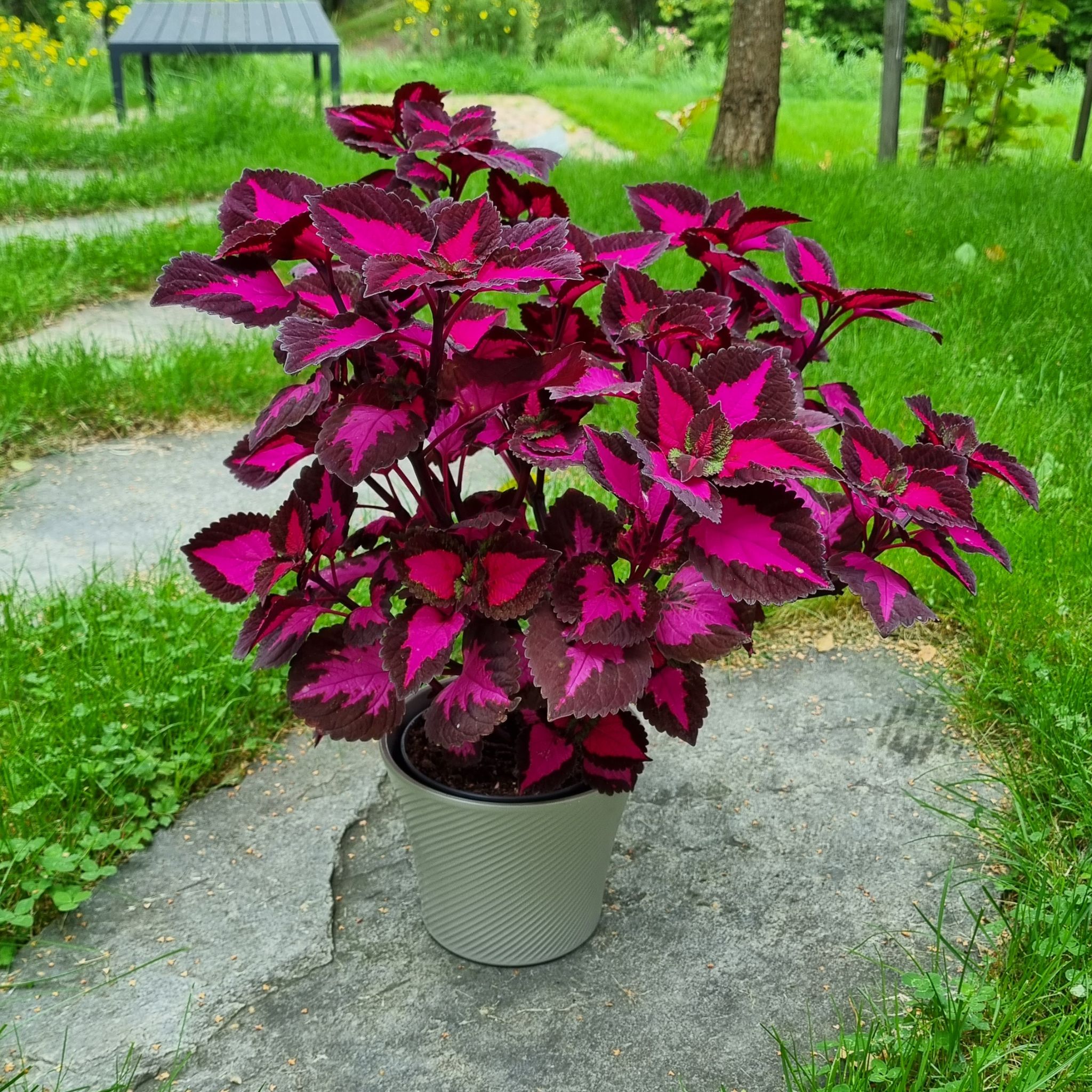
What's Wrong with My Coleus?

Common Coleus Problems
Leggy stems
Coleus stretches fast toward any light source when the spot is too dim, producing long stems with small, widely spaced leaves. Because Coleus grows quickly even in poor conditions, a dim location turns it into a sparse, floppy plant within a few weeks rather than months.
Coleus produces tall, upright flower spikes that redirect the plant's energy away from its multicolored leaves and into seed production. Once a spike forms, the stem below it stops branching and the foliage shrinks. The spikes themselves are not ornamental and letting them go makes the whole plant taller and thinner.
Faded leaf color
Coleus leaf pigments break down under intense direct sun, washing the vivid reds, oranges, and purples into pale, washed-out tones. The large, thin leaves have no waxy coating to shield them, so bleaching happens fast in afternoon sun. Scorched patches often appear alongside color loss.
In a dim spot, Coleus reduces the red and purple pigments that require light to maintain and shifts toward green. The patterns that make the plant worth growing gradually disappear. Cultivars with dark burgundy or near-black leaves are more tolerant of shade, but most colorful varieties need a genuinely bright spot.
Wilting
Coleus has broad, thin leaves with a large surface area and no water-storage tissue. It loses moisture fast in warm or bright conditions and wilts dramatically when the soil dries out, often collapsing within hours of the roots running short of water. Recovery is quick once it gets a thorough drink.
Coleus also wilts when its fibrous roots are rotting in soggy soil because damaged roots cannot move water upward. The giveaway is soil that feels wet while the plant looks thirsty. Rot sets in quickly because Coleus roots are fine and soft, with no resistance to prolonged waterlogging.
Yellow leaves
Coleus roots are fine and fibrous, with very little tolerance for staying wet. In waterlogged soil they rot quickly, and the plant pulls nutrients back from its oldest leaves first. The classic pattern is yellowing at the base of the plant climbing upward, with soil that stays damp long after watering.
As Coleus pushes fast new growth at the stem tips, it sheds its oldest interior leaves. A few yellowing leaves deep inside a healthy, actively growing plant are normal. If the stem tips are putting out fresh colorful leaves and only the lowest interior leaves are yellow, nothing is wrong.
Pests
Spider mites are the most common indoor pest on Coleus. Dry air is the trigger, and the large, soft leaves are easy targets. Look for pale stippling on the upper leaf surface and fine webbing on the undersides and where stems branch. Infestations build fast because Coleus leaves offer a lot of feeding surface.
Whiteflies are a frequent problem on Coleus, especially on plants that spend time outdoors or sit near open windows. A cloud of tiny white insects lifts off when you shake the foliage. They feed on leaf undersides and leave behind sticky honeydew that coats the large Coleus leaves and attracts sooty mold.
White cottony clumps at leaf axils and stem joints where Coleus branches are the giveaway. Mealybugs suck sap from the soft stems and leave behind sticky honeydew. They target the youngest, most tender growth and can be hard to spot early because they tuck into the dense branching points.
Preventing Coleus Problems
About This Article
