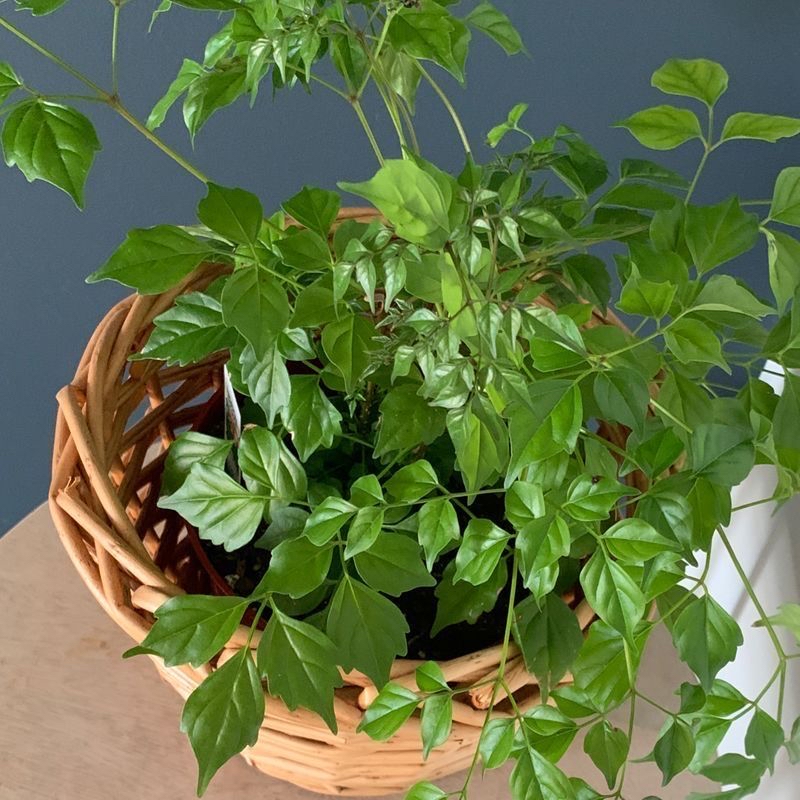
China Doll Plant

What's Wrong with My China Doll Plant?

Radermachera sinica
Reviewed by Kiersten Rankel M.S.
Quick Answer
1.
Leaf drop is almost always shock.
Moving the pot, drafts, inconsistent watering, and temperature swings all trigger mass leaf drop on this species. Check what changed in the plant's environment before anything else.
2.
Check humidity and light if watering is fine.
Crispy tips, leggy growth, and spider mites all trace back to low humidity or too little light. Dry indoor air is the second most common source of trouble.
3.
New growth at the top means it is fighting.
Tightly curled small leaflets at the growing tip that spread out into the delicate compound pattern are a clear signal the plant is still actively growing and problems below are fixable.
Stay on top of plant care
Get seasonal reminders for watering and fertilizing — personalized for your plants.
Try Greg Free

Common China Doll Plant Problems

Leaf drop

Environmental shock

China Doll Plant is extremely sensitive to any sudden change in its environment. Moving the pot, a cold draft, a shift in light, or even turning the plant around triggers mass leaf drop because the species evolved in stable subtropical conditions and treats rapid environmental shifts as a stress signal. Dozens of leaves can fall within days of a single disturbance.

1. Stop moving the plant and return it to its previous spot if the move was recent
2. Seal off cold drafts and move the plant away from heating and cooling vents
3. Hold a steady watering rhythm and avoid repotting until the plant stabilizes
4. Give it 4 to 6 weeks in one place before deciding whether the location is working
Overwatering

Soggy soil causes the fine, delicate roots of a China Doll Plant to rot. Damaged roots cut off water supply to the canopy, and leaves yellow briefly before falling. The drop from rot is slower than shock-triggered drop and usually comes with soft, yellowing foliage rather than leaves that fall while still green.

1. Stop watering and let the soil dry down before the next drink
2. Check the base of the stem for soft or darkened tissue, which signals rot has reached the stem
3. If the stem is still firm, resume on a drier schedule and ensure the pot drains freely
Underwatering

A China Doll Plant that dries out completely will shed leaves rapidly. The delicate fern-like leaflets wilt and drop before showing much yellowing, because the compound leaves have very little water storage in their thin leaflets and react quickly when the soil goes bone dry.

1. Water thoroughly until it drains from the bottom of the pot
2. Check the soil every few days rather than on a fixed calendar schedule
3. If the pot feels very light and the soil has pulled away from the edges, bottom-soak for 20 minutes to re-wet the rootball

Yellow leaves

Overwatering

Overwatering is the most common reason China Doll Plant leaves turn yellow. The plant's fine root system rots quickly in waterlogged soil, and the plant pulls nutrients back from older leaves as the roots lose function. Yellowing moves up from the bottom of the plant and is usually paired with soil that stays wet for many days.

1. Check the soil. If it feels wet or damp, stop watering immediately
2. Let the soil dry fully before the next watering
3. If yellowing continues after a full dry cycle, check the base of the stem. Soft tissue there means rot has reached the stem and the healthy top should be taken as a cutting
Normal shedding

As a China Doll Plant grows, the lowest and oldest leaves yellow and drop naturally to redirect energy to the newer compound foliage above. If only one or two lower leaves are affected and the rest of the plant looks healthy with new growth at the top, this is normal.

Brown leaf tips

Low humidity

China Doll Plant is native to subtropical southern China, where humidity stays naturally high. Indoors, the thin leaflets lose moisture faster than the roots can replace it in dry air. The tips brown and crisp first because they are the furthest point from the stem's water supply.

1. Move the plant away from heating vents and radiators
2. Run a humidifier nearby or group the plant with others to raise local humidity
3. Brown tips will not recover, but new leaflets should come in clean once humidity improves
Underwatering

When the soil dries out too much between waterings, the plant prioritizes water for the roots and stem. The delicate leaflet tips at the ends of each compound leaf are the first to show the deficit, browning and crisping at the tips while the rest of the leaf still looks green.

1. Water thoroughly until it runs from the drainage hole
2. Check the soil more frequently and water before it dries out completely
3. Browning tips will not recover but the leaf can stay on the plant until it falls naturally

Leggy growth

Low light

A China Doll Plant stretching for light grows long, spindly stems with wide spacing between leaf nodes and sparse, undersized compound leaves. The plant is trying to reach a brighter spot. Because it grows upright like a small tree, the leggy look is very obvious as the stem extends without filling out.

1. Move the plant to a brighter spot with bright indirect light
2. Pinch back the longest stems by a third to encourage the plant to branch rather than keep reaching upward
3. New growth in better light will come in denser and better proportioned

Pests

Spider mites

Spider mites are the most common pest on China Doll Plant, and dry indoor air is almost always the trigger. They colonize the undersides of the delicate compound leaflets, leaving fine webbing between leaflets and pale stippling across the upper surface. The thin, finely divided foliage gives them plenty of dense cover to multiply before webbing becomes obvious.

1. Rinse the plant thoroughly in the shower to knock mites off the leaflets
2. Wipe the leaflets and stems with insecticidal soap or 70% isopropyl on a cloth
3. Repeat every 3 to 4 days for two weeks
4. Raise humidity nearby, since mites struggle to reproduce in moist air
Mealybugs

White cottony clumps appear at the joints where leaflets meet the main leaf stem and at growing tips. China Doll Plant's dense, branchy structure gives mealybugs plenty of hidden crevices to shelter in, making them harder to spot until there are many.

1. Dab each white cluster with a cotton swab soaked in 70% isopropyl
2. Follow with an insecticidal soap spray over the whole plant, paying close attention to joints and stem crevices
3. Repeat every 5 to 7 days for three weeks

Preventing China Doll Plant Problems

A few consistent habits prevent most of what goes wrong with China Doll Plant.
Weekly Check
1
Find a bright, stable spot and leave the plant there.
This species drops leaves at the slightest environmental change. Pick a location with bright indirect light away from drafts and vents, and do not move or rotate the pot.
2
Water when the top inch of soil feels barely moist, not bone dry.
China Doll Plant wants consistent moisture but cannot tolerate soggy soil. Letting it dry out completely triggers leaf drop just as overwatering does. Check the soil every few days and water before it dries all the way through.
3
Keep humidity above 50% with a humidifier or by grouping plants.
Dry air causes crispy tips and invites spider mites. A humidifier nearby is the most reliable defense for this subtropical species growing indoors.
4
Keep the plant above 60°F and away from cold windows.
Temperatures below 55°F and cold drafts from doors or glass trigger leaf drop. A stable, warm indoor temperature prevents both cold stress and the shock-related drop that follows it.
5
Pinch back new growth regularly to keep the shape full.
Left alone, this plant grows tall and leggy. Pinching the stem tips every few weeks encourages branching and keeps the bushy, fern-like look that makes it attractive.
Stay on top of plant care
Get seasonal reminders for watering and fertilizing — personalized for your plants.
Try Greg Free

About This Article

Kiersten Rankel M.S.
Botanical Data Lead at Greg · Plant Scientist
About the Author
Kiersten Rankel holds an M.S. in Ecology & Evolutionary Biology from Tulane University. A certified Louisiana Master Naturalist, she has over a decade of experience in science communication, with research spanning corals, cypress trees, marsh grasses, and more. At Greg, she curates species data and verifies care recommendations against botanical research.
See Kiersten Rankel's full background on LinkedIn.
Editorial Process
Every problem and fix in this article was verified against Greg's botanical database, cross-referenced with USDA hardiness zone data and published horticultural research from the Missouri Botanical Garden, university extension programs, and species-specific literature. The Radermachera sinica care profile reflects documented species behavior combined with years of community grower feedback in Greg.
3,545+ Greg users growing this plant
USDA hardiness zones 10a–11b