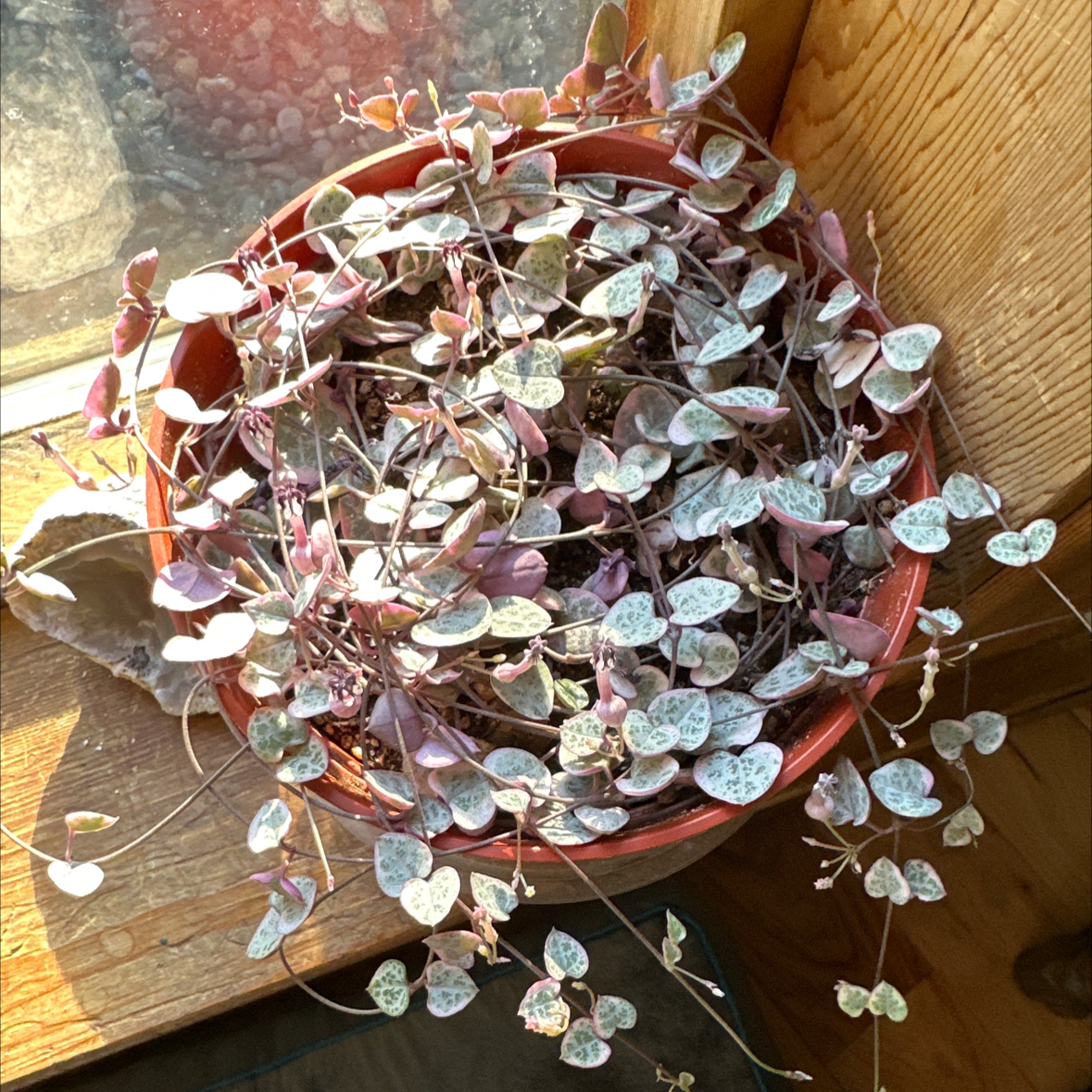
What's Wrong with My String of Hearts?

Common String of Hearts Problems
Sparse strings
String of Hearts is native to southern African hillsides where it scrambles in full sun. In dim indoor spots, the vine stretches long gaps between leaves as it reaches for light, and the heart-shaped pairs become smaller and widely spaced. The compact, lush curtain of leaves never develops without bright exposure.
Yellow leaves
String of Hearts has a tuberous root system built to survive dry seasons, not moist indoor soil. The thin roots rot quickly when kept wet, and the plant pulls resources back from leaves as the roots fail. Yellowing and mushy leaf texture are the first visible sign the roots are already struggling.
As new growth pushes out along the vine tips, the oldest leaves at the base of a string occasionally yellow and drop. If just a few inner leaves are affected and the vine tips look healthy, the plant is simply redirecting energy toward new growth.
Wrinkled leaves
String of Hearts stores water in both its leaves and its underground tuber, so the leaves are usually the last to show drought stress. When the tuber reserves run low, the small heart-shaped leaves pucker and wrinkle. Recovery is fast once the plant gets a thorough drink.
Mushy base
When the tuberous roots stay wet too long they rot, and the damage travels up into the main crown and along the stems. The thin purple stems turn translucent and collapse quickly once rot reaches them. This moves fast on String of Hearts because the tuber is compact and close to the soil surface.
Faded silver pattern
The silver marbling on String of Hearts leaves is produced by cells near the surface that reflect light. In low-light conditions, the plant puts less energy into surface pigmentation and more into chlorophyll, causing the silver to wash out to a flat green. Leaves grown in bright light retain sharp, contrasting silver patterns.
Pests
White cottony tufts tucked into the joints where leaves meet the stem, or nestled around the base of the tuber. Mealybugs are the most common pest on String of Hearts because the closely spaced leaf pairs give them sheltered spots along every string to hide and feed.
Preventing String of Hearts Problems
About This Article
