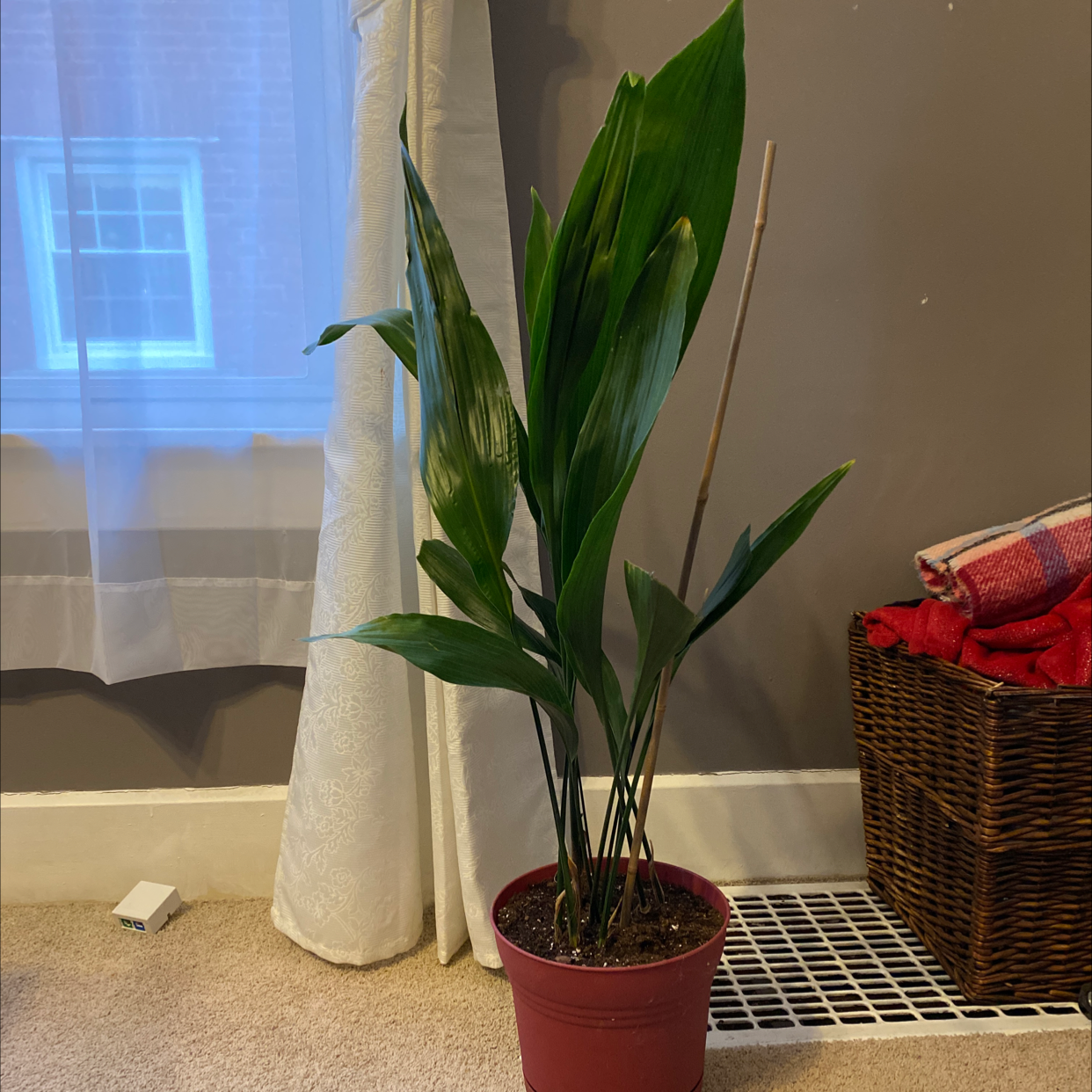
Cast Iron Plant

What's Wrong with My Cast Iron Plant?

Aspidistra elatior
Reviewed by Kiersten Rankel M.S.
Quick Answer
1.
Brown tips usually trace back to water.
Mineral buildup from tap water is the most common complaint with Cast Iron Plant. If you have been using tap water for months, the browning on the tips is likely that, not a disease.
2.
Yellow leaves usually mean too much water.
Cast Iron Plant survives drought easily but roots rot in consistently wet soil. If leaves are turning yellow and the soil stays damp, cut back on watering.
3.
Watch for a new leaf spear at soil level.
A tightly coiled spear pushing up from the rhizome at the base of the plant means it is actively growing. New growth here signals the plant is healthy despite whatever the older leaves look like.
Stay on top of plant care
Get seasonal reminders for watering and fertilizing โ€” personalized for your plants.
Try Greg Free

Common Cast Iron Plant Problems

Brown tips

Tap water minerals

Cast Iron Plant's long strap-like leaves draw water steadily from the rhizome, and mineral salts from tap water ride along and accumulate at the tips where water evaporates. Over months, the deposit burns the leaf tissue at the farthest point from the roots. The tips brown and the edge of the damage looks dry and papery rather than soft.

1. Switch to filtered, distilled, or collected rainwater going forward
2. Flush the soil thoroughly once a month to push accumulated salts out through the drainage hole
3. Trim the brown tips with clean scissors at a slight angle to match the leaf shape. The cut edge will not re-green, but new leaves will grow in clean
Low humidity

Cast Iron Plant tolerates dry air better than most houseplants, but when indoor humidity stays very low for extended periods, the tips of the long strap leaves desiccate and brown at the edges. It looks almost identical to mineral burn, but appears faster in very dry conditions like centrally heated rooms in winter.

1. Move the plant away from heating vents and radiators
2. Run a humidifier nearby or group with other plants to raise local humidity
3. Trim damaged tips with clean scissors. New leaves will come in without brown edges once conditions improve

Yellow leaves

Overwatering

Cast Iron Plant grows from a thick rhizome that stores water in the soil, and its roots are not built for constantly wet conditions. When the soil stays soggy, the roots suffocate and begin to rot. The plant pulls nutrients back from its oldest leaves first, and yellowing starts at the bottom of the plant and moves upward.

1. Stop watering and let the soil dry out completely before the next drink
2. Check the base of the stem for soft or dark tissue. If firm, resume watering on a drier schedule
3. If soft rot has reached the rhizome, remove the affected section, let the cut surface dry for a day, and repot the healthy rhizome section in fresh, well-draining mix
Normal aging

Cast Iron Plant grows very slowly, adding just a few leaves per year from the rhizome. As new leaves emerge, the plant gradually lets go of the oldest ones. A single yellowing leaf at the outer edge of the plant, while everything else looks healthy, is a normal part of the plant cycling through its oldest growth.

Root-bound pot

Cast Iron Plant's rhizome spreads horizontally underground and eventually fills the pot completely. When roots have nowhere to go, the plant struggles to absorb water and nutrients evenly, and outer leaves begin to yellow from the tips inward. The pot may crack or roots may be visibly escaping the drainage hole.

1. Move the plant to a pot one to two inches wider with fresh potting mix
2. Divide the rhizome if the plant has outgrown the space, separating sections that each have at least two to three leaves and healthy roots
3. Water lightly after repotting and keep it in place for a few weeks while roots settle

Spotted leaves

Sunburn

Cast Iron Plant evolved in the deep shade of East Asian forests and has almost no tolerance for direct sun. Even a few hours of direct afternoon light bleaches or scorches the dark green leaves, leaving irregular pale or tan patches that are dry to the touch. Because the plant grows so slowly, these scorch marks persist on the same leaves for years.

1. Move the plant immediately out of any direct sun to a shaded or dimly lit spot
2. Scorched patches will not recover on the affected leaves, but new leaves will grow undamaged in lower light
3. The plant does fine in quite dark corners where most houseplants fail
Physical damage

Cast Iron Plant's stiff, strap-like leaves are durable but bruise and scar permanently when knocked, scraped, or rubbed against a wall or furniture. Because this plant puts out only two to three new leaves a year, a single damaged leaf stays visible on the plant for a long time. The mark is usually a brown or yellowed streak rather than a round spot.

1. Move the plant away from high-traffic areas or surfaces it rubs against
2. Trim badly scarred leaves at the base if the damage is distracting. The slow growth rate means the gap takes time to fill, but new leaves will come in undamaged

No new growth

Normal slow growth rate

Cast Iron Plant is one of the slowest-growing houseplants. A healthy plant in good conditions produces only two to three new leaves per year from its rhizome. Long gaps between visible new growth are completely normal and not a sign that anything is wrong. The plant is not dying. It is just working on a very long timescale.

Pests

Spider mites

Dry indoor air in winter is the main trigger. Spider mites appear as fine webbing on the undersides of the long strap leaves and along the leaf midrib, with pale stippling or faint streaking on the upper surface. Cast Iron Plant's thick, waxy leaves resist mites better than most houseplants, but a plant stressed by very dry air is vulnerable.

1. Rinse the plant under a strong shower to knock mites off the leaf surfaces
2. Wipe both sides of every leaf with insecticidal soap or 70% isopropyl on a cloth
3. Repeat every three to four days for two weeks
4. Raise local humidity above 40% to make the environment less hospitable to mites
Scale

Small tan or brown waxy bumps along the leaf midrib and where the leaf meets the stem. Scale insects attach to Cast Iron Plant's thick, glossy leaves and suck sap steadily. The bumps are easy to miss on the dark green surface until a leaf starts to look dull or sticky from honeydew dripping below.

1. Scrape bumps off with a soft toothbrush or the edge of a card
2. Wipe the affected areas with a cloth dampened in 70% isopropyl alcohol
3. Check every week for a month and repeat if new bumps appear

Preventing Cast Iron Plant Problems

A few consistent habits keep Cast Iron Plant looking its best.
Weekly Check
1
Use filtered or rainwater instead of tap water.
Mineral buildup from tap water is the most common cause of brown tips on Cast Iron Plant's long leaves. Filtered or collected water prevents the slow accumulation that damages the tips over months.
2
Water only when the soil has dried out completely.
Cast Iron Plant's rhizome stores water and the roots rot if kept consistently wet. Waiting until the soil is dry several inches down before watering prevents root rot and yellow leaves.
3
Keep the plant in shade or low indirect light.
Direct sun scorches the dark green leaves and leaves permanent marks that stay visible for years because of the slow growth rate. A dim corner, a north-facing window, or a spot away from any window works well.
4
Place it where leaves will not be bumped or scraped.
Physical damage leaves permanent scorch-like marks on the stiff leaves. Because new leaves appear only a few times a year, a damaged leaf stays on the plant for a long time. A stable, low-traffic spot prevents cosmetic damage.
5
Repot every three to four years when roots fill the pot.
The spreading rhizome eventually fills the container and causes nutrient stress and yellowing. Moving up one pot size every few years keeps the plant able to absorb evenly and prevents the pot from cracking.
Stay on top of plant care
Get seasonal reminders for watering and fertilizing โ€” personalized for your plants.
Try Greg Free

About This Article

Kiersten Rankel M.S.
Botanical Data Lead at Greg ยท Plant Scientist
About the Author
Kiersten Rankel holds an M.S. in Ecology & Evolutionary Biology from Tulane University. A certified Louisiana Master Naturalist, she has over a decade of experience in science communication, with research spanning corals, cypress trees, marsh grasses, and more. At Greg, she curates species data and verifies care recommendations against botanical research.
See Kiersten Rankel's full background on LinkedIn.
Editorial Process
Every problem and fix in this article was verified against Greg's botanical database, cross-referenced with USDA hardiness zone data and published horticultural research from the Missouri Botanical Garden, university extension programs, and species-specific literature. The Aspidistra elatior care profile reflects documented species behavior combined with years of community grower feedback in Greg.
4,169+ Greg users growing this plant
USDA hardiness zones 7aโ€“11b