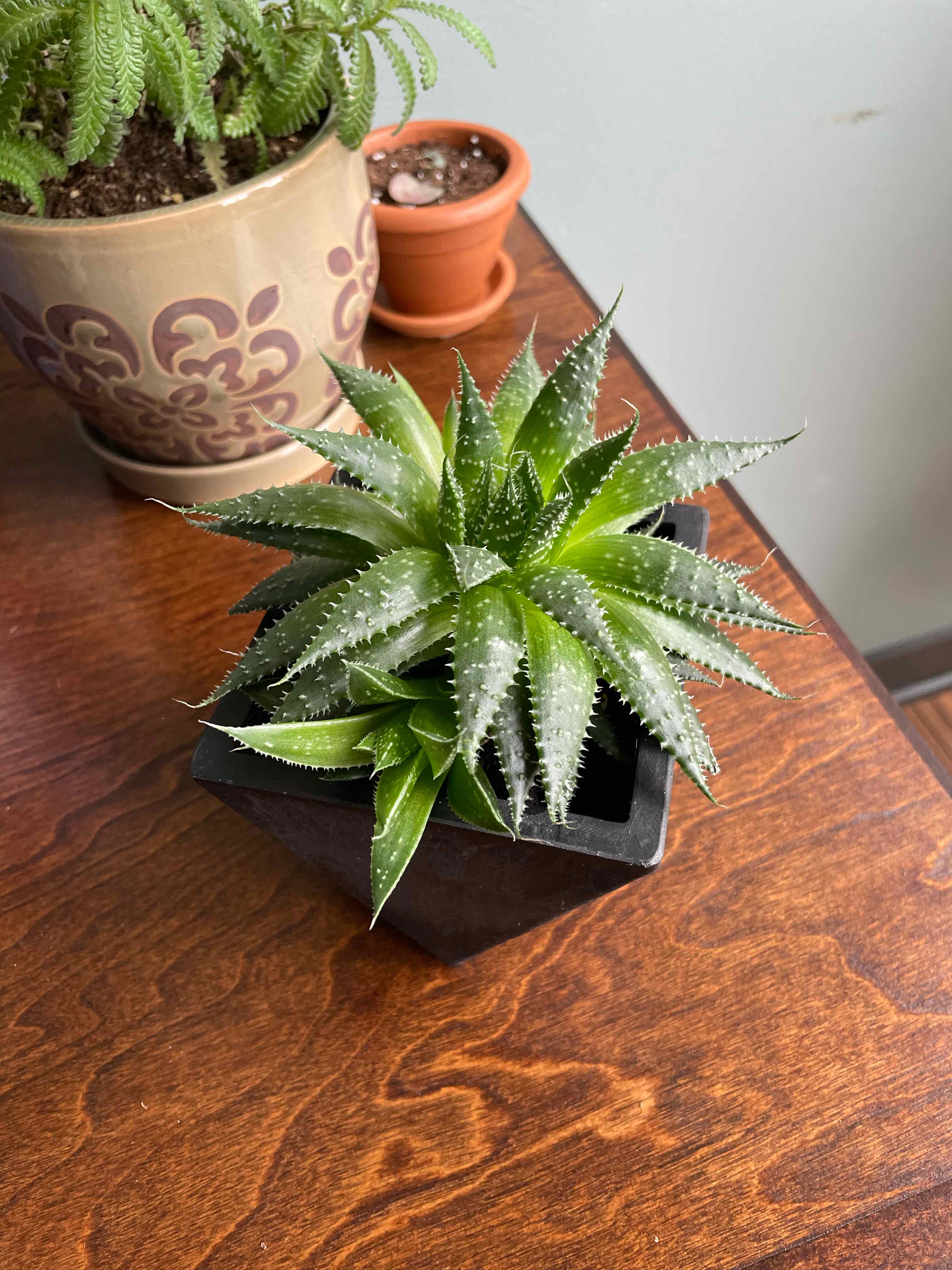
Lace Aloe

What's Wrong with My Lace Aloe?

Aristaloe aristata
Reviewed by Kiersten Rankel M.S.
Quick Answer
1.
Most problems trace back to overwatering.
Lace Aloe stores water in its fleshy leaves and rots long before it goes thirsty. Check the soil before doing anything else.
2.
Light causes most of the rest.
Too much direct sun bleaches the leaves pale. Too little sun stretches the tight rosette apart. Both are fixed by moving to bright indirect light.
3.
New pups or center leaves mean it's still healthy.
If the plant is pushing new offset rosettes at the base or fresh leaves from the center, it is still fighting and recoverable.
Stay on top of plant care
Get seasonal reminders for watering and fertilizing โ€” personalized for your plants.
Try Greg Free

Common Lace Aloe Problems

Mushy leaves

Overwatering and rot

Lace Aloe's triangular leaves are packed with water-storing tissue. When the soil stays wet too long, those cells keep absorbing until they burst from the inside, turning the lowest leaves translucent and soft. Rot climbs from the base up.

1. Remove any mushy or translucent leaves by pulling them cleanly from the base
2. Lift the plant from the pot and cut away brown or soft roots back to firm, white tissue
3. Let the plant air-dry for a day or two so the cuts can callus
4. Repot in dry, gritty cactus mix and wait two weeks before the first watering

Faded leaves

Too much direct sun

Lace Aloe evolved in rocky South African terrain with bright filtered light and gentle morning sun. It handles mild direct sun in the morning without issue, but strong midday or afternoon sun bleaches the dark green leaves pale yellow or tan. The difference between good morning exposure and harsh afternoon exposure is the intensity of the light, not the fact that sun is hitting the leaves.

1. Move the plant out of direct midday and afternoon sun. Bright indirect light, or gentle morning sun from an east window, is the target
2. If the plant is in a south or west window, shift it a few feet back or add a sheer curtain to filter the harshest hours
3. The bleached patches will not recover their color, but healthy new leaves will come in green as the plant stabilizes over a few weeks

Leggy growth

Not enough light

Lace Aloe's natural form is a tight, compact rosette. In low light, the central stem elongates and the leaves spread apart and thin out as the plant strains toward the nearest window. The distinctive white-bumped texture becomes less prominent.

Move to the brightest spot available with bright indirect light, ideally near a south or east-facing window.

The stretched stem will not compress back. If the shape is gone, cut the top off just below the newest healthy leaves and let it root in dry, gritty mix. The old base usually pushes new pups.

Wrinkled leaves

Underwatering

Lace Aloe can go weeks without water, but once the leaf reserves are truly empty the leaves pucker and feel soft between the fingers rather than firm. Recovery is fast once the plant gets a good drink.

Soak the soil until water runs from the drainage hole. The leaves should firm back up within a day or two.

If they stay soft after watering, lift the plant and check the roots. Rot from overwatering can look exactly like thirst from the outside.

Pests

Mealybugs

White cottony clumps tucked into the tight spots where leaves meet the stem. Lace Aloe's densely packed leaf axils give mealybugs ideal cover, and the white raised bumps on the leaves can make early infestations easy to overlook.

1. Dab every white cluster with a cotton swab dipped in 70% isopropyl alcohol
2. Follow up with an isopropyl spray over the whole plant, working between the leaves at the base
3. Repeat every five to seven days for three weeks to catch newly hatched eggs
Scale

Small flat brown or tan bumps along the stems or the undersides of leaves that do not move when touched. Scale feeds directly on sap and causes the leaves to yellow and weaken. They are common on the firm stems of aloe-type plants.

1. Scrape the bumps off with a soft toothbrush or the edge of a card
2. Wipe the stems and leaf undersides with 70% isopropyl on a cloth to kill any remaining crawlers
3. Check weekly for a month and repeat if new bumps appear

Preventing Lace Aloe Problems

A few consistent habits prevent most of what goes wrong with Lace Aloe.
Weekly Check
1
Water only when the soil is completely dry all the way through.
Press a finger or skewer to the bottom of the pot. If there is any moisture, wait. In most indoor conditions that means watering every two to four weeks, not weekly. Overwatering is the top cause of death.
2
Use a gritty, fast-draining mix in a pot with a drainage hole.
A 50/50 blend of cactus soil and perlite works well. Water pooling at the bottom is how leaf rot starts.
3
Place in bright indirect light, with gentle morning sun tolerated.
An east window with morning sun, or a south or west window with a sheer curtain, keeps the leaves dark green and the rosette compact. Mild morning sun is fine. Harsh midday and afternoon sun bleach the leaves. Deep shade stretches the plant.
4
Check the leaf axils every time you water.
Mealybugs hide in Lace Aloe's tight leaf joints, and the white bumps on the leaves make them easy to miss at first glance. Catching them early means a cotton swab rather than weeks of treatment.
5
Keep the rosette crown dry when watering.
Water at the soil surface, not over the leaves. Standing water trapped in the center of the rosette can rot the growing point, which is harder to recover from than leaf damage.
Stay on top of plant care
Get seasonal reminders for watering and fertilizing โ€” personalized for your plants.
Try Greg Free

About This Article

Kiersten Rankel M.S.
Botanical Data Lead at Greg ยท Plant Scientist
About the Author
Kiersten Rankel holds an M.S. in Ecology & Evolutionary Biology from Tulane University. A certified Louisiana Master Naturalist, she has over a decade of experience in science communication, with research spanning corals, cypress trees, marsh grasses, and more. At Greg, she curates species data and verifies care recommendations against botanical research.
See Kiersten Rankel's full background on LinkedIn.
Editorial Process
Every problem and fix in this article was verified against Greg's botanical database, cross-referenced with USDA hardiness zone data and published horticultural research from the Missouri Botanical Garden, university extension programs, and species-specific literature. The Aristaloe aristata care profile reflects documented species behavior combined with years of community grower feedback in Greg.
8,449+ Greg users growing this plant
USDA hardiness zones 8aโ€“11b