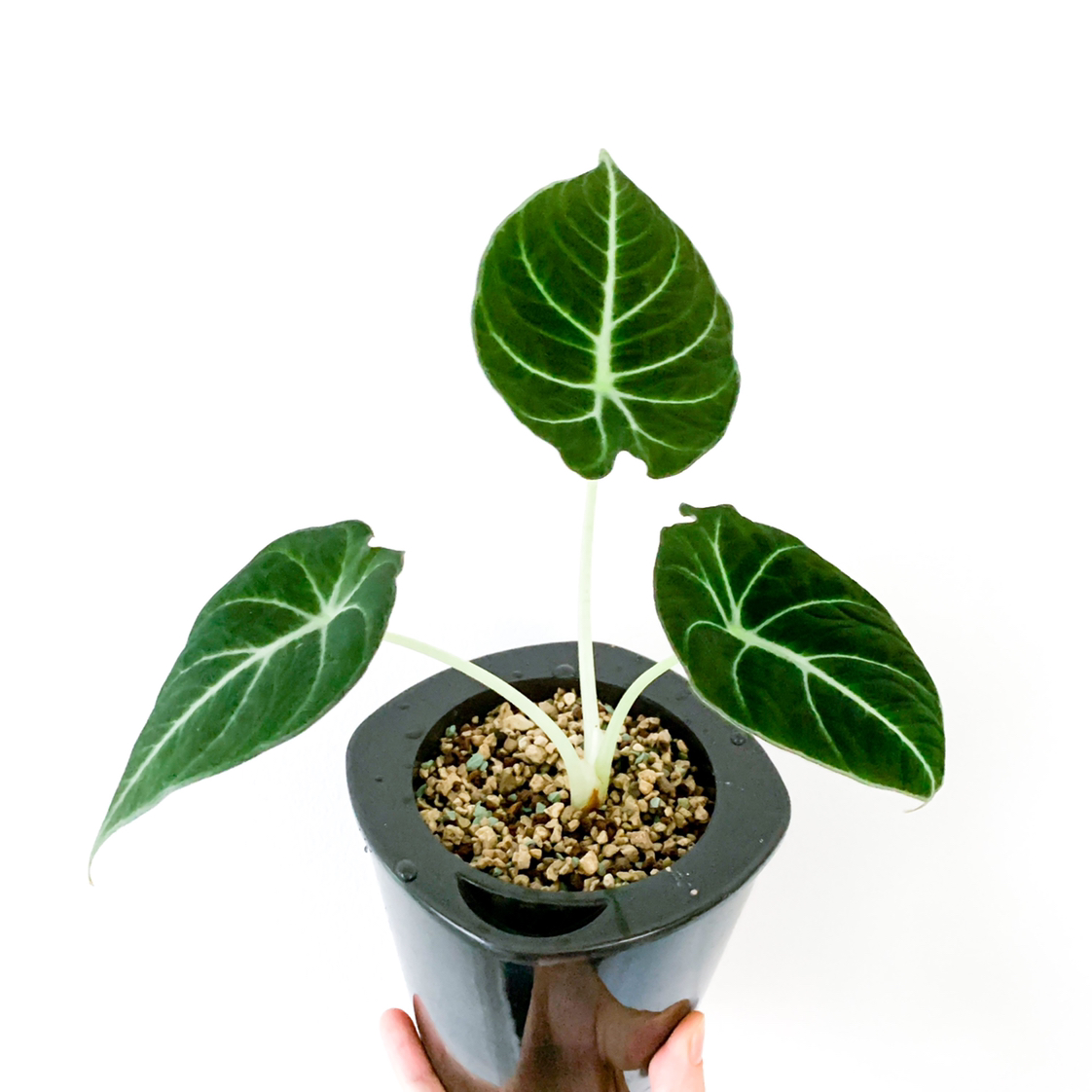
Black Velvet Alocasia

What's Wrong with My Black Velvet Alocasia?

Alocasia reginula
Reviewed by Kiersten Rankel M.S.
Quick Answer
1.
Low humidity causes most problems.
Crispy brown edges, spider mites, and stunted leaves all trace back to air that's too dry. Black Velvet Alocasia needs 65%+ humidity to stay healthy. If something looks wrong, check humidity first.
2.
Check the soil before adjusting water.
Yellowing and drooping can both mean overwatering or underwatering. Feel the soil before reacting. Wet and drooping means root trouble. Dry and drooping means thirst.
3.
A new leaf emerging means it's still alive.
If a dark, tightly furled new leaf is pushing up from the growing point, the corm is healthy and the plant is still fighting. Old damaged leaves are not the story. The new one is.
Stay on top of plant care
Get seasonal reminders for watering and fertilizing โ€” personalized for your plants.
Try Greg Free

Common Black Velvet Alocasia Problems

Brown leaf edges

Low humidity

Black Velvet Alocasia evolved in humid Southeast Asian forests and demands 65%+ humidity. In dry indoor air, moisture evaporates from the velvety leaf surface faster than the roots can supply it, and the edges die first. The fine velvet texture makes this worse because the tiny surface fibers increase the total evaporating area.

1. Run a humidifier near the plant, targeting 65% or higher
2. Move the plant away from heating vents and air conditioning
3. Trim brown edges back to green tissue with clean scissors
Underwatering

When the soil stays dry too long, Black Velvet Alocasia's small root system can't keep up with what the leaves need. The outer leaf edges brown and crisp before the center shows stress because the margins are the last tissue to receive water moving up from the roots.

1. Water thoroughly until water drains from the bottom
2. Check the soil every few days and water when the top inch feels dry
3. Brown edges won't recover, but new leaves should come in clean once watering improves

Yellow leaves

Overwatering

Black Velvet Alocasia grows from a corm and has relatively thin, sensitive roots that rot quickly in soggy soil. When the roots break down, the plant can't move nutrients upward and older leaves yellow first. The small plant size means there's little buffer between too-wet and rotting.

1. Stop watering and let the soil dry down to about an inch before the next drink
2. Check that the pot has drainage holes and is not sitting in standing water
3. If yellowing spreads rapidly and the soil smells sour, unpot and inspect the corm for soft black tissue, cutting it away if present
Winter dormancy

Black Velvet Alocasia often goes partially or fully dormant in winter, dropping leaves one by one as light levels fall. The corm stays alive underground. This is a normal seasonal response, not a sign the plant is dying.

Drooping leaves

Underwatering

When the soil goes dry, Black Velvet Alocasia's stems lose water pressure quickly and the dramatic leaves droop visibly. The small plant can go from fine to wilted faster than larger aroids because it has less water stored in its tissues.

1. Feel the soil. If it's dry an inch down, water thoroughly until it drains
2. Leaves should recover within a few hours as water moves back into the stems
Root rot

Rotted roots cannot push water upward even when the soil is wet. A drooping plant in damp soil is a root rot signal. Black Velvet Alocasia's fine root system is especially vulnerable because it can't outrun rot the way a large-rooted plant can.

1. Check the soil. If it's wet but the plant is still drooping, gently remove the plant from its pot
2. Cut away any black or mushy roots and any soft sections of the corm back to firm tissue
3. Repot in fresh, chunky well-draining mix and hold off watering for several days

Spider mites

Spider mites

Spider mites are the most common pest on Black Velvet Alocasia, and the velvety leaf texture is why. The fine surface fibers trap mites and protect them from being knocked off by casual contact. Look for fine webbing on the leaf undersides and between the leaf stem and petiole, plus pale stippling on the dark upper surface.

1. Rinse the entire plant under a strong shower, focusing on leaf undersides
2. Wipe both sides of every leaf with insecticidal soap or 70% isopropyl on a soft cloth
3. Repeat every three to four days for two weeks
4. Raise local humidity to 65%+ to make conditions hostile to mites going forward

Losing all leaves in winter

Normal dormancy

Black Velvet Alocasia goes dormant when light levels drop in winter, sometimes shedding every leaf. The corm underground stores energy and survives. This looks alarming but is normal for the species. Leaves return in spring when light improves.

Faded leaves

Low light

Black Velvet Alocasia produces its signature near-black coloring only under adequate bright indirect light. In deep shade, new leaves emerge with a greenish, washed-out tone and the bright white veins lose their contrast. The plant is investing less in pigment because it senses less light to use.

1. Move to a spot with bright indirect light, such as a few feet from a filtered south or east window
2. Avoid direct sun, which scorches the velvety leaf surface fast
3. Old faded leaves will not recolor. Watch new growth to judge improvement

Preventing Black Velvet Alocasia Problems

A few consistent habits prevent most of what goes wrong with Black Velvet Alocasia.
Weekly Check
1
Run a humidifier nearby, targeting 65% humidity or higher.
This is the single most important thing you can do. Low humidity is behind brown edges, spider mite infestations, and stunted growth. A small humidifier placed nearby handles all three at once.
2
Plant in chunky, well-draining aroid mix in a pot with drainage holes.
Black Velvet Alocasia's fine roots rot fast in dense or soggy soil. Bark, perlite, and coco coir mixed together give the roots air pockets and let excess water escape quickly.
3
Water when the top inch of soil is dry, not on a schedule.
The small root system is sensitive to both overwatering and drought. Checking the soil every few days and watering based on what you feel prevents both problems.
4
Keep temperatures above 60F and away from cold drafts.
Cold air from windows or vents triggers sudden leaf drop and speeds dormancy. A stable, warm spot well away from exterior walls and air conditioning gives the plant its best chance.
5
Quarantine new plants for two weeks before placing them near your Alocasia.
Spider mites arrive on other plants and find the velvety leaves immediately. Two weeks of isolation stops an infestation before it can reach the Alocasia.
Stay on top of plant care
Get seasonal reminders for watering and fertilizing โ€” personalized for your plants.
Try Greg Free

About This Article

Kiersten Rankel M.S.
Botanical Data Lead at Greg ยท Plant Scientist
About the Author
Kiersten Rankel holds an M.S. in Ecology & Evolutionary Biology from Tulane University. A certified Louisiana Master Naturalist, she has over a decade of experience in science communication, with research spanning corals, cypress trees, marsh grasses, and more. At Greg, she curates species data and verifies care recommendations against botanical research.
See Kiersten Rankel's full background on LinkedIn.
Editorial Process
Every problem and fix in this article was verified against Greg's botanical database, cross-referenced with USDA hardiness zone data and published horticultural research from the Missouri Botanical Garden, university extension programs, and species-specific literature. The Alocasia reginula care profile reflects documented species behavior combined with years of community grower feedback in Greg.
6,567+ Greg users growing this plant
USDA hardiness zones 10aโ€“12b