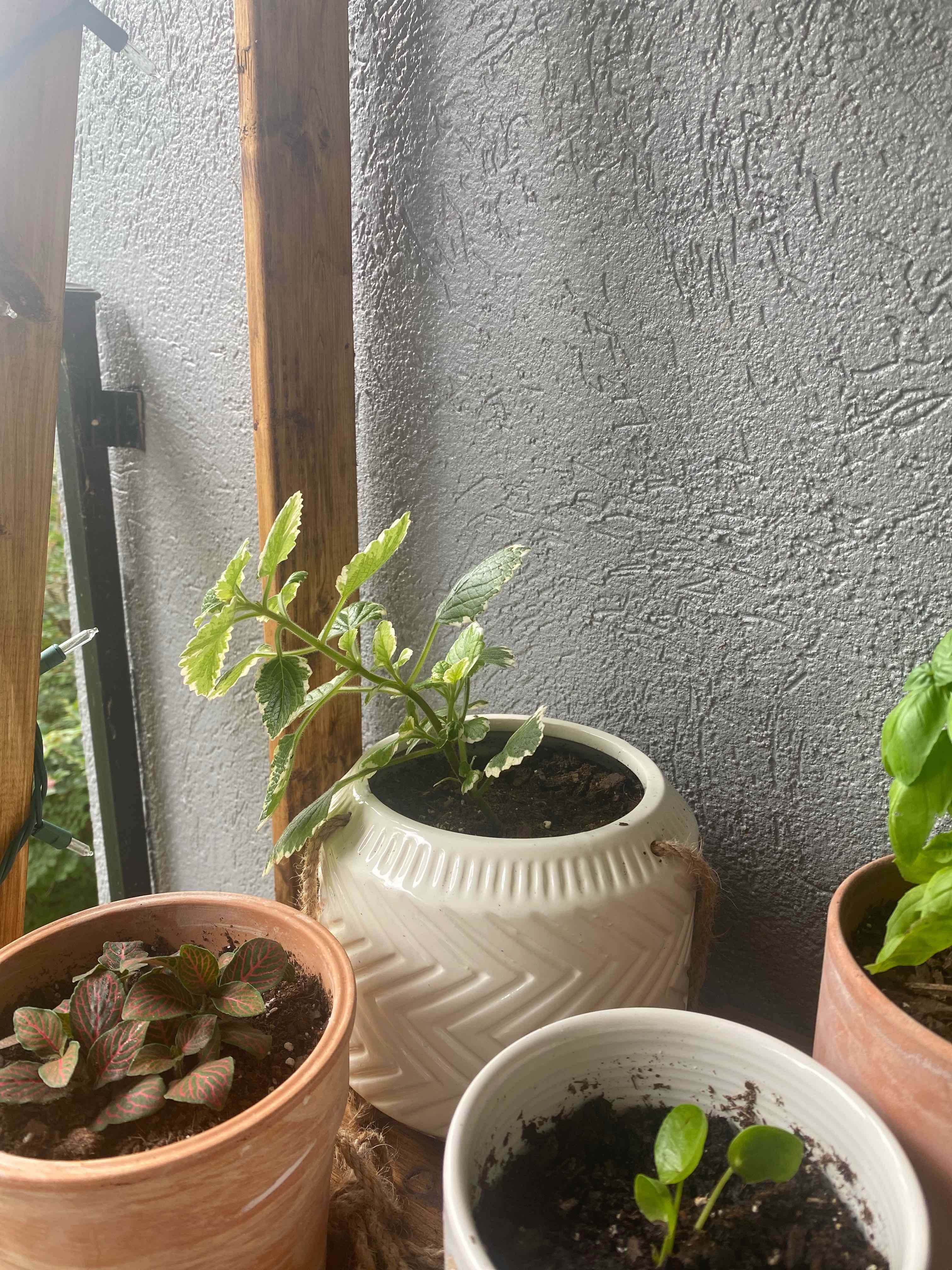
White-Edged Swedish Ivy thrives in a glazed ceramic or plastic pot with drainage holes. Choose a pot 1-2 inches wider than the root ball. This trailing plant has a moderate thirst and does well in any pot that drains freely and holds light moisture.
What Size Pot Does a White-Edged Swedish Ivy Need?
White-Edged Swedish Ivy has a moderate, spreading root system that matches its bushy, trailing growth. Choose a pot 1-2 inches wider than the root ball. A wider pot gives the stems room to root at the nodes as they grow outward.
This plant fills out its pot relatively quickly when growing actively. When the trailing stems become leggy and the pot feels light when lifted, it's time to size up.
A standard 6-8 inch pot works well for most mature plants. Swedish Ivy stays fairly compact, so it rarely needs anything larger than 10 inches.
Rooted cutting or starter plant3–4" pot
Young plant (4–8" spread)4–6" pot
Established plant (8–14" spread)6–8" pot
Mature trailing plant (14"+ spread)8–10" pot
What Material Pot Is Best for White-Edged Swedish Ivy?
White-Edged Swedish Ivy has fibrous roots that appreciate consistent moisture without sitting in water. Native to tropical regions from southern India to Southeast Asia, it's adapted to warm, humid conditions with regular rainfall and quick drainage.
The roots aren't particularly fussy about pot material. They tolerate a wide range as long as the soil drains well and doesn't stay bone dry for extended periods.
Dries fastest → Slowest
Best for White-Edged Swedish Ivy
Fabric
Works in humid rooms. In dry air, the soil may dry out faster than this plant prefers.
Unglazed Ceramic
Good breathability for the roots. Water a bit more often since it dries faster than glazed options.
Wood
A nice middle ground with natural airflow and moderate moisture retention.
Glazed Ceramic
A great choice that holds moisture evenly and keeps this plant happy between waterings.
Plastic
Affordable and retains moisture well. A popular choice for hanging baskets with Swedish Ivy.
Metal
Fine for indoor use. Retains moisture well and works for this strictly indoor tropical.
White-Edged Swedish Ivy is a tropical trailing plant that likes consistent moisture. Glazed ceramic, plastic, and metal are all solid choices that hold water well between waterings. Plastic is especially popular for hanging baskets since it keeps the weight down.
Breathable materials like fabric and unglazed ceramic also work, especially in humid rooms. In dry air, they may dry out faster than this plant prefers, so water a bit more often if you go that route.
Stay on top of plant care
Get seasonal reminders for watering and fertilizing — personalized for your plants.
Does My White-Edged Swedish Ivy Need Drainage Holes?
Yes, drainage holes are important. White-Edged Swedish Ivy likes moist soil but not waterlogged roots. Without drainage, water collects at the bottom and the fibrous roots start to decay.
If you're using a hanging basket (a natural fit for this trailing plant), make sure it has drainage holes or use a liner with slits. Catch any drips with a saucer or water over a sink.
When Should I Repot My White-Edged Swedish Ivy?
Repot White-Edged Swedish Ivy every 1-2 years in spring. This plant grows at a moderate pace and fills out its pot steadily during the growing season.
When repotting, gently tease apart the root ball and settle it into fresh, well-draining potting mix. Go up 1-2 inches in pot width. The plant recovers quickly from repotting and usually puts out new trailing growth within a few weeks.
This is also a good time to trim leggy stems and root the cuttings back into the same pot for a fuller look.
Signs It's Time to Repot
Roots visible through drainage holes
Soil dries out within a day or two of watering
Growth has slowed despite good light and feeding
The pot feels rootbound and light when lifted
Stems are leggy with fewer leaves near the base
When Can I Plant My White-Edged Swedish Ivy in the Ground?
White-Edged Swedish Ivy is hardy in zones 10a through 12b. In frost-free tropical climates, it makes a lush groundcover or trailing accent in shaded beds. Plant it in well-draining soil with dappled light.
In most climates, this plant is best kept in a container indoors. You can move it to a shaded patio in summer when nighttime temperatures stay above 55°F. Bring it inside before any risk of frost, as cold temperatures will damage the foliage and roots.
Got More Questions?
Can I keep White-Edged Swedish Ivy in a pot without drainage holes?
It's not recommended. Swedish Ivy's roots stay healthy with consistent moisture but rot in standing water. Use a pot with drainage holes, or place a nursery pot inside a decorative cachepot.
How do I know if my Swedish Ivy's pot is too big?
If the soil stays wet for more than a week after watering, the pot is likely too large. The excess soil holds moisture that the roots can't use, which leads to root problems.
Is a hanging basket good for White-Edged Swedish Ivy?
Yes, hanging baskets are ideal for showing off the trailing stems. Plastic or lined baskets work best. Just water a bit more often since hanging pots dry out faster from air flow on all sides.
Can I root Swedish Ivy cuttings in the same pot?
Absolutely. Trim leggy stems, poke the cut end into the soil near the base, and keep it moist. The cuttings root easily and fill in bare spots within a few weeks.
Does White-Edged Swedish Ivy like being rootbound?
Not really. While it tolerates mild root binding, a rootbound plant grows slowly and the trailing stems get sparse. Repot when roots start circling or pushing out of drainage holes.
Stay on top of plant care
Get seasonal reminders for watering and fertilizing — personalized for your plants.
Kiersten Rankel holds an M.S. in Ecology & Evolutionary Biology from Tulane University. A certified Louisiana Master Naturalist, she has over a decade of experience in science communication, with research spanning corals, cypress trees, marsh grasses, and more. At Greg, she curates species data and verifies care recommendations against botanical research.
See Kiersten Rankel's full background on LinkedIn.
Editorial Process
Container guidance verified against Coleus paniculatus growth data from Greg's botanical database, cross-referenced with USDA hardiness zone data and published horticultural research.